WHO Unveils SCORE for Health Data Technical Package to Revolutionize Global Health Information Systems and Strengthen Pandemic Response

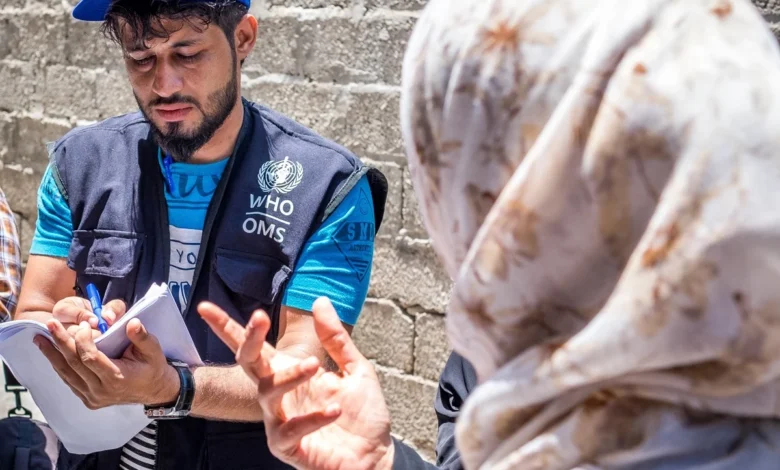
The global public health landscape has long grappled with systemic disparities in data collection, infrastructure, and analytical capacity. In an effort to address these profound vulnerabilities—exacerbated exponentially by the unprecedented global health crisis of the coronavirus disease (COVID-19) pandemic—the World Health Organization (WHO) has officially launched a transformative new initiative. Known as the SCORE for Health Data Technical Package, this comprehensive resource is designed to fundamentally improve access to life-saving data, establish rigorous global standards, and empower governments worldwide to make informed, evidence-based health decisions.
The announcement arrives at a critical juncture in modern public health history. For decades, international health organizations, epidemiologists, and domestic health ministries have pointed to the catastrophic risks of operating blind in the face of emerging pathogens and chronic health burdens. The COVID-19 pandemic laid bare these vulnerabilities, demonstrating how a lack of timely, reliable, and disaggregated health data can severely compromise emergency response efforts, delay critical resource allocation, and obfuscate true infection and mortality rates across different demographics.
By introducing the SCORE framework, the WHO aims to bridge the persistent chasm between raw data collection and strategic health action, offering a standardized pathway for nations seeking to modernize their health information systems (HIS).
The Anatomy of the SCORE Framework
At its core, the acronym SCORE stands for Survey, Count, Optimize, Review, and Enable. Developed through extensive consultations with international public health experts, statisticians, and data scientists, the technical package encapsulates more than 90 universally accepted tools and standards. These instruments are meticulously curated to assist national governments in upgrading every facet of their health data infrastructure, from basic population censuses and civil registration to advanced epidemiological modeling and health systems performance reviews.
The five pillars of the SCORE Technical Package operate cohesively to ensure a holistic overhaul of national statistical architectures:
- Survey populations and health risks: Enhancing regular population-based health surveys to monitor risk factors, health status, and coverage of essential services.
- Count births, deaths, and causes of death: Strengthening civil registration and vital statistics (CRVS) systems to ensure that every birth and death is legally registered and assigned an accurate, medically certified cause of death.
- Optimize health service data: Improving routine facility-based reporting systems to capture high-quality data on service delivery, morbidity, and healthcare utilization.
- Review progress and performance: Fostering a culture of data utilization where policy-makers, healthcare providers, and civil society regularly analyze data to track national and subnational health targets.
- Enable data use for policy and action: Building institutional and human capacity to manage, govern, and ethically share health data while ensuring cybersecurity, data privacy, and broad accessibility.
By housing these diverse elements within a single, harmonized package, the WHO has eliminated the need for fragmented, piecemeal approaches to health systems strengthening. Governments no longer need to navigate a bewildering array of conflicting international standards; instead, they are provided with a unified, practical, and adaptable roadmap.
Background Context: The Pre-COVID Data Deficit
To fully understand the gravity and necessity of the SCORE initiative, one must examine the state of global health data prior to the emergence of SARS-CoV-2. According to baseline assessments published in the WHO World Health Statistics reports, a staggering number of low- and middle-income countries (LMICs) lacked the fundamental capacity to reliably track vital statistics.
Historically, global health investments have heavily favored vertical disease programs—such as targeted interventions for HIV/AIDS, malaria, and tuberculosis—while chronically underfunding horizontal systems like national statistical infrastructure. Consequently, in many developing nations, a significant percentage of deaths occurred outside formal medical facilities and went completely unrecorded. Causes of death were frequently misclassified or left entirely blank, making it virtually impossible for national health ministries to accurately calculate disease burdens, allocate financial resources efficiently, or project future healthcare demands.
When COVID-19 swept across the globe in early 2020, these pre-existing data deficits transformed into acute operational liabilities. Countries struggled to measure excess mortality, track community transmission chains, or distribute scarce personal protective equipment (PPE), therapeutics, and vaccines equitably. The pandemic acted as an unsparing stress test for national health systems, proving definitively that data is just as critical to pandemic containment as hospital beds, ventilators, and medical personnel.
Leadership Perspectives and Strategic Partnerships
The rollout of the SCORE Technical Package represents a collaborative triumph between the WHO and key philanthropic organizations dedicated to global health equity. Funding and strategic support for the initiative were substantially bolstered by the Bloomberg Philanthropies Data for Health Initiative, a partnership that has long championed the modernization of public health data systems in resource-constrained settings.
Addressing global media and public health stakeholders, WHO Director-General Dr. Tedros Adhanom Ghebreyesus emphasized the foundational principle underpinning the new initiative: "Countries must be able to measure progress to make progress. Particularly during COVID-19, reliable data is the best way to coordinate response efforts and improve health in all areas."
Dr. Tedros’s sentiments were echoed by Dr. Kelly Henning, Director of Public Health Programs at Bloomberg Philanthropies. Highlighting the pragmatic value of the package, Dr. Henning noted, "Using data to inform public health priorities and strategies has never been more important. The SCORE Technical Package provides country governments around the world with high-quality, essential technical guidance so that countries can strengthen their own data systems. WHO is proud to partner with the Bloomberg Philanthropies Data for Health Initiative to deliver this timely resource to countries."
Furthermore, Dr. Samira Asma, Assistant Director-General for Data, Analytics and Delivery for Impact at WHO, underscored the moral and operational urgency of the moment. Stressing that the global community faces a narrowing window of opportunity to meet the United Nations Sustainable Development Goals (SDGs) and the ambitious "Triple Billion" targets, Dr. Asma remarked:
"We must keep score to save lives. WHO is committed to working with countries and partners to rapidly scale up capacity for data collection and use in order to improve policy and performance. We must act now to invest in statistical systems in countries, respond to this pandemic and meet the SDGs and the Triple Billion targets. Our window of opportunity is closing, and we cannot wait to address data gaps. Data use to address country needs has to be a priority today."
Chronology of Development and Planned Rollout
The release of the SCORE Technical Package is the culmination of years of technical consultations, pilot testing, and global consensus-building among biostatisticians, health economists, and government ministers.
- Pre-2020: Growing international recognition of widespread data gaps in low- and middle-income countries, leading to preliminary drafts of harmonized health information system frameworks.
- Early 2020: The onset of the COVID-19 pandemic abruptly exposes the catastrophic consequences of unreliable national health data, accelerating the prioritization of system-wide data reforms.
- Mid-2020: Findings from the WHO World Health Statistics 2020 report underscore the urgent need for standardized, universally accepted tools to evaluate and upgrade health information systems.
- Current Phase: Official launch of the SCORE Technical Package, featuring its initial release of core guidance documents and foundational resources.
- Later This Year: Anticipated release of subsequent components, including the comprehensive SCORE Assessment Instrument and granular global, regional, and country status reports.
These forthcoming components are expected to provide national and subnational planners with the diagnostic tools necessary to baseline their current capabilities, identify specific vulnerabilities, and chart measurable progress against both domestic priorities and international health mandates.
Broader Impact, Implications, and Implementation Challenges
While the theoretical benefits of the SCORE Technical Package are universally lauded by public health experts, implementation analysts point out that the true test of the initiative will lie at the country level. Transforming high-level technical guidance into functioning, sustainable national health information systems requires sustained political will, domestic budget allocations, and long-term institutional capacity building.
Many developing nations face severe shortages of trained biostatisticians, epidemiologists, and data governance professionals. Additionally, legacy information technology systems in many healthcare facilities remain paper-based, fragmented, or incompatible with modern digital health platforms. Overcoming these hurdles will require not only the adoption of the SCORE framework but also targeted financial investments from international donors and multilateral development banks.
Proponents of the initiative, however, remain optimistic. By offering a flexible and practical menu of options rather than a rigid, one-size-fits-all mandate, SCORE allows countries at varying stages of development to tailor the tools to their unique infrastructural realities. Furthermore, the emphasis on disaggregated data ensures that marginalized populations—often rendered invisible in aggregate national statistics—are accurately accounted for in health planning and resource distribution.
Conclusion: A Call for Global Solidarity
As the international community continues to navigate the complex aftermath of the COVID-19 pandemic and prepares for future biological threats, the message from the World Health Organization is unequivocal: robust data systems are no longer an optional luxury for affluent nations, but an absolute prerequisite for global health security.
The SCORE for Health Data Technical Package offers a clear, actionable roadmap for governments determined to build back better. By fostering international solidarity, streamlining technical standards, and institutionalizing a culture of evidence-based decision-making, the initiative holds the profound promise of transforming raw numbers into resilient, life-saving public health policies for generations to come.