Max Verstappen to face unprecedented challenge against 100 karters in unique Silverstone showdown

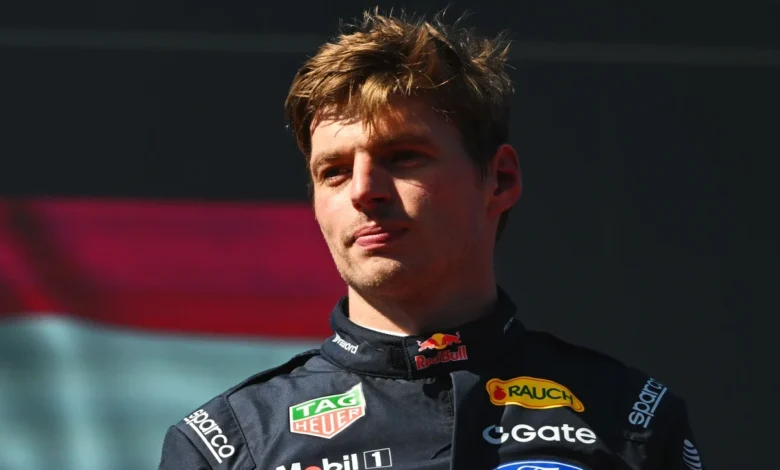
The motorsport world turns its attention to the legendary Silverstone Circuit this Wednesday, 16 September, as four-time Formula 1 World Champion Max Verstappen prepares for a sporting spectacle unlike any seen in modern racing. The event, titled Max vs 100, will see the Red Bull Racing star attempt a monumental feat of race craft: starting from the back of a grid comprised of 100 individual karters, he must navigate his way through the pack to overtake as many opponents as possible over a grueling 30-lap contest. The event, which will be broadcast globally via Disney+, represents a rare intersection of professional motorsport excellence and mass-participation entertainment.
The circuit for the challenge has been purpose-built at the Silverstone venue, specifically designed to accommodate the unique requirements of a 100-kart field. While Silverstone is traditionally known for its high-speed Grand Prix layout, this custom track is engineered to emphasize technical agility, tight corners, and heavy traffic management—essential elements when a single driver is tasked with negotiating a wall of competitors.
The Format and Strategic Dynamics
The fundamental objective for the 100-strong field of challengers is one of collaborative defense. Rather than racing for individual glory, the karters are tasked with utilizing their collective numbers to frustrate the progress of the Formula 1 champion. By employing blocking tactics, formation driving, and strategic positioning, the group aims to keep the Dutchman behind them for as long as possible.
For Verstappen, the challenge is entirely different. Having spent his career mastering the most advanced racing machinery on the planet, he must now recalibrate his approach to suit the lower power-to-weight ratio of high-performance karts. The primary hurdle will be the sheer density of the field. In a standard F1 race, a grid consists of 20 cars. Managing 100, particularly on a circuit designed to compress that field, introduces a level of chaotic variability that even a seasoned world champion rarely faces.
A Diverse Field of Challengers
The entry list for the event is a curated tapestry of the modern digital and physical sporting landscape. The 100 participants include a broad spectrum of individuals, ranging from professional athletes and established motorsport figures to high-profile streamers, internet content creators, and dedicated fans.
This mix is intentional, designed to bridge the gap between traditional motorsport aficionados and the broader digital audience that consumes content through platforms like Twitch and YouTube. By integrating professional drivers with digital personalities, the event serves as a high-stakes experiment in fan engagement. The presence of streamers and creators also ensures that the event will be documented from multiple perspectives, providing a multi-layered narrative of the struggle that unfolds on the tarmac.
Verstappen’s Perspective
Max Verstappen, who has maintained a characteristically pragmatic approach to the challenge, addressed the upcoming event during the lead-up to the Spanish Grand Prix. When asked about his strategy for maneuvering through such a dense field, he remained remarkably composed, suggesting that his plan is to treat the event with the same professional rigor as a standard race weekend, albeit with a lighter tone.
"I’ll just rock up and have a good time, to be honest. Let’s see how it goes," Verstappen remarked. "But yeah, it’s a lot of people. Starting from the back, it’s going to be challenging, but I hope I can catch them all. But we don’t know yet. I don’t even know the format at the moment. So I will just rock up and do my thing."
His comments underscore a key aspect of his racing philosophy: the ability to adapt to changing environments. While he is accustomed to the data-driven world of F1, where every millisecond is simulated and analyzed, this event represents a return to the roots of karting, where instinct and rapid-fire decision-making are paramount.
Chronology of the Challenge
The conceptualization of Max vs 100 has been months in the making. The planning phase involved not only the physical construction of the Silverstone circuit but also the rigorous vetting and preparation of the 100 participants.
- Early 2024: Initial discussions regarding a large-scale exhibition event featuring the reigning champion.
- Mid-2024: Design and engineering of the bespoke Silverstone track, focusing on technical sections that favor karting dynamics.
- August 2024: Official announcement of the 100-karter challenge and the opening of participant selections.
- Early September 2024: Release of the participant list, highlighting the diversity of the field.
- 16 September 2024: The scheduled race day, encompassing practice, qualifying (for the field), and the final 30-lap main event.
Supporting Data: The Logistics of 100 Karts
To put the scale of this event into perspective, one must consider the logistical challenges of managing 100 karts on a single track. In standard professional karting championships, fields rarely exceed 35-40 participants due to safety regulations and the spatial requirements for safe overtaking.
A 100-kart field implies an extreme level of congestion. The track design at Silverstone must incorporate wide "buffer zones" and specific passing lanes that allow for the high-speed differential between Verstappen’s kart and those of the average participants. If the track were too narrow, the event would likely result in a stationary logjam. Instead, the engineers have opted for a layout that facilitates continuous movement, forcing the 100 karters to act as a moving, evolving obstacle course.
Broader Impact and Industry Implications
The Max vs 100 event serves as a bellwether for the future of motorsport broadcasting. As traditional sports face increasing competition from digital entertainment, rights holders are looking for innovative ways to leverage their star athletes.
By placing a Formula 1 champion in an environment that is intentionally skewed against him, the event creates a high-tension narrative that is inherently watchable. It avoids the clinical nature of modern F1 broadcasting, where team radio, pit strategy, and tire degradation often dominate the conversation. Instead, it focuses on the raw, visceral experience of a single driver pitted against a swarm of opponents.
Industry analysts note that this shift toward "eventized" motorsport could have significant implications for how racing is consumed in the coming decade. If the event proves to be a success, it could signal a shift toward more exhibition-style races that prioritize spectacle and digital engagement over traditional sporting records.
Conclusion: The Final Showdown
As the countdown to the 16 September event continues, the focus remains on whether the collective defense of the 100 karters will hold. The event is a testament to the skill of Max Verstappen, but also to the evolution of the sport. Whether he succeeds in overtaking the entire field or finds himself blocked by a wall of determined challengers, the Max vs 100 event is set to be a landmark moment in the 2024 racing calendar.
The eyes of the motorsport community, the gaming industry, and the general public will be on Silverstone to see if the world’s most dominant driver can overcome the ultimate numerical disadvantage. It is not merely a race; it is a test of human intuition, strategic patience, and the ability to perform under pressure when the rules of the game are completely rewritten. As the karts line up on the grid, the only certainty is that the outcome will be as unpredictable as the sport of racing itself.