NASA Invests Over $7 Million in 12 Groundbreaking Space Biology Studies to Support Future Human Exploration on the Moon and Mars

As humanity looks toward a sustained presence on the Moon and crewed missions to Mars, the National Aeronautics and Space Administration (NASA) is doubling down on the biological foundations required to keep astronauts alive, healthy, and nourished far from Earth. In a significant step forward for deep-space exploration, NASA has officially selected 12 new research investigations aimed at tackling the profound physiological and logistical challenges of long-duration spaceflight. Backed by a total funding commitment exceeding $7 million spanning fiscal years 2026 through 2030, these projects will explore everything from advanced extraterrestrial agriculture to precision health countermeasures against cosmic radiation and lunar dust.
The selected studies are divided evenly between two critical domains: the advancement of off-planet food production systems and the deeper understanding of how the unique microgravity, radiation, and environmental stressors of space alter human physiology. Administered through the agency’s Biological and Physical Sciences Division, the initiative represents a vital convergence of agricultural science, molecular biology, and aerospace medicine. By expanding our knowledge of how living organisms adapt to non-Earth environments, NASA hopes to safeguard astronaut well-being while establishing the self-sustaining life-support systems that will define the next era of human spaceflight.
The 12 newly minted investigations bring together principal investigators from 10 distinct research institutions distributed across eight U.S. states. Notably, the program continues to foster fresh perspectives within the aerospace scientific community, with nine of the project awards going to investigators receiving funding from the Space Biology Program for the very first time. These fresh minds will build upon decades of orbital research, transforming theoretical concepts into actionable technologies.
Cultivating the Cosmos: The Space Crops Initiative
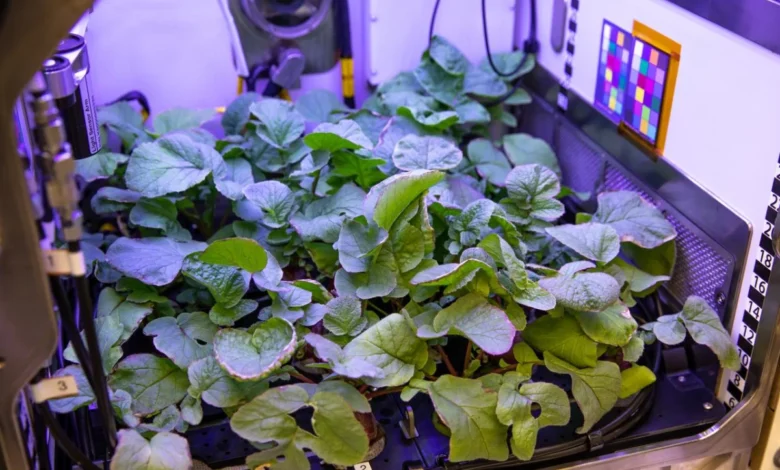
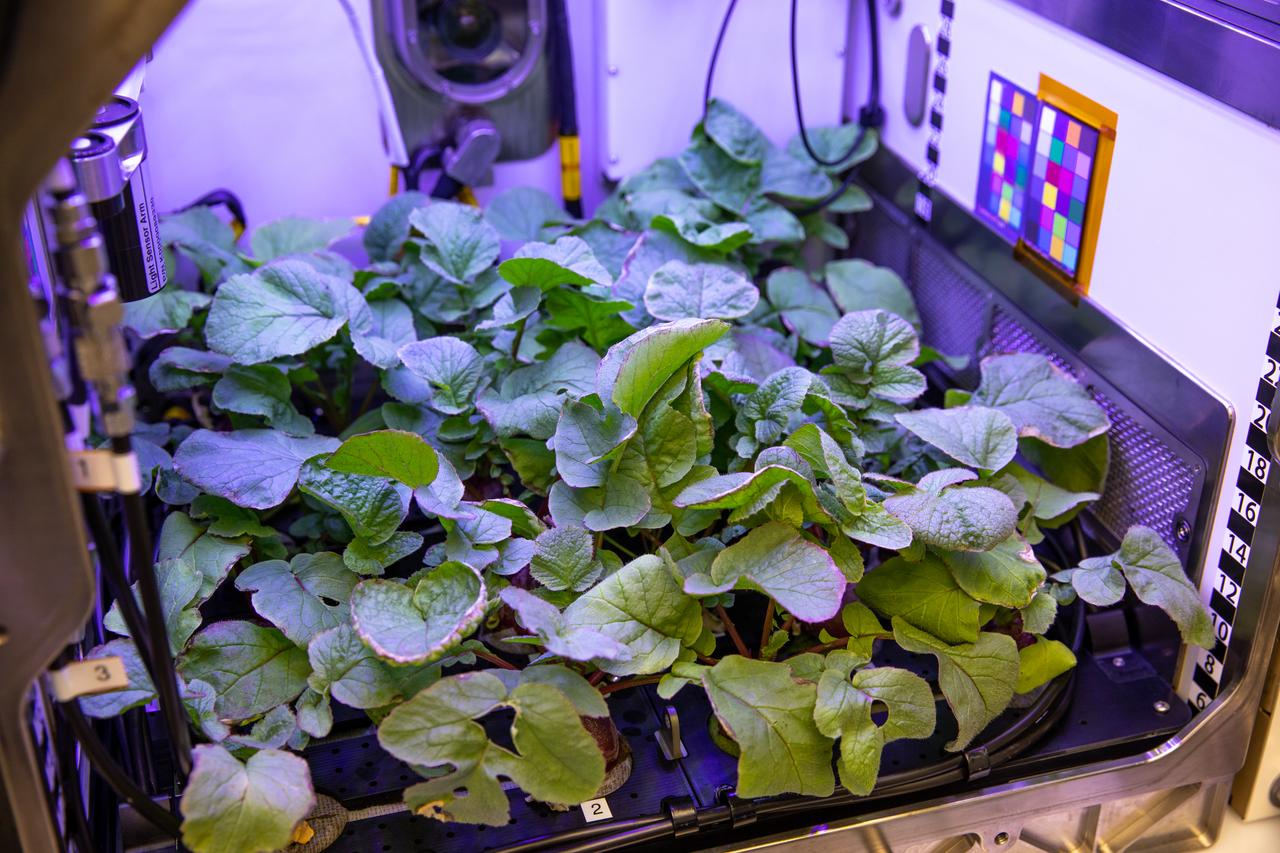
Maintaining a healthy, nutritious, and psychologically comforting diet is one of the most formidable logistical hurdles for long-duration space missions. Resupplying astronauts via cargo spacecraft from Earth becomes increasingly impractical and costly the farther humanity ventures into the solar system. Consequently, harnessing the power of plants is no longer merely a secondary experiment on the International Space Station; it is an absolute necessity for deep-space exploration, including upcoming Artemis base camps on the lunar surface and eventual crewed expeditions to the Red Planet.
To address this challenge, six of the newly funded investigations are supported by NASA’s Space Crops grants. Four of these specific proposals focus heavily on edible plants, examining how their growth patterns, overall physiology, and symbiotic microbial communities are altered by the environmental stressors of space or simulated planetary bodies. Plants grown in microgravity or reduced gravity face unique obstacles, including atypical fluid dynamics, altered gas exchange at the leaf surface, and potential shifts in plant-microbe interactions that could either threaten crops or offer unforeseen benefits.
Beyond standard crop physiology, another fascinating proposal delves into the mechanics of "resurrection plants." These specialized botanical species possess the remarkable ability to survive extreme, prolonged dehydration—a state of near-total desiccation—and rapidly spring back to life upon receiving water. Understanding the genetic and cellular mechanisms behind this resilience could unlock vital traits that can be engineered into food crops to help them survive the harsh, arid conditions often found in controlled environment agriculture systems on other worlds.
The final space crops proposal looks skyward to build upon previous biological research conducted aboard the International Space Station. This study aims to uncover the precise functions of algal genes—the specific segments of DNA that control algae survival and metabolic output—whose expression is visibly modified by the spaceflight environment. Algae represent an exceptionally promising frontier for space life-support systems, capable of rapidly generating oxygen, recycling carbon dioxide, and providing high-density nutritional biomass. Integrating these biological-based solutions into closed-loop life-support systems will be crucial for sustainable deep-space habitation.
Precision Health and Human Resilience in Extreme Environments
While feeding astronauts is critical, ensuring they remain physically and mentally resilient against the hazards of space is equally paramount. The second half of NASA’s newly selected investigations falls under the agency’s Biological and Physical Sciences Division’s focus on precision health. This cutting-edge discipline seeks to unravel the complex mechanisms by which space exploration impacts human health and well-being at the molecular, cellular, and systemic levels.
Among the six human health proposals, one prominent study investigates the toxicological impacts of lunar dust exposure. Unlike Earth, where weathering rounds sharp mineral edges, the Moon’s lack of an atmosphere and continuous micrometeoroid bombardment create jagged, highly abrasive regolith. When tracked into habitats, this dust poses a severe inhalation hazard. The selected research will meticulously examine how lunar dust exposure impacts human respiratory, immune, and inflammatory responses, paving the way for effective protective equipment and habitat air-filtration standards.
Another critical investigation focuses on pharmacological countermeasures, specifically identifying repurposed FDA-approved drugs that can successfully mitigate the physiological degradation caused by space travel. Long-duration exposure to microgravity induces muscle atrophy, bone density loss, cardiovascular deconditioning, and neurological shifts. By identifying existing pharmaceutical agents that can counteract these shifts, medical teams can protect crew members without needing to develop entirely new drug compounds from scratch.
Radiation and cellular aging form the core of two additional research proposals. Cosmic galactic rays and solar particle events present a relentless radiative threat to astronauts operating outside the protective cocoon of Earth’s magnetic field. These studies will analyze how ionizing radiation, when combined with other spaceflight stressors such as isolation and microgravity, accelerates age-relevant characteristics across various organ systems. Understanding these accelerated aging pathways is vital for protecting astronauts from long-term morbidity.
Finally, the last two precision health proposals will assess the molecular and cellular changes induced by spaceflight stressors that directly alter gene expression or protein function. By mapping these delicate biological shifts at the microscopic level, researchers hope to identify novel ways to mitigate health issues before they become chronic. Furthermore, this research will contribute to the development of early-warning detection systems designed to continuously monitor crew members and instantly notify them—and flight surgeons on Earth—of potential health concerns.
Background Context and Chronology of the Program
The seeds for these 19 research awards were planted through a rigorous, highly competitive peer-review process initiated by NASA. The proposals were formally submitted in response to ROSES-2024 (Research Opportunities in Space and Earth Sciences), specifically Program Element E.9: Space Biology Research Studies (NNH24ZDA001N-SBR).
Over the decades, NASA’s approach to space biology has evolved significantly. In the early days of human spaceflight, biological studies were largely observational, tracking basic physiological changes like bone loss and fluid shifts. However, as missions grew longer—culminating in continuous human habitation aboard the International Space Station for nearly a quarter of a century—the focus shifted toward mechanistic understanding and countermeasure development. The integration of advanced genomics, metabolomics, and bioinformatics has allowed modern space biologists to examine cellular changes down to the single-cell level, setting the stage for the current precision health era.
The funding rollout, totaling upwards of $7 million, is strategically structured to disburse across fiscal years 2026 through 2030. This multi-year funding model provides principal investigators with the financial stability required to conduct longitudinal studies, manage complex laboratory simulations, and, where applicable, prepare biological payloads for eventual flight to the International Space Station or suborbital test platforms.
Broader Implications for Space Exploration and Earth Applications
The implications of these 12 investigations extend far beyond the immediate needs of astronauts currently orbiting the Earth. As NASA, international space agencies, and commercial aerospace entities look toward establishing permanent outposts on the Moon under the Artemis program, the technologies developed through these grants will serve as the bedrock of sustainable extraterrestrial infrastructure.
In terms of agriculture, the insights gained from studying space crops and resurrection plants will not only enable long-duration deep-space transit but also revolutionize farming back on Earth. Controlled-environment agriculture, vertical farming, and drought-resistant crop engineering derived from space biology research offer vital solutions for global food security in the face of climate change, dwindling arable land, and freshwater scarcity.
Similarly, the precision health research funded by NASA holds transformative potential for terrestrial medicine. The physiological stressors experienced by astronauts—such as rapid bone demineralization, muscle wasting, and accelerated immune system aging—closely mirror terrestrial conditions like osteoporosis, sarcopenia, and immunosenescence in aging populations. By discovering repurposed drugs and early-warning detection systems for space travelers, researchers are simultaneously unlocking novel therapies and diagnostic tools for patients on Earth.
As these 12 newly funded research teams embark on their respective studies throughout the remainder of the decade, their findings will directly inform mission architectures, habitat designs, and medical protocols for the first humans to walk on the Martian surface. Through meticulous scientific inquiry and targeted investment, NASA continues to bridge the gap between science fiction and the reality of a multi-planetary future.