The National Aeronautics and Space Administration (NASA) has officially issued a formal Request for Information (RFI) to gauge commercial industry capabilities regarding in-space servicing, orbit reboost, and eventual decommissioning options for the legendary Hubble Space Telescope. Released on October 29, 2026, by NASA spokesperson Alise Fisher, the inquiry represents a proactive step by the agency to leverage the explosive growth of the private space sector. By tapping into modern commercial aerospace innovations, NASA hopes to maximize the scientific return of one of humanity’s most celebrated astronomical assets before its ultimate retirement.
The RFI, hosted on federal procurement platforms with a response deadline of November 30, 2026, highlights a growing paradigm shift in space exploration. Rather than relying solely on traditional, government-exclusive flagship missions for orbital maintenance, space agencies are increasingly looking to agile private enterprises to provide cost-effective solutions for extending the operational lifespan of existing space hardware.
Background and Context of the Hubble Space Telescope
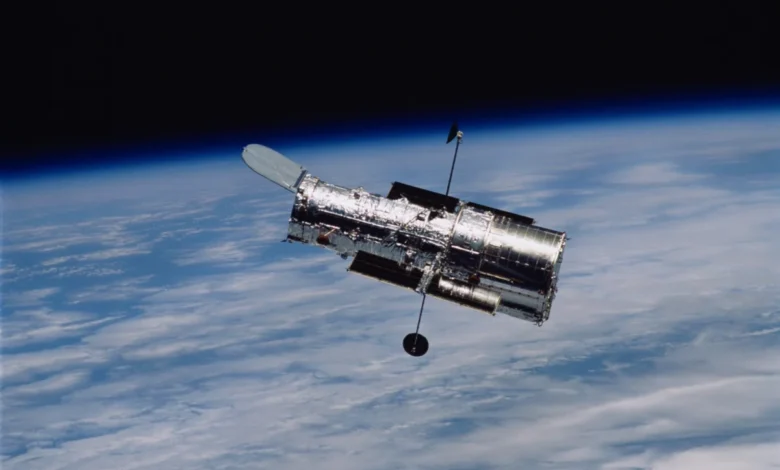
Launched on April 24, 1990, aboard the Space Shuttle Discovery (STS-31), the Hubble Space Telescope has fundamentally transformed our comprehension of the cosmos. Operating in low Earth orbit (LEO) approximately 540 kilometers (340 miles) above the planet, Hubble bypasses the distortion of Earth’s atmosphere to capture breathtaking, high-resolution imagery and critical spectroscopic data across ultraviolet, visible, and near-infrared spectra.
Over more than three decades of continuous service, Hubble has been instrumental in calculating the rate of expansion of the universe, confirming the existence of supermassive black holes at the centers of galaxies, observing the atmospheric composition of extrasolar planets, and peering back in time to view infant galaxies formed shortly after the Big Bang. The telescope is a cooperative international project between NASA and the European Space Agency (ESA), managed primarily by NASA’s Goddard Space Flight Center in Greenbelt, Maryland. Science operations are conducted by the Space Telescope Science Institute in Baltimore, while Lockheed Martin Space provides vital technical support.
Historically, Hubble’s longevity is largely attributable to the Space Shuttle program. Between 1993 and 2009, NASA executed five dedicated crewed servicing missions (STS-61, STS-82, STS-103, STS-109, and STS-125). These missions were triumphs of human spaceflight, allowing astronauts to repair optics, install advanced scientific instruments, upgrade gyroscopes and computer systems, and replace degrading solar arrays. However, following the retirement of the Space Shuttle fleet in 2011, human maintenance visits ceased entirely, leaving Hubble to operate without hands-on intervention for over a decade and a half.
The Orbital Decay Challenge and Timeline
Like all satellites operating in low Earth orbit, Hubble is subject to the subtle yet relentless effects of atmospheric drag. Even at an altitude exceeding 500 kilometers, trace molecules of Earth’s upper atmosphere interact with the spacecraft, gradually bleeding off its orbital velocity and causing its altitude to decay over time.
Unlike newer space telescopes or satellites equipped with integrated propulsion modules, Hubble was never designed with an onboard propulsion system capable of self-reboosting. Without intervention, gravitational forces and atmospheric friction will continue to lower its orbit. Current orbital mechanics projections and atmospheric modeling indicate that Hubble is likely to undergo an uncontrolled re-entry into Earth’s atmosphere sometime in the 2033 to 2034 timeframe.
To prevent this scenario or to manage it safely, NASA estimates that a commercial intervention mission would need to launch by approximately 2032. This window provides a crucial runway for private aerospace companies to design, test, and deploy robotic or crewed servicing vehicles capable of intercepting, securing, and elevating the multi-ton observatory.
Scope of the Request for Information
The RFI published by NASA outlines three primary areas of commercial interest, welcoming proposals, technical data, and feasibility assessments from industry leaders:
-
Orbital Reboost and Life Extension: Exploring the feasibility of a dedicated commercial mission to rendezvous with Hubble, attach a propulsion module or utilize robotic arms to boost the telescope to a significantly higher, more stable orbital altitude. Such a maneuver would counteract atmospheric drag and potentially extend Hubble’s operational lifespan by several years, allowing it to continue complementary observations alongside newer facilities like the James Webb Space Telescope (JWST) and the upcoming Nancy Grace Roman Space Telescope.
-
In-Space Servicing and Capability Enhancement: Investigating whether private companies can perform maintenance tasks, upgrade aging components, or restore degraded hardware subsystems (such as pointing controls or electrical systems) to enhance the observatory’s scientific capabilities.
-
Controlled Re-Entry and Orbital Disposal: Seeking strategies and systems to execute a safe, controlled atmospheric descent at the end of Hubble’s operational lifecycle, ensuring that any surviving debris safely impacts remote ocean waters rather than posing a risk to populated landmasses. Alternatively, the RFI touches upon potential graveyard orbit relocation strategies, though atmospheric disposal remains the standard protocol for massive LEO structures.

Official Statements and Leadership Perspectives
The initiative has garnered strong backing from top agency officials who view public-private partnerships as a cornerstone of modern space policy.
"Hubble still has important science ahead of it, and we should be looking at every reasonable opportunity to keep it delivering for as long as possible," said NASA Administrator Jared Isaacman. Emphasizing fiscal responsibility and scientific maximization, Isaacman added, "If there are innovative and cost-effective ways to extend the life of an asset already on orbit, we owe it to the American taxpayer and the scientific community to explore them. Extending Hubble’s life would mean more discoveries, more science, and more opportunities to expand our understanding of the universe."
Nicky Fox, associate administrator for the Science Mission Directorate at NASA Headquarters in Washington, echoed these sentiments, highlighting the rapid technological advancements achieved by the private sector over the past decade.
"Hubble is a national icon that has fundamentally changed how humanity views our universe for more than 35 years," Fox noted. "Commercial industry has rapidly evolved in recent years to offer new capabilities for in-space satellite capture and servicing. Given the time we have until Hubble’s anticipated re-entry, we are eager to explore the breadth of possibilities to boost Hubble to a higher orbit while we develop the flagship mission to follow."
The Evolution of Commercial In-Space Servicing
The timing of NASA’s RFI aligns with a broader commercial revolution in orbital logistics. Over the past five years, the space industry has transitioned from a model focused exclusively on launch and satellite manufacturing to one that encompasses in-space manufacturing, orbital refueling, active space debris removal, and robotic satellite servicing.
Companies such as Northrop Grumman (via its Mission Extension Vehicles), Orbit Fab, and several venture-backed robotics startups have demonstrated that docking with unserviced legacy spacecraft in orbit is no longer science fiction. These technological strides have proven that robotic systems can successfully interface with docking rings, grapple fixtures, or custom adapters originally built for entirely different purposes—or, in Hubble’s case, design custom capture mechanisms that can latch onto the telescope’s structural ring.
A feasibility study conducted previously between NASA and private aerospace companies demonstrated that a commercial reboost mission using a Dragon spacecraft or similar vehicle was technically viable, laying the groundwork for this broader RFI. By opening the floor to the wider market, NASA aims to discover novel approaches that may not have been considered during initial internal agency reviews.
Synergy with Modern Observatories
A central theme in NASA’s long-term planning is the strategic synergy between multiple space telescopes observing across different wavelengths. While the James Webb Space Telescope specializes in infrared astronomy and looks deeper into the early universe than ever before, Hubble remains uniquely positioned to capture ultraviolet and visible light with exquisite spatial resolution.
Astronomers emphasize that overlapping observation campaigns between Hubble and JWST provide a comprehensive, multi-wavelength portrait of complex astronomical phenomena—from colliding galaxies and stellar nurseries to the atmospheres of distant exoplanets. Keeping Hubble operational through the 2030s ensures that this powerful observational partnership remains intact while NASA prepares its next generation of flagship astrophysics missions, such as the Habitable Worlds Observatory.
Implications and Future Outlook
The RFI issued on October 29 marks the beginning of a deliberate evaluation process rather than a finalized contract award. Responses submitted by the November 30 deadline will undergo rigorous review by NASA engineers and mission planners. If the technical concepts submitted by industry partners prove economically viable and technically sound, NASA may move forward with formal procurement solicitations for a servicing or reboost mission.
For the global scientific community and millions of space enthusiasts worldwide, the prospect of saving Hubble offers renewed hope. For over three decades, the iconic telescope has served as an ambassador of human curiosity, turning distant nebulae and swirling galaxies into familiar cultural touchstones. As private industry steps up to potentially grant the grand observatory a new lease on life, the story of the Hubble Space Telescope is far from reaching its final chapter.