Mercedes secures massive 145-point lead in 2026 constructors standings as team shifts focus to 2027 development

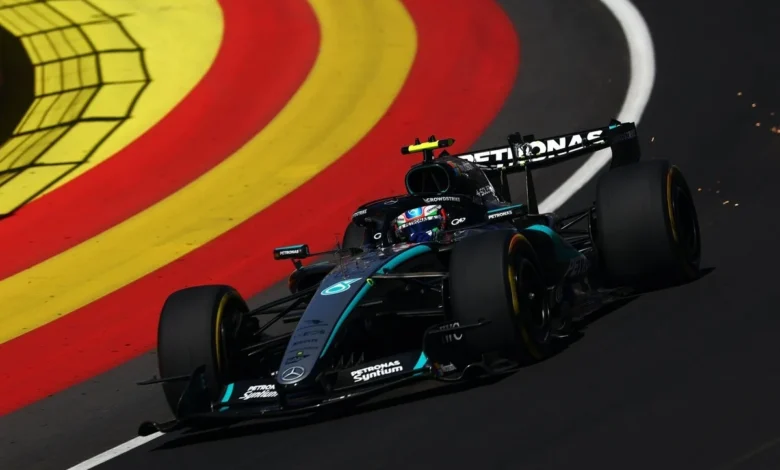
The 2026 Formula 1 season has witnessed a remarkable resurgence for the Mercedes-AMG Petronas F1 Team, effectively marking an end to the period of uncertainty that plagued the Brackley-based squad throughout the initial ground-effect era. With a commanding 145-point lead over their nearest rivals, Ferrari, Mercedes has firmly established itself as the class of the field. This statistical dominance, built upon a foundation of 10 race victories in the first 14 Grands Prix, has prompted team principal Toto Wolff to confirm a strategic pivot: the primary focus for the organization’s technical resources has now officially transitioned toward the 2027 project.
The shift in development priority is a calculated move, reflecting both the maturity of the current W17 challenger and the long-term planning required to sustain a period of dominance under the stringent cost-cap regulations. While rivals continue to pour heavy development investment into their 2026 cars in a desperate bid to close the gap, Mercedes is opting to consolidate its lead while preparing for the future.
A Season of Dominance: The Trajectory to the Top
The 2026 campaign has been a masterclass in operational efficiency and aerodynamic optimization for Mercedes. Following a turbulent two-year stretch where the team struggled to unlock the potential of the regulations introduced in 2022, the current season has served as a validation of their revised engineering philosophy.

The season began with a statement of intent, as Kimi Antonelli—the young protégé who has taken the paddock by storm—consistently extracted maximum performance from the Silver Arrows. His current position at the top of the Drivers’ Championship is not merely a product of the car’s speed, but a testament to his ability to manage race weekends with a level of maturity rarely seen in a sophomore driver. The team’s performance, winning 10 out of 14 rounds, has effectively demoralized the opposition, forcing teams like McLaren and Ferrari to take significant risks in their upgrade packages to remain competitive.
The Strategic Pivot: Looking Toward 2027
Toto Wolff’s confirmation that the team began its migration of resources to the 2027 car before the summer break underscores the internal confidence at Mercedes. In the modern era of Formula 1, where wind tunnel time and computational fluid dynamics (CFD) usage are strictly limited by the FIA’s sliding scale, the decision to stop active development on a current-year car is a high-stakes gamble.
“2027 started a while ago, before the summer,” Wolff stated following the recent success at the inaugural Spanish Grand Prix in Madrid. “We switched resources into next year, and that continues as per the plan, independent of where we are standing in the championship.”
This approach allows Mercedes to get a head start on next year’s chassis and power unit integration. While other teams are still fighting for scraps in the 2026 standings, Mercedes is already testing concepts for 2027, potentially giving them an insurmountable advantage for the following season. This long-term foresight is what characterized the team’s historic eight-year streak of Constructors’ Championships, and it appears the "Silver Arrows" have reclaimed that winning mentality.

The Engineering Challenge: Upgrades vs. Stability
Despite the decision to move focus to the future, Mercedes remains committed to maintaining its current form. A significant, "solid" upgrade package is slated for the upcoming Grand Prix in Malaysia. The timing is critical; as the paddock prepares for a demanding stretch of flyaway races, the team needs to ensure that the W17 remains stable and reliable.
Wolff is acutely aware of the risks associated with bringing new parts to the track this late in the season. “I think we are bringing a solid upgrade in Malaysia,” he told Sky Sports. “We have to survive another one in Baku and let’s see, but sometimes it doesn’t correlate with the road so well. I hope that it does, and hopefully, that puts us on par with the others in terms of upgrades, but we never know.”
The correlation issue—where wind tunnel data fails to translate to real-world track performance—has been the Achilles’ heel of many top teams in recent years. For Mercedes, the goal of this final, major 2026 upgrade is not necessarily to find massive gains, but to ensure the car retains its balance and driveability across varying track temperatures and circuit layouts.
Competitive Landscape and the Pursuit of Rivals
While the point gap to Ferrari is substantial, the threat from McLaren remains a point of focus for the Mercedes engineers. Lando Norris, having secured back-to-back victories in recent outings, has demonstrated that the McLaren MCL38 is capable of challenging the Mercedes W17 on specific track types.

However, the 145-point cushion provides a psychological and tactical barrier. As Wolff noted, the team is treating the remainder of the season with the same intensity as if they were fighting for the lead from behind. “You can DNF, you can crash out. It happens two times in a row and then suddenly what looked like a nice buffer is not anymore because you have six races to go,” he cautioned.
This objective, risk-averse mindset is vital. By ignoring the points table and focusing on the internal standard of excellence, the team hopes to prevent the complacency that often follows such a dominant run.
Broader Implications for the 2026 Season
The trajectory of the 2026 season has sent shockwaves through the pit lane. The structural changes implemented within the Mercedes technical department over the last 18 months—including the acquisition of top-tier talent and the streamlining of decision-making processes—have clearly paid dividends.
Conversely, the pressure on Ferrari and Red Bull is mounting. For Ferrari, the failure to mount a sustained title challenge in 2026 will inevitably lead to questions regarding their organizational structure and strategic department. Meanwhile, the midfield teams, such as Alpine, are currently undergoing their own shake-ups, exemplified by the hiring of former Mercedes technical figures as they attempt to replicate the success seen in Brackley.
As the circus moves toward the final third of the season, the narrative is no longer about whether Mercedes will win the championship, but rather how much of a margin they will create before the season concludes in Abu Dhabi. With their development resources already locked onto 2027, the rest of the field is essentially chasing a ghost.
Conclusion: A New Era of Precision
The story of the 2026 season is one of clinical precision. Mercedes has successfully navigated the complexities of the current regulations, established a dominant position in both the Drivers’ and Constructors’ championships, and—most crucially—secured the long-term future of their development cycle.
Whether the upcoming upgrades in Malaysia prove to be the final piece of the puzzle for 2026 or a stepping stone toward 2027 remains to be seen. However, one thing is clear: the Silver Arrows are once again operating at a level that demands the total attention and respect of the entire grid. As Toto Wolff continues to emphasize the need for "ignoring the points," the team remains focused on the only metric that truly matters: the pursuit of perfection on the track, every single weekend. The 145-point lead is merely a consequence of that commitment, and as the team looks toward the horizon, the prospect of a sustained period of success looks increasingly likely for the German manufacturer.