In a landmark shift for American climate policy, New York has officially become the first state in the nation to enact a comprehensive mandate requiring new buildings to be constructed entirely without fossil fuel hookups. This regulatory milestone, finalized in late July 2025 by the State Fire Prevention and Building Code Council, marks the culmination of a multi-year legislative effort to address the significant environmental impact of the state’s built environment. By transitioning away from natural gas and oil for heating, cooking, and water heating, New York aims to aggressively curb the greenhouse gas emissions that currently stem from residential and commercial structures.
The regulation mandates that new construction projects—ranging from small residential units to large-scale commercial facilities—must utilize electric technologies, such as heat pumps and induction appliances, rather than traditional gas piping. This policy shift represents a systemic transformation of the construction industry, forcing developers to prioritize energy efficiency and electrification as standard practice rather than optional design choices.
A Chronology of the All-Electric Buildings Act
The road to this legislative victory was neither short nor uncontested. The foundation for the current mandate was laid in 2023 with the passage of the All-Electric Buildings Act (AEBA), a centerpiece of the state’s ambitious Climate Leadership and Community Protection Act. After the legislation cleared the state assembly and senate, the implementation phase became subject to rigorous administrative review and intense industry scrutiny.
Throughout 2024, the state navigated the complexities of integrating these requirements into the existing State Fire Prevention and Building Code. The process faced significant friction from fossil fuel advocacy groups and building trade organizations, who argued that the transition would place undue financial strain on developers and compromise grid reliability. The conflict reached a peak in mid-2025, when the U.S. District Court for the Northern District of New York delivered a pivotal ruling. The court denied a challenge from industry groups attempting to block the act, effectively clearing the path for the code council to finalize the regulations in July 2025.
Under the finalized rule, the implementation follows a tiered schedule based on building scale:
- December 31, 2025: Residential buildings up to seven stories and commercial/industrial structures under 100,000 square feet with permit applications submitted on or after this date must be fully electric.
- 2029: Larger commercial and industrial buildings exceeding 100,000 square feet will be subject to the full requirements, providing a longer runway for the complex engineering required for large-scale high-rise electrification.
The Environmental and Economic Rationale
The impetus for this regulation is grounded in sobering data regarding New York’s carbon footprint. According to the New York State Department of Environmental Conservation, buildings are responsible for approximately 31% of all greenhouse gas emissions within the state. This includes emissions from on-site combustion—primarily natural gas used for boilers and stoves—as well as the energy required for cooling and ventilation.
Beyond the climate imperative, proponents of the act, including advocates from environmental justice organizations like PUSH Buffalo, emphasize that the shift is a public health necessity. Fossil fuel combustion in homes is a documented source of indoor air pollutants, including nitrogen dioxide and particulate matter, which are linked to respiratory issues, particularly in children and vulnerable populations.
Economic analysis suggests that the transition is not merely an environmental cost, but an eventual financial benefit for both residents and developers. Data from the New Buildings Institute indicates that while initial mechanical installation costs for all-electric homes can vary, the total cost of ownership is significantly reduced. By eliminating the need for gas infrastructure, developers can avoid the capital costs associated with extending gas lines to new sites. Furthermore, homeowners stand to benefit from the superior efficiency of modern heat pumps compared to conventional gas furnaces. Projections estimate that residents could see a cumulative savings of approximately $5,000 per household over a 30-year period, primarily through reduced utility expenditures and the elimination of gas service fees.

Navigating Legal and Industrial Challenges
Despite the current victory, the implementation of the AEBA remains a point of contention. The legal battle in New York mirrored earlier, failed attempts to mandate electrification in other parts of the country, most notably in Berkeley, California. In that instance, a federal appeals court struck down a municipal ordinance banning gas infrastructure, citing the federal Energy Policy and Conservation Act (EPCA).
New York’s legal team and state legislators were careful to draft the AEBA in a manner designed to withstand similar challenges, framing it as an update to state building codes rather than an outright prohibition of specific appliances. However, industry stakeholders remain litigious. Reports from Canary Media indicate that building and fossil fuel trade groups have petitioned the U.S. Department of Justice to intervene, arguing that the state’s rule still encroaches upon federal jurisdiction.
Supporters of the law, such as the Northeast region director at Food & Water Watch, Alex Beauchamp, remain optimistic. They view the current legal status as a confirmation that the state’s authority to regulate building safety and efficiency is robust enough to survive industry-led opposition. "The fossil fuel industry was sent a powerful message," stated Dawn Wells-Clyburn of PUSH Buffalo. "The health, well-being, affordability, and prosperity of our communities matters more than the industry’s profits."
Scope and Exemptions
The mandate is not a "one-size-fits-all" policy. Recognizing the technological limitations of certain specialized facilities, the state has built in specific exemptions to ensure that the regulation does not compromise essential services. Facilities such as hospitals, medical laboratories, industrial sites requiring high-heat processes, and certain types of agricultural infrastructure are permitted to continue using fossil fuels where electrification is currently technically infeasible or prohibitively expensive.
Restaurants are also a notable area of concern. While the industry has raised alarms about the impact of induction-only cooking on culinary operations, the regulation includes provisions that allow for some flexibility in high-demand kitchen environments. The goal is to encourage a transition where possible without jeopardizing the operational viability of the state’s vibrant hospitality sector.
Implications for the Future of Urban Development
The success of New York’s policy will likely serve as a blueprint for other states and municipalities grappling with their own climate goals. As the first state to adopt such a comprehensive mandate, New York is effectively testing the market, supply chain, and grid capacity required for mass-scale electrification.
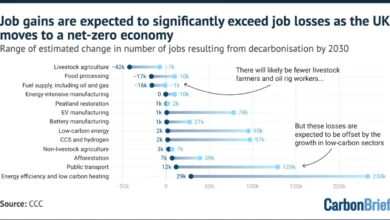
The immediate implications for the construction industry are significant. Architects, mechanical engineers, and developers must now shift their design paradigms toward high-performance building envelopes and heat-pump-integrated HVAC systems. This shift is expected to stimulate a new market for green technology installers and energy auditors, potentially fueling job growth in the state’s clean energy sector.
Furthermore, the integration of all-electric buildings into the existing power grid is a major component of the state’s broader strategy. As more buildings become electric, the demand for electricity will rise, placing pressure on the state’s power grid to transition simultaneously to renewable energy sources, such as offshore wind and solar, to ensure the full benefits of decarbonization are realized.
As of late 2025, New York stands at a critical juncture. The state has successfully navigated the political and legal obstacles to make "all-electric" the new standard for the next generation of housing and commercial space. While the threat of further litigation persists, the momentum behind the electrification movement appears to be firmly established. For New Yorkers, this policy represents a long-term commitment to reducing the state’s reliance on volatile global fossil fuel markets, improving local air quality, and aligning the built environment with the global imperative to mitigate climate change. The next few years of implementation will prove to be a crucial case study in the feasibility of a state-wide transition to a fossil-free future.
Related posts: