The veteran actor, widely revered for his Shakespearean gravitas and his later transition into global pop-culture royalty, passed away on Wednesday at his home in Los Angeles. His longtime spokesperson, Kelly Bush Novak, confirmed that his death followed a brief and poignant journey with Alzheimer’s disease and Lewy body dementia. In a statement released to the public, Novak noted the serene circumstances of his passing, stating: “He has been held in the warm embrace of family and friends, surrounded by live music, prayer, tears, laughter and the kind of profound emotion that only he could inspire after a lifetime of devotion to us all. We will forever cherish the peaceful ease and reflection on his face, an enduring reminder of his invincible grace.”
A Life of Transformation: From Mirfield to the Enterprise
Born on July 13, 1940, in the small industrial town of Mirfield, West Yorkshire, Patrick Stewart’s early life stood in stark contrast to the regal, composed figures he would later portray on stage and screen. He was the youngest of three sons born to Gladys, a textile factory worker, and Alfred, a military veteran turned laborer. His childhood was marked by severe hardship, including poverty and the trauma of a home life destabilized by his father’s struggles with alcoholism and domestic violence.
In later years, Stewart became an outspoken advocate for victims of domestic abuse, frequently citing his own upbringing as the catalyst for his social activism. It was the theater, however, that provided his primary escape. At the age of 12, an English teacher recognized his potential, casting him as Shylock in The Merchant of Venice. This early exposure to the Bard’s works ignited a lifelong passion that would eventually see him become one of the most respected Shakespearean actors of the 20th century.
After leaving school at 15, Stewart balanced work as a local journalist and a furniture salesman before securing a scholarship to the Bristol Old Vic Theatre School in 1957. By 1966, he had joined the Royal Shakespeare Company (RSC), beginning a 16-year tenure that would solidify his status as a titan of the British stage. His performances in productions such as Antony and Cleopatra and Hamlet—the latter of which earned him a Laurence Olivier Award in 2009—set the standard for classical performance in the modern era.
The Sci-Fi Renaissance: Picard and Xavier
While Stewart had already enjoyed a distinguished career in theater, his transition to international superstardom occurred at age 47. In 1987, he was cast as Captain Jean-Luc Picard in Star Trek: The Next Generation. The role was a departure for the series, which had previously been defined by the swashbuckling charisma of William Shatner’s Captain Kirk. Stewart’s Picard was different: intellectual, diplomatic, and anchored by a profound moral compass.

His performance over seven seasons and four feature films—Generations (1994), First Contact (1996), Insurrection (1998), and Nemesis (2002)—turned the catchphrases “Engage!” and “Make it so” into universal cultural shorthand. The success of the series proved that science fiction could be elevated through high-caliber acting, paving the way for the sophisticated genre storytelling prevalent today.
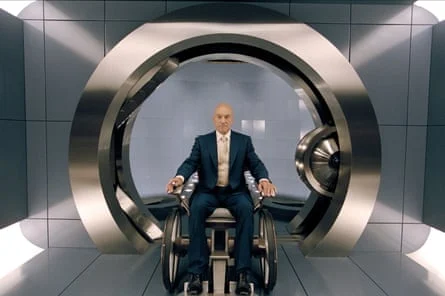
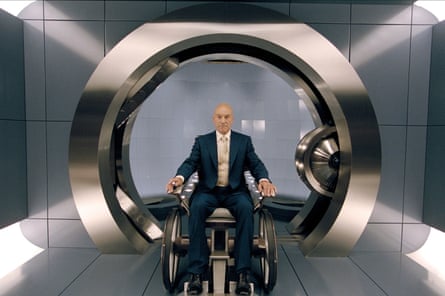
In 2000, Stewart undertook a second legendary role, portraying Professor Charles Xavier in Bryan Singer’s X-Men. Initially concerned about the risk of being typecast, Stewart found a new generation of fans through his portrayal of the telepathic mutant leader. He would eventually reprise the role in seven films, with a final appearance scheduled for the upcoming December release of Avengers: Doomsday.
A Chronology of Artistic Achievement
- 1957: Enrolls at the Bristol Old Vic Theatre School.
- 1966: Joins the Royal Shakespeare Company, beginning a 16-year run.
- 1971: Makes his Broadway debut in Peter Brook’s A Midsummer Night’s Dream.
- 1987: Debuts as Captain Jean-Luc Picard in Star Trek: The Next Generation.
- 1996: Wins a Grammy Award for Prokofiev: Peter and the Wolf.
- 2000: Debuts as Professor Charles Xavier in the X-Men franchise.
- 2009: Wins an Olivier Award for his role in Hamlet.
- 2020–2023: Returns to the Star Trek universe for the series Star Trek: Picard.
- 2023: Publishes his memoir, Making It So.
Tributes from Peers and Colleagues
The entertainment industry has responded to the news with an outpouring of grief and appreciation for a man described as both a professional giant and a deeply human colleague. William Shatner, the original Star Trek captain, took to social media to express his condolences: “From the stage to the bridge of the Enterprise, he brought intelligence, grace, and a deep sense of humanity to everything he did. Captain Picard stood for the best of us, and so did the man who played him.”
George Takei, who served alongside Shatner in the original series, noted the intergenerational impact of Stewart’s work: “He inspired a whole next generation of star-gazers who looked longingly ahead to a brighter future for all humanity. Our hearts are heavy, indeed. Rest in the heavens, Captain.”
Marvel Studios president Kevin Feige characterized Stewart as a man of “quiet strength and gravitas,” noting that his off-screen persona was defined by a sharp, self-deprecating sense of humor. Hugh Jackman, who starred alongside Stewart for over two decades in the X-Men series, shared a poignant tribute on Instagram: “We lost one of the greats of stage and screen today. And, in my book, a tremendous friend and man. I learned so much from him. I will miss you, Patrick Stewart, all of my days.”
Broader Impact and Legacy
The death of Sir Patrick Stewart represents the closing of a significant chapter in the history of 20th and 21st-century performance. His career trajectory serves as a rare bridge between the traditional, high-brow world of British theater and the expansive, technologically driven landscape of modern blockbuster cinema.
Economically and culturally, Stewart was instrumental in the longevity of the Star Trek and X-Men franchises. His involvement provided a level of prestige that allowed these series to evolve from niche fandoms into foundational pillars of global entertainment. Beyond his acting, his commitment to social causes—particularly his work regarding domestic violence and his support for Huddersfield Town FC—endeared him to a public that viewed him as more than a celebrity, but as a person of principle.
His final years were defined by a reflective nature. In his 2023 memoir and subsequent interviews, he expressed a sense of humility regarding his success, often grappling with the disparity between his humble, violent beginnings and his eventual status as a household name. He lived long enough to see his work analyzed in academic circles, celebrated in conventions, and honored with prestigious awards, yet he remained characteristically grounded.
As the film and theater communities reflect on his loss, the consensus remains that Stewart’s legacy is twofold: he was a transformative actor who elevated the craft of performance, and he was a man who, despite his own childhood traumas, used his platform to advocate for empathy and justice.
Sir Patrick Stewart is survived by his wife, the jazz musician Sunny Ozell, and his two children, Daniel and Sophie, from his first marriage to Sheila Falconer. His passing leaves behind a vacuum in the world of arts, but his recorded performances, spanning over six decades, ensure that his voice—that unmistakable, authoritative baritone—will continue to resonate for generations to come. The "invincible grace" mentioned by his family in their final statement will likely remain the defining characteristic by which the world remembers him.