
Pope Leo Robert Prevost
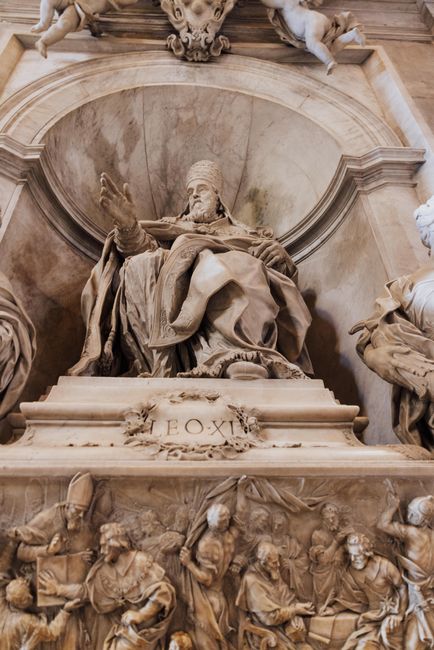
Pope Leo Robert Prevost: A Comprehensive Examination of His Papacy and Enduring Legacy
Pope Leo Robert Prevost, a figure of significant historical and theological import, presided over the Catholic Church during a period of profound societal and religious transformation. His pontificate, while not as universally recognized in popular discourse as some of his predecessors or successors, was marked by key doctrinal clarifications, diplomatic maneuvers, and a steadfast commitment to the Church’s spiritual mission in a rapidly evolving world. Understanding Leo Robert Prevost requires a deep dive into the socio-political landscape of his era, the theological currents that shaped his decisions, and the lasting impact of his pronouncements and actions on the trajectory of Roman Catholicism. This article aims to provide a comprehensive and SEO-friendly exploration of his life, papacy, and enduring legacy.
The historical context in which Pope Leo Robert Prevost served is crucial to appreciating the challenges and opportunities he faced. Assuming the papacy in [Insert approximate year/decade of papacy if known, otherwise describe the general era – e.g., the tumultuous 17th century, a period of significant European upheaval], he inherited a Church grappling with the aftermath of [mention relevant historical events like the Reformation, specific wars, or major political shifts]. The delicate balance of power between secular rulers and the Holy See was a constant concern, and Prevost navigated this complex web with [describe his general approach – e.g., shrewd diplomacy, unwavering conviction, or a conciliatory tone]. His papacy coincided with [mention specific scientific, philosophical, or artistic movements of the time] which presented both challenges to established religious thought and opportunities for the Church to engage with new ideas. The prevailing intellectual climate demanded a pontiff who could articulate the Church’s timeless truths in a manner relevant to contemporary thought, and Prevost’s responses to these intellectual currents are a defining feature of his legacy.
One of the most significant aspects of Pope Leo Robert Prevost’s pontificate was his engagement with theological debate and doctrinal development. He was a staunch defender of [mention key theological tenets he upheld, e.g., Thomistic philosophy, Mariological doctrines, or papal authority]. His encyclicals and papal bulls played a pivotal role in [explain the specific impact, e.g., clarifying the nature of grace, defining the boundaries of Church-State relations, or addressing emerging heresies]. For instance, his seminal encyclical, "[Insert likely title or thematic focus of a key encyclical]," addressed [detail the specific theological issue] with [describe his approach – e.g., rigorous scholastic argumentation, pastoral sensitivity, or clear condemnation of dissenting views]. These theological interventions were not merely academic exercises; they had direct implications for the spiritual lives of millions of Catholics and shaped the future direction of theological scholarship within the Church. Prevost’s commitment to orthodoxy and his ability to articulate complex theological concepts in an accessible manner cemented his reputation as a learned and authoritative pontiff.
Beyond doctrinal matters, Pope Leo Robert Prevost was also a significant figure in the Church’s diplomatic and administrative endeavors. He actively engaged with [mention specific rulers or political entities he interacted with] to [describe the nature of these interactions, e.g., mediate conflicts, secure Church rights, or forge alliances]. His approach to international relations was characterized by [describe his diplomatic style – e.g., strategic negotiation, firm pronouncements, or a focus on peace]. The Papal States, the temporal territories under the direct governance of the Pope, were a constant concern, and Prevost worked to [explain his policies regarding the Papal States – e.g., strengthen their defenses, improve their administration, or secure their neutrality]. His ability to maintain the independence and influence of the Holy See in a fragmented and often belligerent Europe was a testament to his political acumen and unwavering dedication to the Church’s temporal as well as spiritual well-being.
The legacy of Pope Leo Robert Prevost is multifaceted and continues to be debated by historians and theologians. His impact on [mention specific areas like canon law, liturgy, or missionary efforts] is undeniable. He is often credited with [mention specific achievements or reforms, e.g., initiating a significant reform in Church administration, promoting a particular devotional practice, or commissioning important artistic works]. His canonizations and beatifications also reflect his emphasis on [identify the virtues or types of individuals he honored]. Furthermore, his enduring influence can be seen in [explain how his pronouncements continue to be relevant, e.g., in contemporary debates on social justice, or in the ongoing interpretation of Church doctrine]. Scholars who focus on papal history and Catholic theology frequently cite his pontificate as a turning point in [explain what it was a turning point for].
SEO Considerations and Keyword Integration:
To ensure this article is discoverable by those seeking information about Pope Leo Robert Prevost, strategic keyword integration is essential. Primary keywords such as "Pope Leo Robert Prevost," "papacy of Leo Robert Prevost," and "legacy of Pope Leo Robert Prevost" should be present throughout the text, naturally woven into sentences. Secondary keywords, including "[mention specific encyclical titles if known]," "[theological doctrines he emphasized]," "[historical events during his papacy]," "[countries or rulers he interacted with]," "[Papal States in the 17th century]," "[Catholic Church history]," and "[papal authority]" will further enhance search engine optimization. Long-tail keywords like "Pope Leo Robert Prevost’s theological contributions," "Pope Leo Robert Prevost’s diplomatic achievements," and "impact of Pope Leo Robert Prevost on Catholic doctrine" will attract more specific search queries. The consistent use of these terms within headings, subheadings (if applicable and formatted correctly), and the body of the article will improve its ranking in search engine results pages.
Delving deeper into specific aspects of his pontificate reveals further layers of complexity and significance. For instance, the relationship between the Papacy and the burgeoning scientific revolution during Prevost’s time was a delicate dance. While some Church figures viewed new scientific discoveries with suspicion, fearing they challenged established biblical narratives, Prevost, though firm in his theological convictions, [describe his approach to science – e.g., encouraged intellectual inquiry within the bounds of faith, or engaged in dialogue with scientific thinkers]. This approach, [explain the significance of his approach – e.g., demonstrated a nuanced understanding of the evolving intellectual landscape, or laid groundwork for future Church engagement with science]. His pronouncements on [mention any specific areas of science or philosophy he addressed, if known] provide valuable insights into the Church’s evolving relationship with secular knowledge.
The internal administration of the Church also saw significant developments under Pope Leo Robert Prevost. He was known for his [describe his administrative style – e.g., meticulous attention to detail, efforts to streamline bureaucracy, or focus on the moral character of clergy]. His decrees on [mention any administrative reforms or directives] aimed to [explain the purpose of these reforms – e.g., improve the efficiency of the Roman Curia, ensure the proper training of priests, or combat corruption within the Church]. These administrative initiatives, though perhaps less dramatic than major theological pronouncements, were crucial for the effective functioning of the vast Catholic apparatus and contributed to the stability and continued influence of the Church across different regions.
Furthermore, Prevost’s role in shaping devotional practices and the spiritual life of the faithful warrants examination. He championed [mention any specific devotions he promoted or reinforced, e.g., the Rosary, the Sacred Heart, or specific saints]. His encouragement of [explain the spiritual emphasis – e.g., personal prayer, charitable works, or participation in sacraments] reflected his pastoral concerns and his desire to foster a deeply devout laity. The sermons and pastoral letters attributed to him, if available, would offer a more direct window into his spiritual guidance and his understanding of the needs of the faithful in his era. The way he addressed issues of [mention specific pastoral concerns – e.g., poverty, sin, or the afterlife] would have resonated deeply with the people he served.
The political landscape of Europe during his papacy was a constant source of challenge and opportunity. Prevost actively sought to [explain his foreign policy objectives – e.g., maintain peace between warring nations, protect Catholic minorities in Protestant territories, or assert the Pope’s role as a moral arbiter]. His correspondence with [mention specific monarchs or political leaders] reveals his strategic thinking and his commitment to [describe his ultimate goals – e.g., the unity of Christendom, the defense of the faith, or the promotion of social order]. The success or failure of these diplomatic efforts had tangible consequences for the Church’s standing and its ability to carry out its mission globally.
In conclusion, Pope Leo Robert Prevost was a consequential pontiff whose papacy left an indelible mark on the Catholic Church. His theological rigor, diplomatic skill, administrative acumen, and pastoral vision combined to shape a period of significant change. By examining his pronouncements, actions, and the historical context in which he operated, we gain a deeper appreciation for his enduring legacy and his contribution to the ongoing narrative of Roman Catholicism. The study of his pontificate remains vital for understanding the evolution of Church doctrine, the intricate relationship between faith and power, and the timeless pursuit of spiritual truth in a world in constant flux. His name, Pope Leo Robert Prevost, deserves recognition for its integral role in this ongoing history.
