Prediction Markets Face Intense Scrutiny as Policymakers Investigate Insider Trading Allegations Involving Political Wagers


The explosive growth of decentralized and regulated prediction markets has placed the industry under an unprecedented regulatory microscope, drawing sharp concerns from academic researchers, financial watchdogs, and federal law enforcement agencies alike. Major political prediction platforms, including Polymarket and Kalshi, have recently experienced massive surges in trading volume as millions of dollars flow into wagers tied to high-stakes political contests. However, this surge in participation has been accompanied by mounting alarms over potential insider trading, data leaks, and the manipulation of odds by individuals with privileged access to confidential information.
As regulatory bodies begin to probe these platforms for compliance failures, the intersection of blockchain-based prediction markets, traditional polling data, and political forecasting has triggered a complex debate regarding financial integrity, systemic transparency, and the future oversight of speculative wagering.
Escalating Regulatory Scrutiny and Academic Investigations
The rapid monetization of political outcomes has transformed prediction markets from niche forecasting tools into major financial centers, capturing the attention of both retail traders and institutional speculators. In recent weeks, researchers from institutions such as Vanderbilt University and Siena College have published alarming reports examining the structural integrity of wagers placed on these platforms. Their findings suggest that prediction markets, while occasionally serving as accurate barometers of public sentiment, remain highly vulnerable to exploitation by actors possessing non-public information.
The core of the controversy centers on whether decentralized and federally regulated prediction platforms possess adequate guardrails to prevent individuals with insider knowledge—such as campaign staffers, government employees, or polling contractors—from capitalizing on confidential data. Unlike traditional stock markets, which are governed by decades of strict insider trading laws, prediction markets often operate in a regulatory gray area, making the enforcement of fair-trading practices difficult and inconsistent.
Case Studies: Polling Discrepancies and Market Anomalies
Recent election cycles have highlighted significant divergences between traditional scientific polling and the odds presented on platforms like Polymarket and Kalshi. For instance, in high-profile senatorial and gubernatorial races, prediction market odds have occasionally shifted dramatically in ways that conflict with comprehensive, methodology-driven public polls.
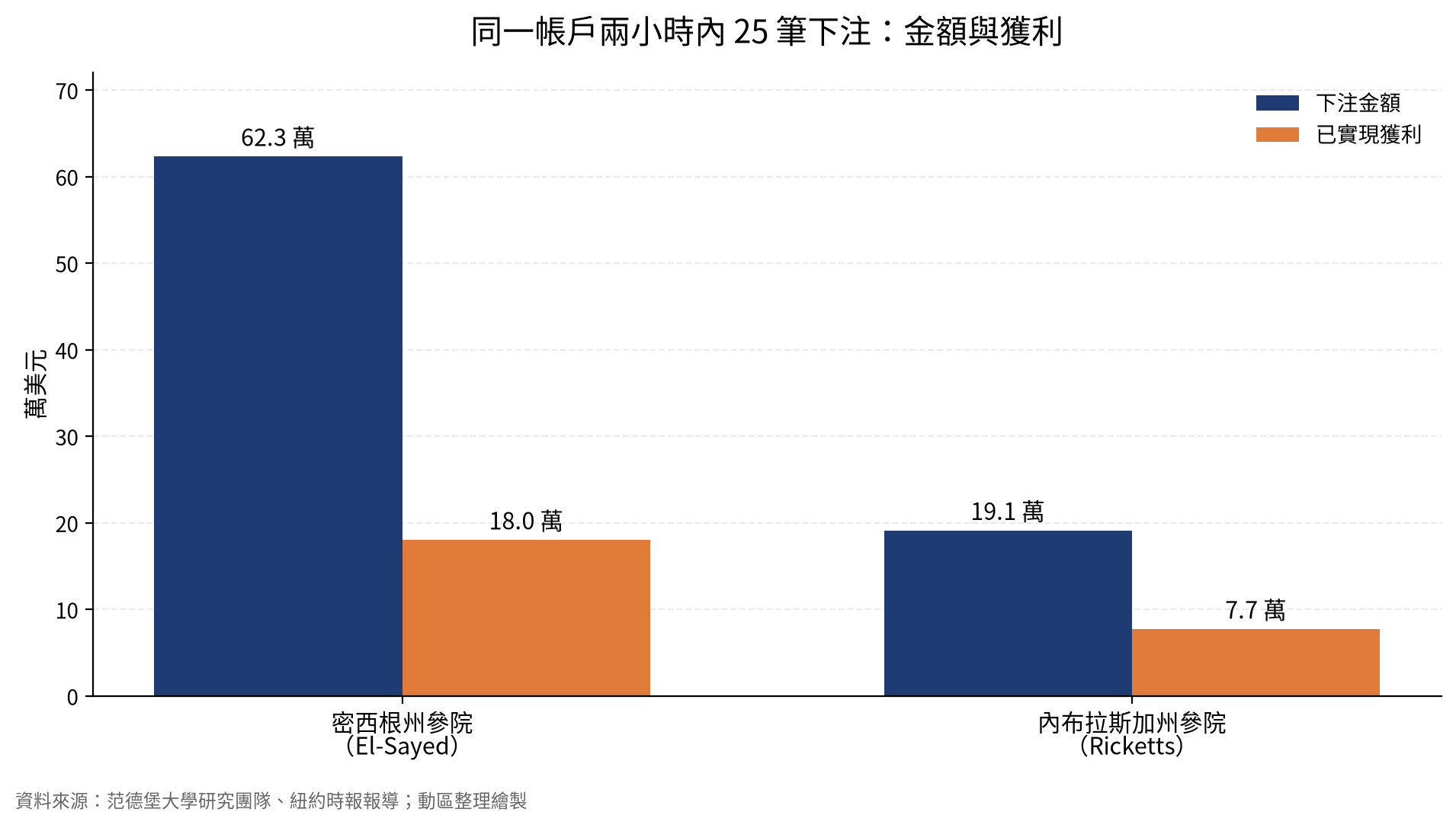
In the closely watched Nebraska Senate race, polling data released by the New York Times and Siena College on October 31 surveyed 191,277 likely voters to assess the contest between incumbent Republican Pete Ricketts and independent challenger Dan Osborn. While the scientific polling indicated a competitive lead for Ricketts—showing him ahead at 49% to 43%—prediction markets reflected a significantly more lopsided view. Polymarket bettors placed Ricketts’ odds at 67%, while other contracts valued his chances as high as 73%, with aggregated market metrics pointing to a nearly 7.9-point advantage.
A similar divergence occurred in the Michigan gubernatorial race, where extensive polling tracked the matchup between Democratic candidate Abdul El-Sayed and his Republican opponents. While traditional surveys and state polls indicated a tightly contested race within the margin of error, prediction market platforms experienced sudden influxes of capital that heavily favored specific outcomes, prompting financial analysts to question whether large-scale wagers were being driven by sentiment or by leaked internal campaign strategies.
The Mechanism of Suspicious Trading and the Role of Whales
Investigative reports published by major news outlets have revealed instances where substantial wagers were placed hours or even days before the public release of crucial polling data or campaign announcements. In late October, market watchers noted that accounts funded with millions of dollars had taken aggressive positions on Kalshi and Polymarket, successfully predicting sudden shifts in market odds just moments before official polling results were made public.
The Anti-Corruption Data Collective, in collaboration with blockchain analytics firm Nansen, has spearheaded efforts to map the trading behavior of high-volume participants on these platforms. Their analyses have uncovered transactional patterns showing that certain wallets engaged in high-frequency, high-stakes trading immediately prior to the publication of major polling datasets, strongly implying the utilization of non-public information.

Representatives from polling organizations, including Siena College and research firm ReconMR, have publicly expressed concern over the security of their data pipelines. While survey organizations employ rigorous protocols to safeguard their findings prior to official publication, the vast financial incentives present in prediction markets have dramatically increased the risk of data leakage, unauthorized dissemination, and commercial espionage.
Federal Enforcement and Legal Precedents
Concerns over insider trading in prediction markets are not merely theoretical. Earlier this year, the U.S. Department of Justice unsealed an indictment against Gannon Ken Van Dyke, a U.S. soldier accused of using classified national security information to place profitable wagers on a prediction market. According to federal prosecutors, Van Dyke utilized confidential government insights to execute trades on Polymarket, successfully generating substantial financial returns before law enforcement intervened.
This landmark case served as a wake-up call for federal regulators, demonstrating that prediction platforms can be weaponized by individuals with access to state secrets or proprietary political data. The prosecution underscored the legal vulnerabilities inherent in platforms that allow anonymous or pseudonymous wagering on sensitive geopolitical and domestic political events.
Industry Responses and Self-Regulatory Measures
In response to mounting pressure from lawmakers and financial watchdogs, prediction market operators have begun implementing stricter compliance protocols, identity verification procedures, and surveillance mechanisms. Kalshi, a federally regulated designated contract market overseen by the Commodity Futures Trading Commission (CFTC), has expanded its compliance framework to monitor suspicious trading activity while cooperating closely with federal investigators.
However, decentralized platforms such as Polymarket face unique structural challenges. Operating primarily on blockchain infrastructure without centralized intermediaries, decentralized prediction markets prioritize user privacy and censorship resistance, which inherently complicates traditional Know-Your-Customer (KYC) and Anti-Money Laundering (AML) enforcement. Industry leaders argue that decentralized protocols rely on market self-correction and transparent, public ledgers to deter bad actors, whereas critics contend that these safeguards are wholly insufficient against determined insiders.
Broader Economic and Democratic Implications
As prediction markets continue to grow in popularity and influence, their impact on the broader democratic process remains a subject of intense debate among political scientists, economists, and legal scholars. Proponents argue that prediction markets aggregate information more efficiently than traditional media, providing real-time sentiment analysis that can outperform conventional polling. Conversely, critics warn that these markets are susceptible to financial manipulation, where wealthy speculators or coordinated groups can artificially inflate odds to create a false narrative of momentum, potentially swaying undecided voters and distorting public perception.
The ongoing friction between regulatory bodies and prediction market operators signals a transformative period for the industry. Whether through federal legislation, self-regulatory frameworks, or aggressive enforcement actions by the Department of Justice, the future of political wagering will undoubtedly depend on the industry’s ability to establish robust transparency standards and eliminate illicit insider trading. Until these systemic vulnerabilities are adequately addressed, prediction markets will continue to navigate a precarious balance between financial innovation and regulatory scrutiny.