
The discovery of a Martian meteorite in the Sahara Desert has provided planetary scientists with an unprecedented window into the geological infancy of the Red Planet. Designated as Teghaza 001, this igneous rock, unearthed in Mali in 2022, has been confirmed by a team led by NASA Jet Propulsion Laboratory (JPL) planetary scientist Yang Liu to be at least 4.1 billion years old. This makes it one of only three known Martian meteorites dating back to the planet’s earliest epochs, offering a tangible link to a period when Mars was a far more dynamic and potentially habitable world.
The classification of Teghaza 001, published recently in the journal Science, challenges existing assumptions about the Martian geological record. Until now, the vast majority of the approximately 300 Martian meteorites identified on Earth—including the common shergottites, nakhlites, and chassignites—have been found to be 2.4 billion years old or younger. With the exception of the famous Allan Hills 84001 (found in Antarctica) and the complex, heterogeneous "Black Beauty" (Northwest Africa 7034), our collection of Martian samples has been heavily skewed toward the planet’s more recent volcanic history.
The Mechanism of Cosmic Transport
The extreme rarity of ancient Martian samples is not necessarily indicative of their rarity on Mars, but rather a reflection of the "filter" inherent in the process of planetary ejection. For a rock to make its way from the Martian surface to Earth, it must be launched into space by a massive impact event.
Dr. Yang Liu notes that the physical properties of the source material play a critical role in this survival. "We don’t fully understand why old Martian rocks are so rare on Earth," Liu explains. "If an impact hits into loose regolith or unconsolidated powder, the material does not survive the journey. It must be a cemented, cohesive rock to withstand the immense pressures of ejection and the vacuum of space. Therefore, the impact process itself acts as a natural filter, favoring stronger, more recent volcanic rocks over the potentially more fragile, ancient crustal materials."
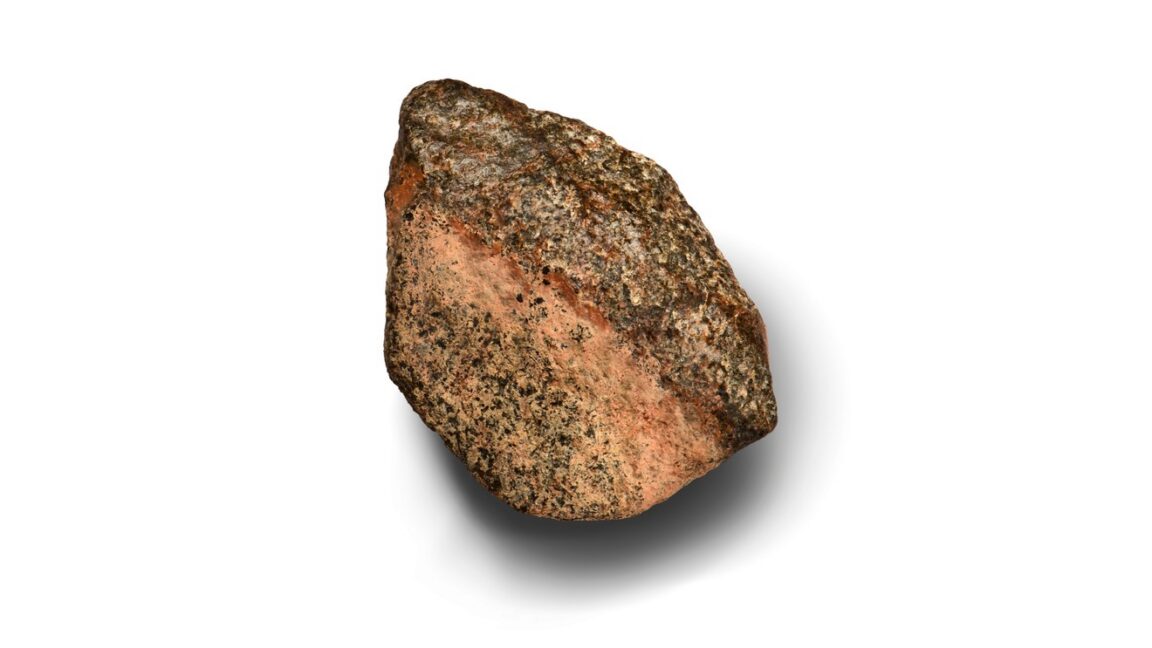
This reality has left the scientific community with a biased sample set. Most current meteorites do not reflect the bulk composition of the Martian surface, which orbital sensors suggest is significantly older and more chemically diverse than the samples sitting in museum drawers. Teghaza 001, as a single, intact igneous rock, serves as a vital correction to this bias, providing a "ground truth" that orbital spectroscopy cannot replicate.
Chronology and Mineralogical Analysis
The journey of Teghaza 001 from a remote corner of the Sahara to a high-tech laboratory in New Mexico involved a complex process of verification. After its discovery by desert meteorite hunters, the rock was processed through standard channels. Initial assessments classified it as a shergottite, but discrepancies in its mineral composition—specifically its unique oxygen isotope ratios and manganese-rich content—raised red flags for planetary scientists Carl Agee and Karen Ziegler.
When subjected to rigorous geochemical dating, the results were consistent across multiple methodologies. Zircon grains within the matrix provided an age of 4.11 billion years. This was corroborated by phosphate mineral analysis and rubidium-strontium dating. The consistency of these dates is significant, as zircons are notoriously resilient to thermal resetting; they generally only reveal their original formation age unless subjected to extreme metamorphic events or significant hydrothermal alteration.
The mineralogy of Teghaza 001 reveals a slow-cooling history. Composed primarily of feldspar and pyroxene, the rock exhibits large crystals—some reaching a millimeter in length—suggesting the magma remained insulated beneath the surface rather than erupting in a violent volcanic event. Modeling by the research team indicates a cooling rate of approximately 0.01 degrees Celsius per year, pointing to a formation environment deep within the Martian crust.
Evidence of an Early Hydrosphere
Perhaps the most profound implication of the Teghaza 001 discovery is the evidence of ancient water activity. The rock’s chemistry shows signs of interaction with a hydrothermal fluid. Specifically, the presence of sodium-rich rims on feldspar grains and trapped sodium within zircons indicates that the rock was bathed in hot water shortly after its crystallization.
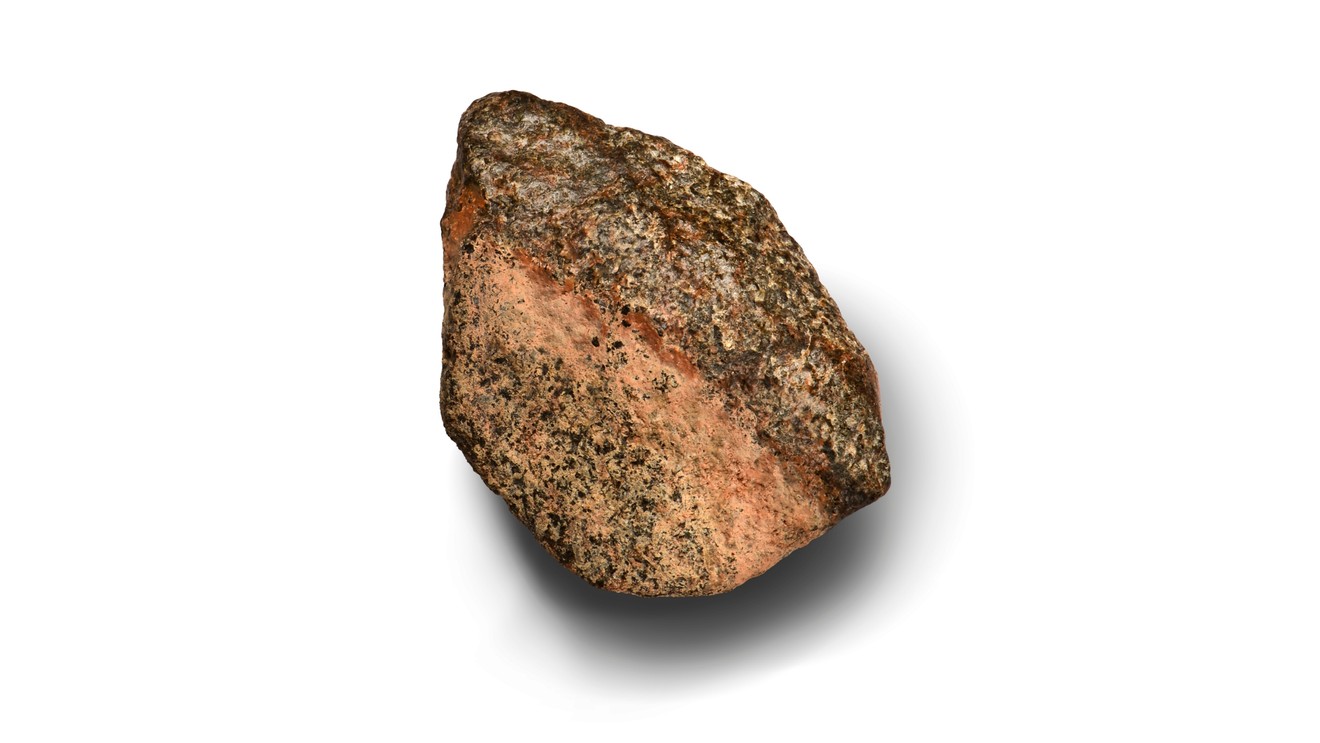
Furthermore, the sample is enriched in oxygen-18, a heavy isotope of oxygen. This enrichment is a hallmark of low-temperature interaction between rocks and liquid water at or near the surface. The research team posits that the magma that formed Teghaza 001 likely assimilated pieces of crust that had already been altered by surface water, or it directly encountered circulating fluids.
This finding adds weight to the theory of a "wet" early Mars. If water was circulating through the crust 4.1 billion years ago, it suggests that the planet possessed a robust hydrosphere during its most critical developmental phase. This environment would have been chemically active and potentially capable of supporting pre-biotic chemistry, reinforcing the importance of the southern highlands—where this rock likely originated—as a prime target for future exploration.
Implications for the Martian Mantle
Beyond the crust, Teghaza 001 provides a glimpse into the deep interior of Mars. Chemical modeling of the sample, particularly the ratio of zirconium to titanium, suggests that the magma source contained garnet. Garnet is stable in the Martian mantle only at depths exceeding 160 kilometers.
This indicates that the Martian mantle was not a homogenous reservoir but was instead highly differentiated shortly after the planet’s formation. Previous studies of other meteorites suggested that the mantle separated into three to five distinct reservoirs during the solidification of the initial magma ocean 4.5 billion years ago. Teghaza 001 does not match any of these established reservoirs, implying that the chemical evolution of the Martian interior was far more complex and multifaceted than previous models had anticipated.
The Future of Martian Science
While Teghaza 001 is a monumental find, it remains a "stray" sample. Without the geological context provided by a controlled landing mission, scientists are limited in their ability to map the rock to a specific site on the planet. Current orbital data can narrow the origin point to a patch of terrain roughly 100 by 100 meters, which often contains a mix of diverse geological units.

The scientific community, including Dr. Liu, emphasizes that while meteorites like Teghaza 001 are invaluable, they are only a stopgap until a successful Mars Sample Return mission is completed. The samples currently being collected by the Perseverance rover in the Jezero Crater represent the "gold standard" for planetary research. By pairing the broad, deep-time perspective offered by meteorites with the precise, stratigraphically controlled samples from a rover mission, researchers expect to refine the chronology of the early solar system.
The discovery of Teghaza 001 is not merely the cataloging of a new rock; it is a validation of the need to continue searching for, and analyzing, the ancient fragments of our neighboring planets. As teams continue to study the remaining shards of the 800-gram mass, further revelations regarding the thermal, chemical, and aqueous history of the Red Planet are expected. This meteorite serves as a stark reminder that even in the cold, arid deserts of Earth, the stones beneath our feet can still rewrite the history of the stars.