American Diabetes Association Faces Renewed Scrutiny as Blocked Op-Eds Reveal Allegations of Premeditated Ambush and Suppressed Scientific Dissent


The American Diabetes Association (ADA) is embroiled in an escalating controversy following its refusal to publish an editorial and seven accompanying opinion articles from its own journal’s deputy editors, who subsequently posted the critiques on a preprint server. This latest development reignites a dispute stemming from a June 5th incident where five prominent scientists were ejected from the ADA’s annual meeting in New Orleans for distributing an editorial critical of the Trump administration’s policies affecting scientific research, with new allegations pointing to a deliberate, premeditated ambush orchestrated by ADA leadership.
Background: A Climate of Concern for Scientific Integrity
The genesis of this profound disagreement lies within a broader climate of apprehension that permeated the scientific community during the Trump administration. Throughout this period, many scientists and medical professionals expressed significant concerns regarding perceived governmental attempts to undermine scientific integrity, reduce funding for critical research, and sideline expert advice in policy formulation. Agencies such as the National Institutes of Health (NIH), a vital source of funding for diabetes research, faced proposed budget cuts and shifts in strategic priorities that alarmed researchers across various disciplines. The scientific community also grappled with rhetoric that questioned established scientific consensus on critical public health and environmental issues.
This environment spurred numerous professional organizations and individual researchers to adopt more vocal public stances, often navigating the complex terrain between their non-profit, non-partisan status (specifically 501(c)(3) organizations) and their fundamental mission to advocate for public health, scientific advancement, and evidence-based policy. The initial editorial, published in Diabetes Care, a peer-reviewed journal affiliated with the ADA, in April 2026, directly addressed these anxieties. It sharply criticized the administration’s "ongoing attacks on scientific research" and highlighted the potential detrimental ramifications for fields like diabetes research, patient care, and the broader public health infrastructure. Such interventions, while not explicitly endorsing or opposing a political party, inevitably drew attention to the impact of specific governmental policies on scientific endeavors and societal well-being.
The New Orleans Incident: A Flashpoint of Dissent
The simmering tensions reached a critical juncture on June 5, 2026, during the ADA’s prestigious annual scientific meeting in New Orleans. Five highly respected scientists—Dr. Steven Kahn, a professor of medicine at the University of Washington and editor-in-chief of Diabetes Care, alongside former ADA President Dr. Desmond Schatz of the University of Florida, Dr. Aaron Kelly, a pediatrics professor at the University of Minnesota, Dr. Justin Ryder of Northwestern University, and Dr. Irl Hirsch, also from the University of Washington—began distributing reprints of the April editorial. Dr. Maureen Gannon of Vanderbilt University Medical Center was also among those identified for removal.
The scientists strategically chose to distribute the editorial outside the conference’s opening keynote speech. This particular session had already drawn attention because the original speaker, Jay Bhattacharya, who headed the National Institutes of Health under the Trump administration, had canceled at the last minute, with senior NIH official Rick Woychik stepping in to deliver the address. The scientists’ objective was to raise awareness among their peers about the editorial’s critical content and to foster discussion on issues they believed directly impacted the diabetes community.
However, their efforts were abruptly curtailed. Within minutes of commencing distribution, the situation rapidly escalated. Police officers were reportedly summoned and proceeded to escort the scientists out of the conference venue. Their conference badges were confiscated, and they were explicitly threatened with arrest should they attempt to re-enter. Louisiana State Police later confirmed to various media outlets, including The New York Times, that their intervention was carried out at the explicit request of the ADA. Subsequently, the ADA formally barred all five scientists from attending the remainder of the multi-day conference.
Chronology of ADA’s Evolving Justifications and Public Backlash
The ADA’s immediate response to the incident was marked by a series of shifting justifications, each of which was met with increasing skepticism and condemnation from the scientific community.
- Initial Stance (June 5th): A media team initially informed MedPage Today that the scientists had violated the conference’s code of conduct by distributing materials without prior approval.
- Internal Communication (June 6th): In an email circulated to ADA members, the association reiterated that the removals were due to a lack of prior approval for material distribution, explicitly stating it was "not because of the viewpoints expressed in those materials."
- 501(c)(3) Compliance (June 7th): The ADA, a 501(c)(3) nonprofit organization, then released a public statement asserting that its actions were necessary to comply with federal regulations. These regulations, the ADA claimed, mandated "maintaining a strictly nonpartisan environment at all organizational events and functions."
However, these justifications were swiftly and widely challenged. Critics, citing IRS guidelines, pointed out that federal regulations for 501(c)(3) organizations primarily restrict direct intervention in political campaigns (e.g., endorsing candidates) and do not typically prohibit leaders or members from expressing political views in a personal capacity or from speaking out on public policy issues that directly impact their organization’s mission, such as scientific funding or healthcare policy.
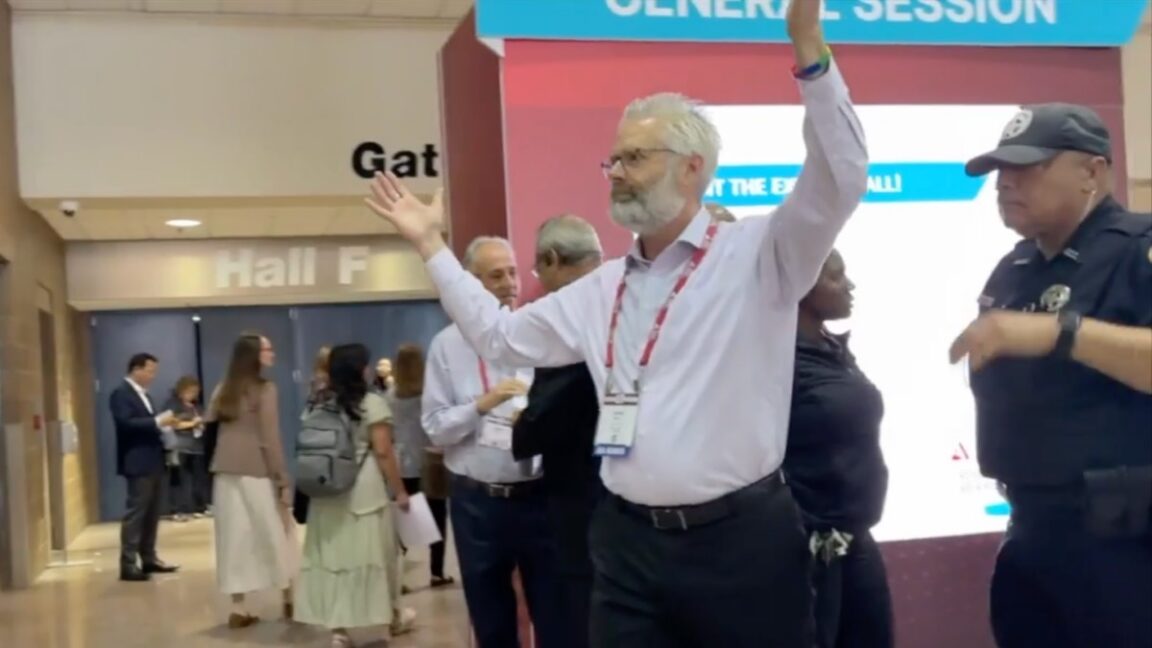
The incident sparked a firestorm of criticism across social media platforms like Twitter/X and BlueSky, where posts decrying the ADA’s actions went viral. This public outcry had an unintended consequence: it sharply increased page views for the very April editorial the ADA had sought to suppress, effectively amplifying its message.
The internal dissent within the ADA also became palpable. Several high-profile ADA leaders resigned in protest, including the ADA president-elect (though her specific reasons were not publicly disclosed at the time) and Dr. Mark Atkinson, chair of the Scientific Sessions Meeting Planning Committee. A fiery letter, signed by more than 40 ADA officials, condemned the organization’s actions as "outrageous" and dismissed its justifications as "unpersuasive" and "fatuous nonsense." This letter demanded an "immediate and unconditional public apology" and an independent review of the incident. Concurrently, an open letter titled "Shame on You" garnered over 7,500 signatures, further illustrating the profound dissatisfaction within the diabetes community.
During a scheduled symposium, Dr. John Buse, who had stepped in to chair the session after Dr. Kahn’s removal, openly criticized the ADA’s actions to the attendees. His remarks were met with "deafening" applause, as he later recounted, signaling widespread support for the ousted scientists and their stance on scientific advocacy.
ADA CEO’s Apology and Promise of Independent Review
Under immense pressure and facing a growing public relations crisis, ADA CEO Charles Henderson released a video statement on June 10th, offering an apology for the organization’s decision. "What transpired is not reflective of who I am, the values I hold, or the way I was raised," Henderson stated, acknowledging the gravity of the situation. He pledged to "work hard to bring our community back together to build on the progress we have collectively made for those affected by diabetes." Crucially, Henderson also committed the ADA to commissioning a "thorough independent review of the events that occurred as well as the policies, procedures, and decision-making process that guided our actions." While this apology was a significant step, many within the scientific community remained cautious, awaiting tangible actions and accountability.
The Unfolding Controversy: Blocked Publications and Grave Allegations
Despite CEO Henderson’s apology and promises of review, the dispute remained unresolved. In July 2026, the situation escalated further when Dr. Elizabeth Selvin and Dr. Cheryl A.M. Anderson, deputy editors of Diabetes Care, along with Dr. Kahn and the other scientists, revealed that the ADA had refused to publish an editorial and seven accompanying opinion articles submitted for the journal. In a decisive move to ensure these critical perspectives reached the public, the authors collectively posted these articles to Zenodo, an open-access preprint server, conveniently compiled into a single PDF file.
The preprint compilation introduced several deeply troubling new details and accusations, suggesting a significant gap between the ADA’s public apology and its internal actions. The deputy editors explicitly stated in their introductory remarks, "The ADA’s response was to refuse to publish these articles. We are speaking out because it is unusual and unacceptable for a medical society to work at cross purposes with its members and its editors." They highlighted a pattern of behavior, noting, "The ADA has already tried to restrict editorial freedom once before related to our raising awareness of what is happening in Washington, DC, and, in particular, with the dismantling of the National Institutes of Health." They emphasized that publishing these articles was essential for healing and unity within the community.
The Claim of a "Premeditated Ambush"
Perhaps the most severe accusation contained within the preprint came from Dr. John Buse, who, in his contribution, asserted his belief that "the ADA actions were a premeditated attack on Steven Kahn and other attendees" that constituted "an existential threat to the ADA." This grave allegation was supported by several specific pieces of evidence detailed in the preprint:
- Prior Knowledge: The New Orleans Five claimed that ADA leadership was fully aware, in advance, that individuals planned to distribute the editorial at the conference.
- Unheeded Warning: Dr. Desmond Schatz reportedly texted Chief Scientific and Medical Officer Rita Kalyani prior to the meeting, advising her to contact Dr. Kahn to clarify appropriate distribution areas, explicitly stating that the activity "should not in any way be disruptive." Kalyani’s alleged response was that she was on a plane and would address it upon landing, but she never followed up.
- "One More Badge": As Kahn, Kelly, Ryder, and Schatz were being removed, a police officer reportedly asked the head of conference security if "that was sufficient." The security officer then explicitly directed them to remove Dr. Maureen Gannon, stating he needed "one more badge," suggesting a predetermined quota for removals.
- "The Client’s" Orders: When Gannon requested to speak to ADA leadership to clarify any misunderstanding, the head of security allegedly stated that these were the instructions from "the client"—referring to the ADA.
Dr. Buse concluded, "It was an ambush. ADA leadership knew exactly what was going to happen and when. They could have contacted Steven and tried to come to some accommodation. Instead they set in place armed law enforcement officers to disrupt the activity, apparently with a quota for the number of people to be hustled out of the meeting. The ADA actions are not dissimilar in nature to the efforts of our federal government to quell protests—force against people exercising constitutional rights as an act of both retribution and a display of power. We are lucky this event did not have even greater consequences."
Unresolved Demands and Earlier Tensions

The authors of the preprint laid out clear demands, including the promised "thorough investigation," the establishment of a formal process to address professional membership concerns, and enhanced visibility in the ADA’s patient advocacy and research funding efforts. Crucially, they insisted that the ADA must uphold the independence of its journal editors and their publication decisions, specifically demanding that "Any disclaimers need to be removed from the published editorials."
The preprint also illuminated earlier instances of friction. Deputy editors Selvin and Anderson recounted a 2025 session they organized titled, "How Do We Fix a Broken Health Care System?", featuring Washington state congresswoman Kim Schrier, a pediatrician living with Type 1 diabetes. ADA leadership reportedly objected to the session’s perceived "unbalanced" nature, requesting the inclusion of "a congressperson from across the aisle" and other speakers offering "opposing views." When this proved impractical, the ADA approved the session but conspicuously chose not to advertise it. Selvin and Anderson maintained the session was non-partisan, with Congresswoman Schrier’s comments focusing on bipartisan efforts to reduce drug costs, her personal experience with diabetes, and warnings about potential NIH funding cuts. They further disclosed that, in the wake of the June 5th ousters, ADA leadership canceled the scheduled annual in-person meetings with the Diabetes Care editorial board and associate editors, eliminating "the only opportunity we have all year to connect face-to-face with the full editorial team."
The profound irony of the situation was not lost on Selvin and Anderson, who observed, "Now, with a public relations crisis firm in tow, the ADA has emailed advocacy messages opposing federal policies and is taking strong stances on proposed changes that would be harmful to diabetes patients and research. These are the very things we have been writing about in the journal. The irony is not lost on us."
Internal Resignations and Broken Trust
The internal schism within the ADA was further underscored by Dr. Mark Atkinson’s detailed account of his resignation as chair of the Scientific Sessions Meeting Planning Committee. Atkinson, whose name appeared as a signatory on the initial June 6th ADA letter defending the organization’s actions, stated unequivocally that he never agreed to the final text. He had been involved in face-to-face discussions where he strongly advocated for an apology, not merely a defense of the ADA’s decisions. After leaving the meeting early, he expected to review any final version before its release. Instead, "a substantially different letter was released, bearing my name and that of the ADA’s chief executive officer," he wrote. He felt that remaining in his position "would imply confidence in a process that I no longer had confidence in," making his resignation "among the most difficult professional decisions I have ever made." He concluded, "I do not regret resigning. I regret the circumstances that made my resignation necessary."
Implications and Broader Impact on Scientific Advocacy
This ongoing saga poses fundamental questions regarding academic freedom, scientific integrity, and the ethical governance of professional medical societies. For the ADA, a preeminent organization in diabetes research and patient advocacy, the controversy represents a significant challenge to its reputation, credibility, and internal cohesion.
- Balancing Advocacy and Non-Partisanship: The core of the dispute revolves around the delicate balance between a scientific organization’s need to maintain its non-partisan 501(c)(3) status and its inherent responsibility to advocate for science and public health, which often necessitates critiquing governmental policies. The incident suggests that the ADA’s interpretation of "non-partisan" was overly restrictive, potentially stifling legitimate scientific discourse on policy matters.
- Chilling Effect on Scientific Discourse: The ousting of prominent scientists and the subsequent blocking of editorial content could create a chilling effect within the ADA and other similar organizations. If researchers fear reprisal for expressing expert opinions on policy, it undermines the principles of academic freedom and open scientific debate, potentially hindering the organization’s ability to fulfill its mission.
- Erosion of Trust and Governance Concerns: The allegations of a premeditated ambush, coupled with the perceived lack of meaningful accountability following the CEO’s apology, could severely erode trust among ADA members, volunteer leaders, researchers, and the broader public. The calls for a "reworking of governance and engagement to align strategy with mission" suggest deep-seated dissatisfaction with the current leadership’s decision-making processes, transparency, and responsiveness to its members.
- The Rise of Preprint Servers: The utilization of Zenodo to publish the blocked articles highlights the growing importance of preprint servers as alternative, open-access channels for disseminating research and academic commentary when traditional publication avenues are obstructed. This incident may encourage other academic communities to explore such platforms for expressing dissent or sharing critical analyses that might otherwise face institutional resistance.
- Long-term Organizational Health: A prolonged public dispute and accusations of suppressing scientific voices could negatively impact the ADA’s ability to attract top scientific talent, secure vital research funding, and maintain its influence in public health policy and advocacy. Donors, partners, and prospective members may become wary of associating with an organization perceived to be at odds with its own scientific community.
A Call for Reconciliation and Enduring Reform
Despite the clear indignation and gravity of the accusations, Dr. Buse’s contribution to the preprint concluded on a note of cautious optimism. He expressed hope that ADA leadership would eventually apologize for their actions and that "people will be held to account." He called for the implementation of processes to "ensure our rights as members of the ADA will be restored" and for the organization to unequivocally "stand up for science." Buse posited that the opportunity for profound reform would emerge from "an awakening of the spirit of the science and medicine community who founded this organization 85 years ago and the struggle that will emerge."
The American Diabetes Association now faces a critical juncture. The path toward restoring trust and credibility will undoubtedly require a comprehensive, transparent, and truly independent investigation into the events of June 5th. This must be accompanied by genuine accountability for those involved in the decision-making process and a clear, unambiguous reaffirmation of the organization’s commitment to academic freedom, robust scientific discourse, and the unhindered advocacy for patient welfare and research. Only through