How Astronauts Celebrate Halloween Aboard the International Space Station Over Two Decades of Orbital Exploration

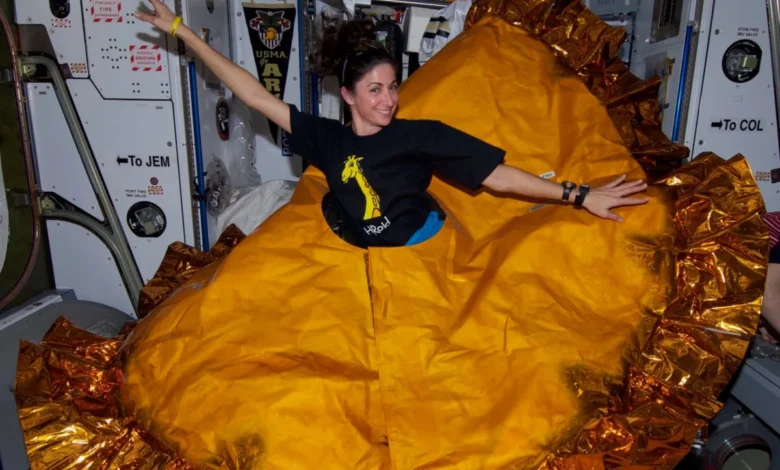
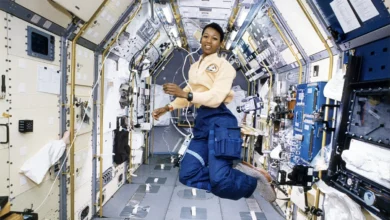
While millions of children and adults across planet Earth don elaborate costumes, carve pumpkins, and wander neighborhood streets in search of confectionery treats every October 31, the inhabitants of the International Space Station face a distinctly different environment for their festivities. Orbiting approximately 250 miles above the terrestrial surface at speeds reaching 17,500 miles per hour, the floating laboratory lacks the traditional atmospheric elements, autumn chill, and terrestrial geography associated with Halloween. Nevertheless, the multidisciplinary crews assigned to the orbiting outpost have consistently demonstrated a profound commitment to maintaining cultural traditions, boosting crew morale, and celebrating seasonal holidays while working in the harsh, high-stakes domain of microgravity.
The celebration of Halloween on the International Space Station is not merely a trivial pursuit of amusement; rather, it serves an essential psychological function for astronauts and cosmonauts enduring prolonged periods of isolation, intense physical workloads, and separation from family and friends. NASA, along with its international partner agencies—including the European Space Agency, the Japan Aerospace Exploration Agency, the Canadian Space Agency, and Roscosmos—recognizes that preserving psychological well-being is just as critical to mission success as maintaining life-support hardware or conducting complex biomedical and physical science experiments. Consequently, flight planners and ground support teams frequently facilitate the inclusion of small, lightweight festive items in cargo resupply missions, allowing crews to transform the sterile, high-tech interior of the space station into an unconventional haunted laboratory for a single evening.
The Evolution of Microgravity Costume Design
Crafting a costume in the absence of gravity presents unique engineering and creative challenges. Traditional terrestrial garments often rely on weight, structure, and downward gravitational pull to achieve their intended aesthetic effect. In free fall, fabrics float away from the body, hair stands permanently on end, and capes behave less like mysterious shrouds and more like wayward banners. To overcome these physical limitations, space station residents have historically relied on ingenuity, resourcefulness, and repurposed materials already available onboard the vehicle.
Over the years, astronauts have fabricated imaginative costumes utilizing standard-issue clothing, utility tape, Velcro strips, packaging materials, and even items intended for scientific payloads or personal hygiene. For instance, makeshift masks, antennas fashioned from zip ties, and hastily assembled headgear have allowed crew members to transform themselves into science fiction creatures, classic monsters, or lighthearted iterations of traditional ghouls and goblins. When standard materials fall short, the crew utilizes computer tablets to display digital faces or utilizes the station’s onboard color printers to generate placards and insignia that complete their thematic transformations.
Beyond individual costuming, crew members frequently participate in collaborative group themes. Past expeditions have coordinated cohesive concepts, ranging from interstellar pirates to alien lifeforms, capturing photographs and recording video messages to beam back to mission control centers in Houston, Huntsville, Köln, Tsukuba, and Moscow. These visual records are subsequently shared with the global public via NASA’s official media channels and social networking platforms, bridging the vast distance between orbital researchers and the citizens they represent on Earth.
A Quarter-Century of Continuous Human Presence
The tradition of celebrating Halloween in orbit must be viewed within the broader historical context of the International Space Station program itself. November 2020 marked the milestone of 20 continuous years of uninterrupted human habitation aboard the station, and the platform has since surpassed a quarter-century of cumulative operations. Since the arrival of the Expedition 1 crew—comprising NASA astronaut William Shepherd and Russian cosmonauts Sergei Krikalev and Yuri Gidzenko—on November 2, 2000, more than 270 individuals representing over 20 countries have lived and worked aboard the complex.
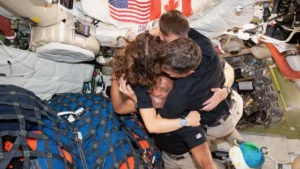
Throughout this extensive timeline, Halloween has fallen during numerous distinct expedition increments, providing a recurring cultural touchstone for crews whose mission durations typically span six months. Early expeditions, which operated with smaller crew sizes of two to three individuals, kept their celebrations relatively modest, often restricted to a brief pause in their packed timelines for a themed meal or a quick photo session. However, as the station’s laboratory capabilities expanded and the permanent crew capacity grew to six and later seven members, holiday celebrations evolved into more organized, communal events.
Chronology of Orbital Holidays
Examining the historical chronology of the space station reveals how holiday observances have adapted to changing geopolitical landscapes, technological advancements, and shifting operational rhythms. In the early 2000s, communication links between the space station and ground controllers relied heavily on audio channels and lower-bandwidth data transmissions, meaning that photos of orbital Halloween celebrations were frequently released days or weeks after the event occurred.
By the 2010s, the integration of high-definition video downlink capabilities, robust IP networking, and direct-to-consumer social media accounts fundamentally transformed how astronauts shared their experiences. Crew members could suddenly post real-time updates on October 31, allowing classrooms, science enthusiasts, and families on Earth to witness microgravity costuming almost instantaneously.
During the COVID-19 pandemic years of 2020 and 2021, when populations on Earth experienced unprecedented isolation and altered holiday routines, the International Space Station crews provided a unique sense of continuity and shared human experience. Their published messages and lighthearted costume displays reminded terrestrial audiences of the resilience of the human spirit, demonstrating that even hundreds of miles above the planet, camaraderie and tradition remain indispensable.
Psychological and Sociological Implications of Spaceflight Culture

Behavioral health and performance specialists within NASA’s Human Research Program have extensively studied the importance of cultural celebrations, holidays, and recreational activities during long-duration spaceflight. As humanity prepares to embark on deeper exploration missions—such as crewed Artemis returns to the lunar surface and eventual transit missions to Mars—the psychological dynamics of isolated, confined, and extreme environments will become increasingly pronounced.
Dr. Lauren Leveton, a behavioral health expert affiliated with NASA, notes that structured breaks, celebrations of terrestrial holidays, and shared recreational rituals serve as essential countermeasures against "third-quarter effect," a well-documented psychological phenomenon where crew motivation and morale dip significantly past the midpoint of a long-duration mission.
"When you are living and working in a high-consequence environment where every movement is monitored and safety protocols are paramount, the psychological relief provided by creative outlets like holiday celebrations is invaluable," explains a senior aerospace human factors researcher who requested anonymity due to ongoing program evaluations. "It allows astronauts to step outside their demanding operational roles, reconnect with their cultural identities on Earth, and strengthen interpersonal bonds with crewmates who may come from vastly different national and linguistic backgrounds."
Indeed, the International Space Station has consistently operated as a unique crucible of international cooperation. On any given Halloween, a crew might consist of individuals from the United States, Russia, Japan, and various European nations. Despite geopolitical tensions on Earth, the shared experience of donning a whimsical costume or sharing a festive meal in microgravity reinforces a unifying global perspective—often described by astronauts as the "overview effect"—wherein national boundaries fade when viewed from the vantage point of low-Earth orbit.
Logistical Realities of Cargo and Crew Provisions
While the celebration of Halloween is fundamentally rooted in spontaneity and fun, its execution requires careful logistical planning by ground operations teams. Cargo resupply vehicles—such as SpaceX’s Dragon, Northrop Grumman’s Cygnus, and Roscosmos’s Progress spacecraft—deliver thousands of pounds of scientific hardware, maintenance spares, propellants, and crew provisions to the station each year.
Tucked away among the essential supplies, food system specialists at the Johnson Space Center often include special-edition menu items, seasonal treats, or small, crew-requested care packages. While fresh pumpkins or carved Jack-o’-lanterns are prohibited due to weight constraints, potential biological hazards, and the risk of attracting microbial growth in a closed ecological system, astronauts have occasionally engineered faux pumpkins using orange-colored food packaging, fabric scraps, or digital graphics displayed on station computer screens.
Furthermore, the station’s rigid daily schedule must be carefully managed to accommodate holiday events. Crew members typically maintain a 50-hour work week dedicated to scientific research, station maintenance, and physical exercise routines necessary to mitigate bone density loss and muscle atrophy in microgravity. Allocating time for festivities requires advance coordination with flight directors in Mission Control Houston and TsUP in Moscow, ensuring that critical experiments are not disrupted and that orbital safety is never compromised.
Broader Impacts on Science Communication and Public Engagement
Beyond its immediate psychological benefits for the crew, the observance of cultural milestones like Halloween serves a powerful public outreach function. Space agencies have increasingly recognized that public engagement is vital for maintaining political and financial support for large-scale scientific endeavors.
By participating in universally recognized cultural events, astronauts demystify spaceflight and make their demanding professions relatable to broad audiences, particularly school-aged children. When students see an astronaut floating upside down in a superhero costume or interacting with a zero-g prop, it sparks curiosity about science, technology, engineering, and mathematics (STEM) fields. NASA’s educational branch frequently leverages these seasonal media hooks to release classroom guides, interactive webinars, and curriculum resources that connect the physics of microgravity with cultural traditions.
As the International Space Station approaches the latter half of its operational lifecycle—with transition plans currently targeting deorbit operations in the early 2030s—the legacy of its onboard cultural traditions will undoubtedly inform the design and operational protocols of future commercial space stations and deep-space habitats. Private entities developing next-generation commercial destinations in low-Earth orbit are already incorporating crew welfare, recreational spaces, and cultural celebrations into their habitat designs, recognizing that human beings require more than just oxygen and water to thrive away from Earth.
Conclusion
The celebration of Halloween aboard the International Space Station encapsulates the intersection of rigorous scientific exploration and enduring human culture. Across more than two decades of continuous orbital habitation, crews have consistently found innovative ways to transcend the mechanical constraints of their environment, utilizing creativity and camaraderie to bring a touch of terrestrial tradition into the cosmos. As humanity continues to push the boundaries of exploration toward the Moon, Mars, and beyond, the lessons learned from these orbital festivities will remain a testament to the fundamental human need for community, joy, and shared celebration, no matter how far from home we may travel.