Google Admits AI Search Generates Less Revenue, Plans to Fix the Shortfall with Increased Advertising

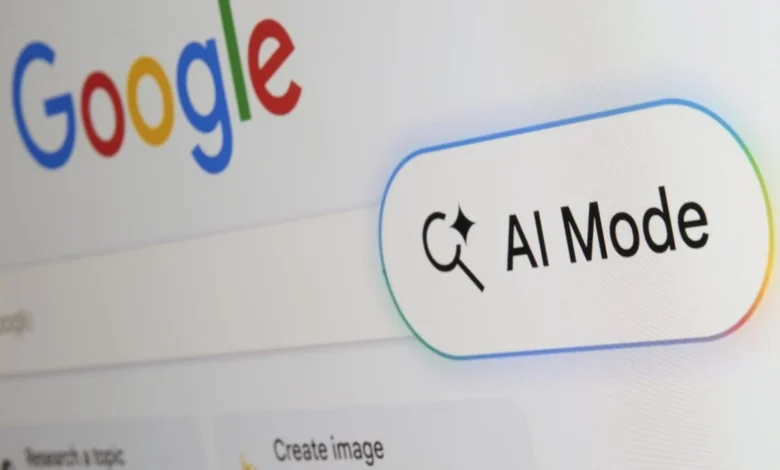
The intersection of artificial intelligence and digital monetization has officially reached a critical juncture for Silicon Valley, as Alphabet Inc.’s Google grapples with the financial realities of its generative AI search features. During a recent quarterly earnings call, company executives addressed market anxieties following a notable dip in stock value. The core of the issue lies in a structural shift within how users interact with the world’s dominant search engine: Google’s AI-driven search experience, often referred to as AI Mode, is cannibalizing the traditional pay-per-click advertising model that has fueled the tech giant’s astronomical growth for over two decades.
Rather than retreating from the costly and resource-intensive deployment of generative artificial intelligence, Google leadership has doubled down on its strategy. The proposed solution to the revenue contraction caused by AI-induced "zero-click searches" is paradoxically straightforward: flood the new interface with even more advertisements. This disclosure has sparked intense debate among financial analysts, digital marketers, and publishers regarding the long-term sustainability of the ad-supported web and the evolving user experience on the internet’s most visited platform.
The Anatomy of the Zero-Click Crisis: How AI Summaries Disrupt Traditional Search
For years, the economic engine of Google Search relied on a simple value exchange. A user enters a query, Google presents a list of organic links alongside paid sponsored results, and the user clicks through to a third-party website where they encounter ads, buy products, or consume content. This ecosystem generated tens of billions of dollars quarterly, forming the bedrock of Alphabet’s corporate valuation.
However, the introduction of AI-generated summaries fundamentally alters this journey. When a user submits a complex query, AI Mode compiles a comprehensive, synthesized answer directly at the top of the search engine results page (SERP). Consequently, the user obtains the required information immediately without needing to visit the underlying publisher websites or scroll past traditional sponsored links. This phenomenon—widely documented by digital economists and SEO experts—is known as the "zero-click search."
Market analysts note that zero-click searches bypass the traditional monetization funnel. Because the user’s information need is satisfied entirely on the Google results page, ad impressions on downstream publisher sites plummet, and the frequency of clicks on traditional text-based search ads decreases. This operational shift was reflected in recent market reactions, where investors expressed apprehension that the high compute costs of running large language models (LLMs) combined with lower ad yields would compress profit margins.
The Chronology of Google’s AI Integration and Monetization Efforts
To understand how Google arrived at this juncture, it is necessary to examine the rapid chronology of its generative AI rollout:
- May 2023 (Google I/O): Google officially announces Search Generative Experience (SGE), later branded and integrated into broader AI experiences, signaling a transition from classic blue links to conversational, AI-synthesized answers.
- Late 2023 to 2024: The company scales generative AI summaries to hundreds of millions of users globally, facing early criticisms regarding answer accuracy, publisher traffic losses, and server infrastructure costs.
- Mid 2024 to 2025: Advertisers and digital publishers begin reporting noticeable declines in organic referral traffic. Financial markets begin scrutinizing the margin dilution caused by expensive AI queries compared to traditional, low-cost keyword indexing.
- Late 2025 to 2026: Alphabet’s financial disclosures acknowledge that AI-driven queries monetize at a lower rate than traditional search queries, prompting management to outline an aggressive roadmap for introducing native ad formats into conversational search.
Google’s Strategic Pivot: More Ads in AI Mode
According to financial filings and technical analyses highlighted by industry publications such as Ars Technica, Google’s leadership is executing a calculated remediation plan. While the company currently integrates limited contextual ads alongside AI-generated responses, the forthcoming strategy is significantly more aggressive.
Google plans to dynamically swap and insert sponsored links throughout a user’s continuous interactive session with the AI chatbot. As a user asks follow-up questions or refines their search parameters within AI Mode, the underlying system will serve targeted advertisements tailored to the conversational context. Furthermore, Google is scaling this capability internationally, preparing to roll out AI-driven advertising formats across multiple global markets where generative search has recently launched.
Despite these aggressive expansion plans, Google has explicitly cautioned investors that the financial recovery will not be instantaneous. The company outlined two primary headwinds facing the monetization of AI search:
- Lower Initial Ad Inventory: At present, fewer advertisers have configured campaigns specifically optimized for conversational AI interfaces compared to traditional keyword-targeted search ads. Building out this marketplace requires educating brands on the unique value proposition of conversational placements.
- Adoption Curves: Advertisers typically require a transitional period to measure return on investment (ROI) within emerging platforms, meaning that high-volume bidding and optimal price discovery for AI Mode ads will take quarters—if not years—to mature.
The Broader Implications for Publishers, Advertisers, and Users
The shift toward AI-dominated search and the subsequent increase in ad density carry profound implications for the broader digital ecosystem.
For digital publishers and content creators, the trend threatens an already fragile revenue model. News organizations, niche blogs, and educational platforms that rely on organic search traffic to sustain their operations have witnessed sharp declines in referral visits. If Google summarizes content directly within the search interface and monetizes that interaction through its own proprietary ads, independent publishers are left with diminished audiences and fewer avenues to monetize their intellectual property.
For advertisers, the evolution represents both a challenge and an opportunity. While traditional search engine optimization (SEO) strategies are losing efficacy, brands must now learn how to position themselves within AI-driven recommendations and conversational chatbots. This requires new tools, different bidding strategies, and a deeper understanding of how large language models weigh contextual relevance versus traditional keyword matching.
For everyday users, the user experience of searching the web is undergoing its most radical transformation in decades. What began as a clean, text-based index designed to point users toward external resources is morphing into a walled garden ecosystem. In this new paradigm, users receive synthesized answers generated by algorithms, accompanied by an increasing volume of native advertisements embedded directly within the conversational flow.
Conclusion: Navigating the High-Stakes Future of Search
Google’s recent disclosures underscore the difficult economic balancing act facing major technology firms as they transition from legacy web architectures to artificial intelligence. While generative AI offers undeniable utility in terms of speed and synthesis, its heavy computational overhead and disruptive impact on traditional ad funnels present severe fiscal challenges.
By committing to a strategy of increased ad integration within AI Mode, Google is signaling that it will not sacrifice monetization in the pursuit of technological innovation. However, as the company works to close the revenue gap through expanded international ad rollouts and dynamic session-based sponsored content, the broader digital landscape must adapt to a reality where answers are automated, traffic is retained, and advertisements are more pervasive than ever before.
Related posts: