Revolutionizing Heart Health: Large-Scale International Study Reveals Silent Atherosclerosis Is Pervasive Among Apparently Healthy Adults

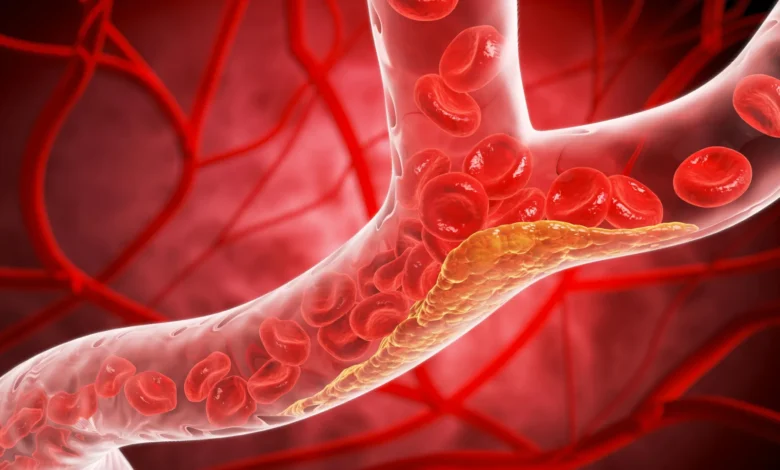
Atherosclerosis, the insidious, gradual accumulation of fatty plaque within the arterial walls, serves as the silent engine driving the vast majority of global cardiovascular disease. For decades, the medical community has operated under the assumption that this condition is a late-stage manifestation of aging or poor lifestyle choices, typically surfacing only after it produces acute, life-threatening symptoms such as myocardial infarction or stroke. However, groundbreaking results from the first phase of the REACT study, presented at the ESC Congress 2026 and simultaneously published in The New England Journal of Medicine, have shattered these long-held clinical assumptions. The study reveals that subclinical atherosclerosis is not only present in a significant portion of young, seemingly healthy adults but is also far more widespread across the adult population than previously estimated.
The Scope of the REACT Initiative
The REACT (Researching Early Atherosclerosis in the General Population) study represents a massive, international undertaking designed to map the development of silent cardiovascular disease across the entirety of adult life. Funded by a EUR 23 million grant from the Novo Nordisk Foundation, the project is a collaborative effort between Rigshospitalet in Copenhagen, Denmark, and the Centro Nacional de Investigaciones Cardiovasculares Carlos III (CNIC) in Spain.
Led by Professor Henning Bundgaard of Rigshospitalet and Dr. Borja Ibáñez, Scientific Director at CNIC, the project aims to fundamentally shift the paradigm of cardiovascular medicine. Rather than relying on traditional risk factor calculators—which estimate the probability of disease based on variables like blood pressure, lipid profiles, and smoking history—the researchers advocate for a precision medicine approach rooted in direct imaging. By identifying the physical presence of arterial plaque long before it causes a clinical event, clinicians hope to initiate preventive therapies at a stage where the disease process may be reversible or, at the very least, significantly slowed.
Methodology and Data Collection
Phase 1 of the REACT study, titled REACT-DETECT, enrolled 16,808 participants ranging from 18 to 70 years of age across Denmark and Spain. To ensure a comprehensive diagnostic baseline, the researchers employed advanced imaging techniques to screen three distinct vascular territories: the carotid arteries in the neck, the femoral arteries in the legs, and the coronary arteries in the heart.
The study’s database is among the most extensive ever assembled in the field of cardiovascular health. Beyond imaging, researchers integrated cardiovascular risk factors, comprehensive blood biomarker analysis, omics data, and detailed retinal imaging. This multi-layered approach allowed the team to construct a longitudinal "atlas" of how atherosclerosis manifests differently across age groups and biological sexes.
Key Findings: A New Timeline for Disease Development
The data harvested from the 16,808 participants revealed startling trends regarding the onset of the disease. Among the youngest cohort, individuals aged 18 to 29, approximately 1 in 13 participants already exhibited signs of arterial plaque in at least one vascular territory. This finding effectively moves the timeline for potential cardiovascular intervention back to the earliest years of adulthood.
As expected, the prevalence of the disease climbed steadily with age. However, the trajectory of this rise is remarkably steep: by the time participants reached the 60 to 70 age bracket, the study found that roughly 9 out of 10 individuals were living with some degree of silent atherosclerosis.
Furthermore, the study highlighted a significant correlation between vascular sites. The researchers observed that the majority of participants who presented with plaque in their coronary arteries also showed evidence of plaque in the carotid or femoral arteries. This is a critical finding for future clinical practice, as it suggests that peripheral artery imaging—which is faster, non-invasive, and significantly cheaper than a coronary CT scan—could serve as a highly effective surrogate marker for overall heart health.
Gender-Specific Patterns of Progression
One of the most consequential aspects of the study is its analysis of gender-based differences in disease development. The data indicates that men tend to exhibit an earlier onset of atherosclerosis, with their pattern of disease progression running approximately five to ten years ahead of women.
Conversely, the data for women revealed a sharp, accelerated increase in plaque prevalence between the ages of 40 and 60. This timeframe, which closely mirrors the menopausal transition, suggests that hormonal changes and other biological shifts during this period of a woman’s life play a pivotal role in the progression of vascular disease. These findings emphasize that a "one-size-fits-all" approach to cardiovascular prevention is likely inadequate and that screening protocols should be tailored to account for sex-specific biological milestones.
Limitations of Traditional Risk Assessment
Perhaps the most sobering insight from the REACT study is the failure of current cardiovascular risk assessment models. Standard tools, such as the SCORE2 system, were found to identify only a small fraction of the individuals who actually harbored silent atherosclerosis. This indicates a profound disconnect: a patient may be categorized as "low risk" by traditional metrics while their arteries are simultaneously undergoing silent, structural damage.
Dr. Borja Ibáñez noted that this realization necessitates a transition toward a new model of prevention. "For decades, we have estimated cardiovascular risk using factors such as age, blood pressure, and cholesterol," he stated. "This study shows that we can now go one step further and detect the disease directly before it causes a heart attack or stroke."
The Future of Preventive Medicine: Phase 2 and Beyond
The researchers are not stopping at mere detection. The project is structured as an eight-year, two-phase initiative. With the foundational data from Phase 1 now established, the team is preparing for Phase 2 (REACT-PROTECT), slated to run from 2027 through 2032, pending final funding approvals.
Phase 2 is designed as a large-scale randomized clinical trial. The primary objective is to test whether a prevention strategy guided by direct imaging—potentially utilizing portable, high-resolution ultrasound devices—can actually reduce the systemic progression of the disease and lower the incidence of cardiovascular events compared to current standard-of-care practices.
The vision is to normalize the use of portable ultrasound devices by primary care providers, turning them into standard diagnostic tools for routine physicals. By moving from a model of "risk estimation" to one of "disease detection," the healthcare system could theoretically catch the disease at a stage where lifestyle modification and early pharmacological intervention are most effective.
Global Implications and Validation
Recognizing that cardiovascular health is influenced by a complex interplay of genetics, environment, and lifestyle, the REACT team is actively expanding its footprint beyond Europe. Collaborations have been established with research institutions in India, Singapore, Tanzania, and Mexico to validate the study’s findings in diverse populations.
This effort builds upon the foundational work of the PESA-CNIC-Santander study, which previously established the link between lifestyle patterns and mid-life atherosclerosis. By extending this research into younger demographics, the REACT initiative is attempting to determine the "point of no return" for arterial health. Dr. Valentin Fuster, who has been instrumental in both the PESA and REACT projects, expressed optimism regarding the potential for clinical outcomes. "For years, we have proposed that early intervention in atherosclerosis could not only prevent its progression but might even make it possible to cure the disease," he stated.
Analysis: A Shift in Clinical Priorities
The implications of the REACT study are profound. If the medical community adopts the imaging-first paradigm suggested by Professor Bundgaard and Dr. Ibáñez, it would represent the most significant shift in cardiology since the advent of statins.
Critics of widespread screening often point to the risk of over-medicalization and the anxiety associated with finding asymptomatic disease. However, the proponents of this new model argue that the cost of inaction—measured in nearly 20 million deaths annually—is far greater. By utilizing non-invasive ultrasound, the barriers to entry for screening are lowered, making it a viable option for population-wide health initiatives.
The study also provides a clear call to action for public health policymakers. If a significant percentage of young adults are already exhibiting signs of vascular damage, it suggests that the "preventive" window for cardiovascular disease must be moved much earlier, targeting adolescence and young adulthood through diet, exercise, and education, rather than waiting for the appearance of traditional risk factors in middle age.
As the REACT study moves into its next phase, the global medical community will be watching closely. The move toward a precision medicine approach, validated by empirical imaging data, could turn the tide against the world’s leading cause of death, transforming cardiovascular disease from an inevitable reality of aging into a manageable, and perhaps even preventable, condition. The data is clear: the disease is already there, waiting in the shadows. The challenge now is to ensure that the healthcare system is ready to see it, and to treat it, before it becomes a crisis.