Honoring the #RealLifeHeroes: World Humanitarian Day Shines a Light on Frontline Aid Workers Amid Global Crises and the COVID-19 Pandemic

As the world continues to grapple with the profound socio-economic and public health disruptions caused by the COVID-19 pandemic, the international community observes World Humanitarian Day. This annual global observance is dedicated to recognizing, honoring, and celebrating the tireless efforts of humanitarians worldwide who navigate extraordinary challenges to deliver life-saving assistance. From bustling urban centers facing severe public health strains to remote, conflict-torn regions marked by displacement and severe scarcity, these frontline workers embody the highest ideals of human solidarity.
This year’s commemoration holds particular significance. Humanitarian workers are currently operating under unprecedentedly complex conditions, balancing the demands of traditional emergency response with the unique constraints imposed by a global health crisis. Movement restrictions, disrupted supply chains, and severe funding shortages have severely tested the resilience of aid organizations. Yet, despite these formidable obstacles, millions of vulnerable individuals—including women, children, and marginalized populations whose lives have been upended by natural disasters, protracted conflicts, and disease outbreaks—continue to receive essential aid, protection, and hope.
The Origins and Evolution of World Humanitarian Day
The designation of August 19 as World Humanitarian Day by the United Nations General Assembly is deeply rooted in the history of international diplomacy and humanitarian service. The date marks the tragic anniversary of the 2003 bombing of the Canal Hotel in Baghdad, Iraq. The devastating terrorist attack targeted the United Nations headquarters in the country, claiming the lives of 22 people, including Sergio Vieira de Mello, the United Nations Secretary-General’s Special Representative for Iraq.
Mr. Vieira de Mello was a career diplomat and humanitarian whose distinguished service spanned decades and multiple continents. His death, alongside dedicated colleagues, sent shockwaves through the international community and fundamentally altered the security landscape for humanitarian operations worldwide. In response to this tragedy and the mounting risks faced by aid personnel globally, the UN General Assembly formally established World Humanitarian Day in December 2008, with the inaugural commemoration taking place on August 19, 2009.
Over the past decade and a half, the day has evolved from a memorial tribute into a global advocacy platform. It serves not only to honor those who have lost their lives in the line of duty but also to raise public awareness about the realities of humanitarian work, advocate for the safety and security of aid personnel, and highlight the pressing needs of populations caught in humanitarian crises.
A Dangerous Landscape: Escalating Violence Against Aid Workers
While the demand for humanitarian assistance has reached historic highs, the environment in which aid workers operate has grown increasingly perilous. According to comprehensive data compiled by Humanitarian Outcomes through the Aid Worker Security Database, the year prior to this commemoration recorded the highest number of major attacks against humanitarians in the database’s history.
The statistics underscore a deeply troubling global trend: a total of 483 relief workers were targeted in 277 separate security incidents. Of those affected, 125 workers lost their lives, 234 sustained injuries, and 124 were kidnapped. This represents an alarming 18 percent increase in the number of victims compared to the figures recorded just one year prior.
A longer-term analysis reveals that this violence is part of a systemic escalation. Comparing the decade spanning from 2000 to 2009 with the subsequent decade of 2010 to 2019, the international community witnessed a staggering 117 percent increase in security incidents targeting humanitarian personnel. Tragically, nearly 5,000 humanitarians have been killed, wounded, or abducted since the Baghdad bombing in 2003.
Geographic Hotspots and Targeting of Specialized Personnel
The distribution of security incidents highlights specific regions where conflict, weak governance, and active hostilities converge to create extreme hazards for relief operations. Historically, the Syrian Arab Republic has recorded the highest concentration of major attacks against humanitarian personnel, driven by years of protracted civil conflict and complex geopolitical interventions.
Following Syria, countries such as South Sudan, the Democratic Republic of the Congo (DRC), Afghanistan, and the Central African Republic registered significant numbers of violent incidents against aid workers. Furthermore, nations like Mali and Yemen experienced a doubling of major security incidents within a single year, reflecting deteriorating security environments and the expanding footprint of non-state armed groups.
Of particular concern is the intentional targeting of specialized personnel, including healthcare workers and public health responders. In 2019, the international community documented a sharp surge in attacks on medical staff and facilities. In Syria, medical infrastructure and frontline medics faced repeated airstrikes and shelling, violating established norms of international humanitarian law. Concurrently, in the Democratic Republic of the Congo, health workers responding to persistent Ebola virus outbreaks encountered violent resistance, misinformation campaigns, and direct armed attacks that severely hampered disease containment efforts.
The COVID-19 Pandemic Amplifies Vulnerabilities
The advent of the COVID-19 pandemic introduced an entirely new layer of complexity to global humanitarian operations. As health systems in developed and developing nations alike came under immense strain, humanitarians found themselves on the front lines of a dual crisis: mitigating the spread and impact of a novel coronavirus while maintaining life-saving programs for populations already displaced by war, famine, and climate-related disasters.
Paradoxically, many of the primary responders during this unprecedented public health emergency are individuals who themselves belong to vulnerable populations. Refugees, members of local civil society organizations, and community-based health workers have stepped forward to fill critical gaps left by international agencies constrained by travel restrictions and border closures. These local actors—often possessing deep trust within their communities—have distributed food rations, established improvised shelter, managed community health clinics, and disseminated vital public health messaging.
However, the pandemic also exacerbated logistical and financial bottlenecks. Strict border controls, quarantine regulations, and grounded commercial flights severely restricted the movement of specialized personnel and essential relief supplies. Concurrently, the economic fallout of the global health crisis strained donor budgets, leading to a widening gap between soaring humanitarian needs and available funding resources.
Official Responses and Calls for Accountability
In the face of mounting casualties and operational hurdles, leadership within the United Nations and international humanitarian networks have issued strong condemnations of violence against aid workers while demanding greater protection and accountability from member states and parties to conflict.
Mark Lowcock, the United Nations Under-Secretary-General for Humanitarian Affairs and Emergency Relief Coordinator, issued a direct tribute to frontline personnel during the global observance.
"To humanitarian workers everywhere doing important, courageous work on the front lines, we say thank you," Mr. Lowcock stated. "You are saving lives every day, and as new challenges and crises are piling on to existing ones, your perseverance is an inspiration. Your protection is also paramount to making sure we can deliver to people most in need. The best way to pay tribute to humanitarian workers is by funding their work and ensuring their safety."
International legal frameworks, including the Geneva Conventions and customary international humanitarian law, explicitly prohibit attacks against humanitarian relief personnel and medical workers, classifying such acts as war crimes under specific circumstances. Despite these legal protections, impunity remains widespread. Human rights advocates and UN agencies continue to call for transparent investigations, legal accountability for perpetrators, and justice for survivors and the families of fallen aid workers. The foundational premise of humanitarian action—that relief workers are neutral, impartial actors providing assistance based solely on need—must be systematically reinforced by global political leaders.
Shifting the Spotlight: Honoring the #RealLifeHeroes
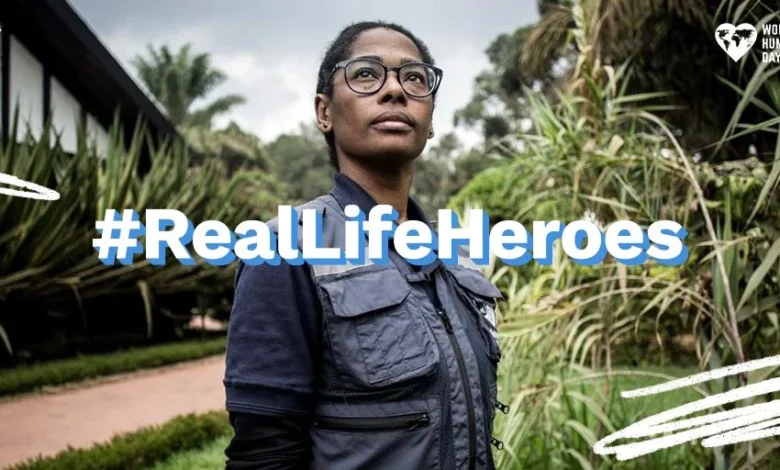
To commemorate World Humanitarian Day, the United Nations Office for the Coordination of Humanitarian Affairs (OCHA), alongside numerous international partners, launched a global campaign centered on the personal narratives of local aid workers. Dubbed the #RealLifeHeroes campaign, the initiative seeks to move beyond macro-level statistics and humanize the individuals whose daily sacrifices sustain vulnerable communities.
The campaign highlights diverse profiles of resilience and dedication. Among them are refugees who, despite facing displacement and legal uncertainties, leverage their training to serve as essential health workers within camp settings and host communities. It also features veteran health workers who transitioned seamlessly from fighting Ebola outbreaks in West and Central Africa to combating the spread of COVID-19 in high-density urban environments. Additionally, pediatricians, nurses, and maternal health specialists who maintained continuity of care for women and children amidst active shelling and localized violence are recognized for their unwavering commitment.
These narratives underscore a broader structural shift within the humanitarian sector: the localization of aid. As international access has been constrained by geopolitical tensions and public health emergencies, local actors have increasingly assumed leadership roles in emergency response. Empowering local organizations, ensuring equitable distribution of resources to frontline responders, and integrating community-led insights into strategic planning are increasingly recognized as vital components of effective humanitarian governance.
Broader Implications for the Future of Humanitarian Action
The convergence of escalating security threats, chronic underfunding, and complex global health emergencies points toward a critical juncture for the international humanitarian architecture. The traditional model of international intervention—often characterized by heavily centralized, expatriate-led operations—is undergoing a necessary evolution toward locally led, highly adaptable response frameworks.
However, localization alone cannot insulate aid workers from targeted violence and systemic operational risks. The international community faces pressing structural imperatives. First, diplomatic channels must be aggressively utilized to enforce compliance with international humanitarian law, ensuring that warring parties respect the sanctity of medical facilities, humanitarian convoys, and relief personnel. Second, sustainable funding mechanisms must be established to bridge the widening chasm between global requirements and donor contributions, ensuring that life-saving programs are not abruptly curtailed due to budgetary shortfalls.
As World Humanitarian Day concludes its annual formal observances, the broader mission continues unabated. In active conflict zones, disaster-stricken regions, and communities recovering from pandemic-related shocks, thousands of humanitarians remain at work, risking their safety to preserve the dignity and survival of others. Their perseverance serves as both a testament to human resilience and a persistent reminder of the collective responsibility shared by the global community to protect those who serve the most vulnerable.
Related posts: