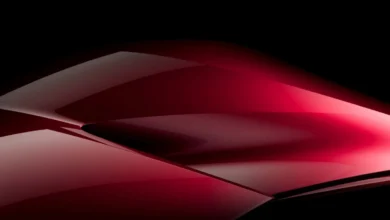
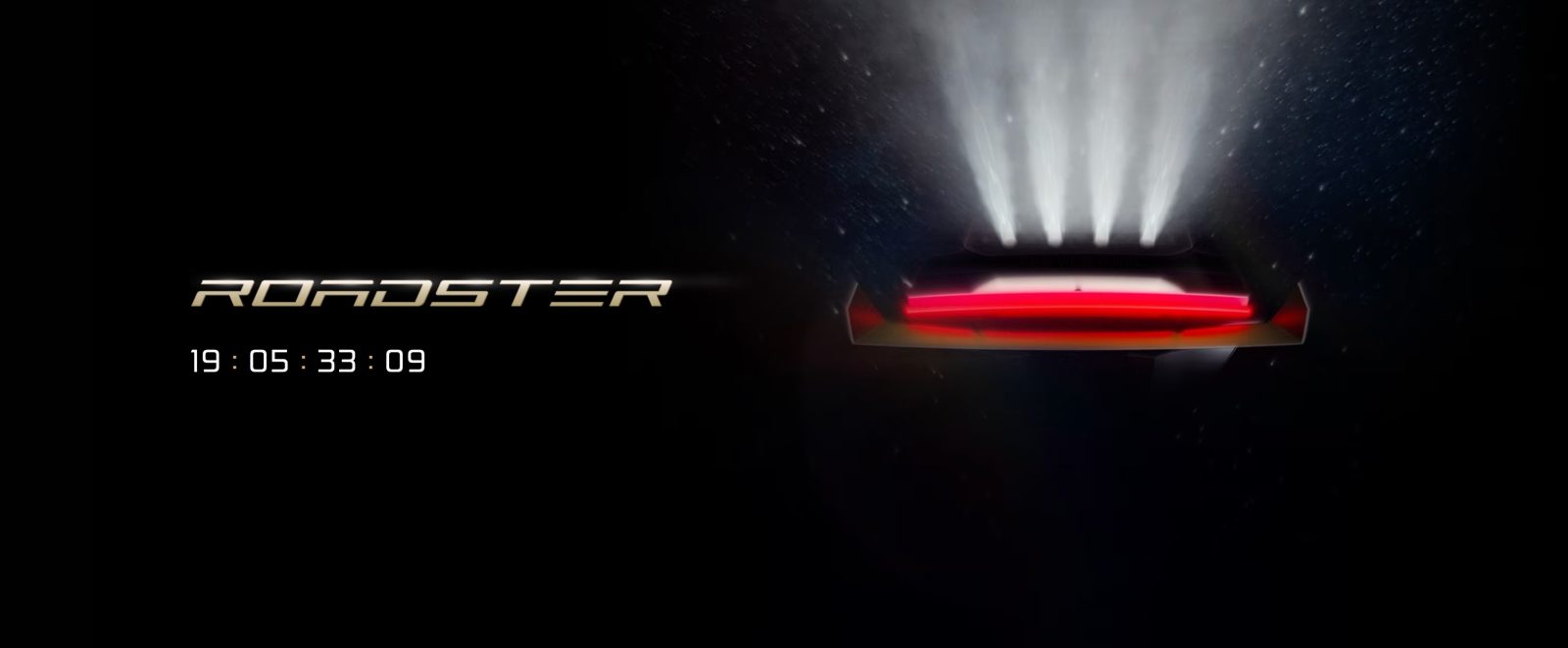
Electric vehicle manufacturer Tesla has officially signaled a forthcoming public demonstration of its long-delayed next-generation Roadster, issuing a promotional teaser that points toward an October 1 unveiling. The campaign, highlighted by a stark visual featuring the electric hypercar framed by rocket-launch illumination and the aggressive declaration “Go for launch,” has renewed industry attention on a vehicle that was first introduced to the public more than nine years ago.
The digital countdown currently active on Tesla’s official web portal aligns with the October 1 date. While the manufacturer has not yet disclosed the specific geographic location of the event, nor confirmed whether it will be broadcast globally, the promotional material heavily implies that the central feature of the presentation will involve the demonstration of aerospace-derived thruster technology.
Background Context of the Long-Delayed Project
The initial unveiling of the second-generation Tesla Roadster took place in November 2017 during a surprise product showcase at the company’s design studio in Hawthorne, California. At the time of its debut, CEO Elon Musk outlined ambitious technical specifications that positioned the vehicle at the bleeding edge of automotive performance.
The baseline specifications presented in 2017 included a projected base price of $200,000, with a limited-run “Founders Series” commanding a $250,000 upfront reservation. Performance metrics cited by the company included a 0 to 60 miles per hour acceleration time of 1.9 seconds, a top speed exceeding 250 miles per hour, and an unprecedented battery range of 620 miles on a single charge enabled by a massive 200 kWh battery pack. Initial production estimates pointed toward a commercial launch in 2020.
However, the program quickly became subject to a cascading series of postponements. Competing corporate priorities, including the scaling of the Model Y, supply chain constraints during the global pandemic, the development of the Tesla Semi, and engineering challenges associated with the vehicle’s novel propulsion systems, led to a succession of delayed timelines. Over the intervening years, the production window was pushed sequentially through 2022, 2023, 2024, and subsequent periods, with recent executive statements pointing toward a potential manufacturing start between 2027 and 2028.
Chronology of Broken Timelines and Shifting Targets
The journey from prototype to production has been characterized by repeated recalibrations of expectations from company leadership.
- November 2017: Tesla unveils the Roadster prototype, promising production by 2020. Early reservation holders commit $50,000 for standard models and the full $250,000 price tag for Founders Series editions.
- 2020–2023: Production timelines are repeatedly deferred as the company prioritizes high-volume vehicle manufacturing and energy storage solutions.
- November 2024: During an annual shareholder meeting, Elon Musk indicates that engineering work is nearing completion but shifts manufacturing estimates further outward.
- Spring 2025: Speculation surrounding impromptu vehicle demonstrations circulates, though promised spring events fail to materialize.
- August 2025: Reports outline plans for a specialized, driverless hardware demonstration incorporating SpaceX cold gas thrusters, which is subsequently postponed.
- September 2026: Tesla launches a coordinated promotional campaign featuring several legacy vehicle and technology platforms, culminating in the formal October 1 teaser.
The Accumulation of Opportunity Costs for Early Investors
The prolonged development cycle has had a tangible impact on some of the brand’s most visible early supporters. Numerous high-profile early reservation holders, including technology personality Marques Brownlee and entrepreneur Sam Altman, have publicly confirmed that they ultimately canceled their reservations and reclaimed their deposits over the course of the multi-year delay.
Financial analysts note that while the initial deposits provided an influx of interest-free capital during a critical development phase for the company, the ongoing delays risk testing the patience of the enthusiast community. The capital tied up by thousands of reservation holders has remained stagnant while alternative electric hypercars from legacy and boutique manufacturers—such as Rimac, Pininfarina, and Lotus—have successfully brought competing ultra-high-performance vehicles to market.

Engineering Realities of the SpaceX Thruster Integration
A defining characteristic of the modern Roadster narrative has been the integration of technology from sister company SpaceX. Musk first suggested the inclusion of cold gas thrusters in 2018, proposing that compressed air or gas thrusters could dramatically alter acceleration, cornering, and braking limits.
Recent industry reports indicate that the physical demonstration planned for the upcoming event has undergone significant scoping adjustments. While early conceptual discussions referenced complex maneuvers such as driving up magnetized ramps or operating in extreme orientations, the practical implementation has been refined.
Current technical expectations suggest that the October 1 presentation will feature a remote-operated, driverless vehicle demonstration designed to showcase vertical lift or hover capabilities via compressed gas thrusters. Because the operating noise of high-pressure cold gas thrusters generates decibel levels capable of causing hearing damage, safety protocols will reportedly require spectators to maintain a distance of hundreds of yards from the active vehicle.
Furthermore, industry observers emphasize that the hardware slated for display is intended as an engineering showcase rather than a consumer-ready automobile. The demonstration vehicle is expected to lack street legality and may be produced in strictly limited quantities, potentially structured around an exclusive track program targeted at select collectors rather than general retail buyers.
Strategic Implications and Market Analysis

Industry analysts view the timing of the October 1 teaser within the broader context of Tesla’s corporate strategy. The promotional push coincides with a period of heightened corporate messaging designed to highlight synergy between Tesla and SpaceX. Financial commentators have increasingly scrutinized the strategic relationship between the two entities, particularly regarding potential corporate integration or asset consolidation.
By reactivating public interest in the Roadster—alongside parallel renewed focuses on legacy platforms like the Tesla Semi and autonomous robotaxi initiatives—the manufacturer has successfully captured media mindshare ahead of critical corporate governance votes. Observers note that while the spectacle of a rocket-powered electric vehicle serves as an effective marketing instrument for stock valuation and brand enthusiasm, the fundamental commercial metric for the automotive industry remains the delivery volume of road-legal consumer vehicles.
As the industry awaits the events of October 1, the core question for the market is whether the forthcoming presentation will establish a credible, binding timeline for consumer-grade production models, or if the Roadster will remain primarily a technological proof-of-concept symbolizing the intersection of electric mobility and aerospace engineering.