Booking an electric flight in Europe is only 10 years away, says influential Dutch researcher

The landscape of commercial aviation could undergo a profound transformation by the middle of the next decade, with the prospect of booking an entirely emissions-free passenger flight rapidly transitioning from theoretical design to tangible reality. According to prominent Dutch aerospace researchers and innovative aviation startups, European travelers could be boarding commercial electric aircraft by the year 2034. Spearheading this movement is Elysian Aircraft, a Netherlands-based startup that has captured the attention of the global aerospace community with its flagship commercial airliner concept, the E9X.
As regulatory bodies increase pressure on the transportation sector to curb its carbon output, and as airlines grapple with the economic volatility of fossil fuel markets, the E9X promises a quieter, more sustainable alternative. While the concept of electric aviation has long been championed for small, private, or regional commuter aircraft, Elysian’s roadmap targets a much larger segment of the commercial market, aiming to fundamentally reshape short-haul travel across Europe and beyond.
The Magnitude of Aviation Emissions
To understand the significance of ventures like Elysian Aircraft, one must examine the current environmental footprint of the global aviation industry. While direct carbon dioxide emissions from commercial aircraft account for roughly 2% to 2.5% of global human-induced greenhouse gas emissions, the true climate impact is significantly more complex. When factoring in high-altitude emissions such as nitrogen oxides, water vapor, and contrail-induced cirrus clouds—which trap heat in the atmosphere—aviation’s total contribution to global heating rises considerably, particularly in developed nations where air travel per capita is much higher.
Campaign groups such as Stay Grounded and various environmental policy institutes have long emphasized that standard efficiency improvements within traditional jet-fuel aircraft are insufficient to meet international climate targets. Because demand for air travel is projected to grow over the coming decades, incremental gains in fuel economy are frequently outpaced by the sheer volume of passenger miles flown.
Consequently, the aviation industry faces a dual imperative: it must decouple fleet growth from carbon emissions while maintaining the economic connectivity that modern societies rely upon. While sustainable aviation fuels (SAFs) and hydrogen propulsion systems are heavily promoted as medium- to long-term solutions, they face substantial hurdles regarding scalability, production costs, and infrastructure development. Pure battery-electric propulsion, by contrast, offers the potential for zero operational emissions at the point of use, provided the electrical grid powering the aircraft is sourced from renewable energy.
Engineering the E9X: Overcoming the Battery Hurdle
The primary obstacle to commercial electric flight has always been the low energy density of chemical batteries compared to jet fuel. Traditional lithium-ion batteries are significantly heavier per unit of energy stored, making long-haul electric flight physically unfeasible with current technology. However, aerospace engineers have increasingly recognized that regional routes—which represent a massive share of global flight operations—do not require transatlantic range.
Designed in close collaboration with aerospace researchers at the prestigious Delft University of Technology (TU Delft), the Elysian E9X is purpose-built to navigate these technological constraints. Rather than attempting to power a massive, long-range widebody jet, the E9X focuses on a specific market niche: short-haul regional connectivity.
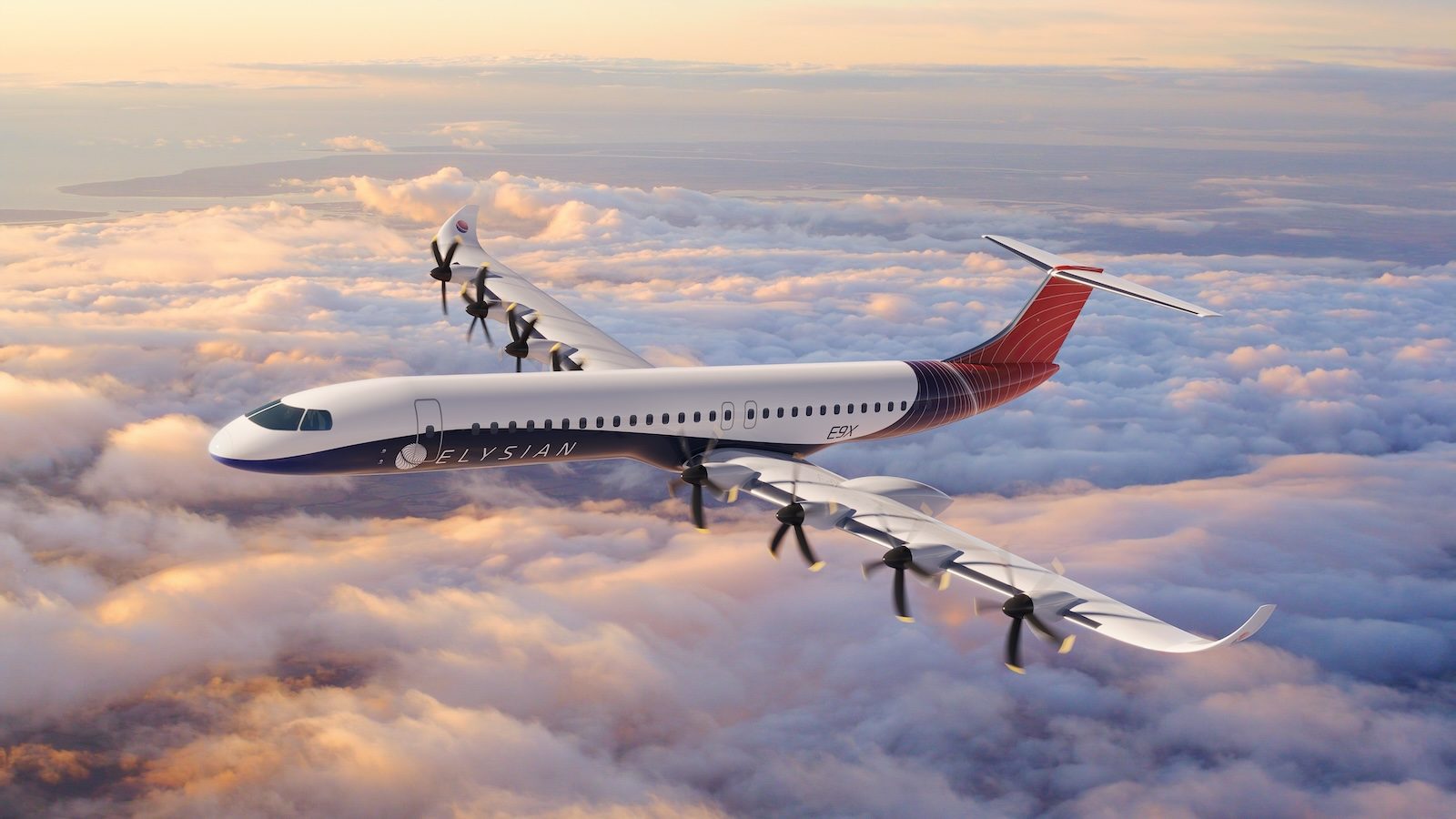
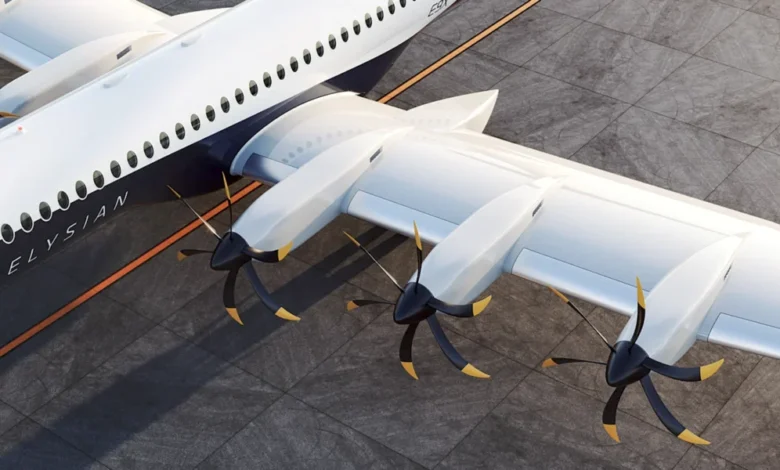
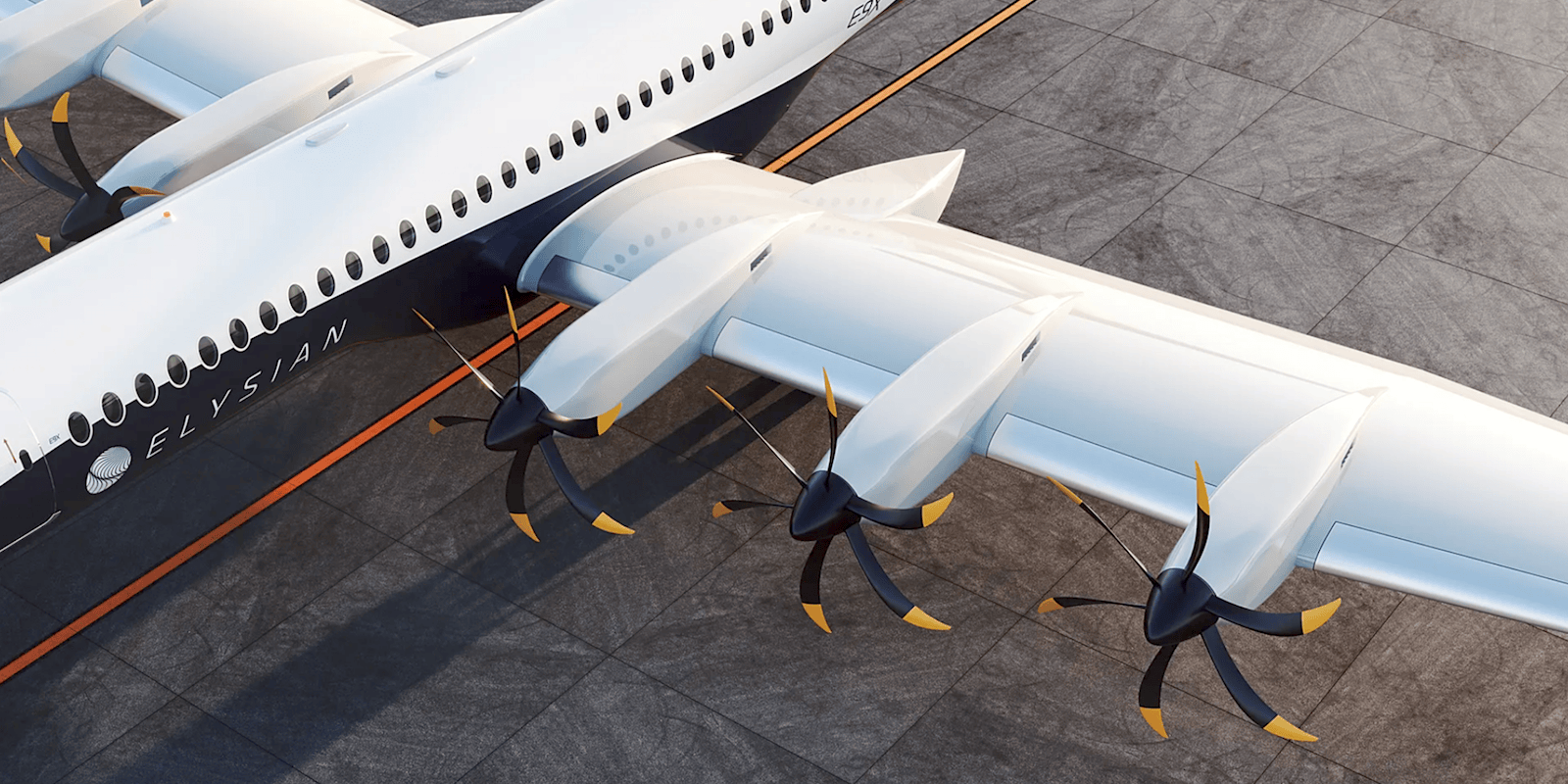
The aircraft’s structural design is innovative, utilizing oversized, high-aspect-ratio wings to house modular battery packs. By integrating the heavy energy storage systems directly into the wing structure—where traditional commercial airliners store liquid fuel—engineers can optimize weight distribution and aerodynamic performance. This energy is then routed to six electric motors driving distributed propellers, providing both propulsion efficiency and a drastically reduced acoustic footprint.
The E9X is designed to accommodate approximately 90 to 100 passengers, with an initial operational range of 800 kilometers (roughly 500 miles), which developers intend to scale up to 1,000 kilometers (approximately 620 miles) as battery technology matures. According to company leadership, this specific range bracket is strategically chosen because it covers nearly half of all scheduled commercial passenger flights worldwide.
Chronology and Development Milestones
The journey toward the E9X has involved a methodical, research-driven progression rather than sudden conceptual leaps. The initiative builds upon years of academic research conducted at TU Delft, where aerodynamicists and propulsion experts analyzed the feasibility of battery-electric architectures for larger airframes.
- Phase 1: Academic Foundation and Conceptualization. Initial feasibility studies conducted in partnership with Dutch academic institutions laid the groundwork for a radical departure from conventional tube-and-wing designs, focusing heavily on battery integration and thermal management.
- Phase 2: Scaled Demonstrator Testing. Moving beyond digital blueprints, Elysian collaborated with Germany’s renowned DLR (Deutsches Zentrum für Luft- und Raumfahrt / German Aerospace Center) to construct and fly a scaled demonstrator model. This testing phase was crucial for validating aerodynamic stability and verifying how heavy wing-mounted battery configurations behave during various flight regimes.
- Phase 3: Conceptual Design Reviews. Elysian successfully completed its second conceptual design review, locking in key architectural parameters regarding passenger capacity, structural load distribution, and electrical system safety.
- Phase 4: Commercial and Operational Partnerships. Recognizing that an aircraft manufacturer cannot succeed in a vacuum, Elysian has actively engaged key industry stakeholders. The startup has partnered with major European carriers, including KLM and Transavia, to evaluate how electric airliners would integrate into existing airline schedules, maintenance routines, and airport gate operations. Additionally, aircraft leasing firm TrueNoord has joined the coalition to analyze the financial frameworks and asset-management models required to make electric aircraft commercially viable for leasing portfolios.
Industry Implications and Market Impact
The commercial implications of a successful 90-passenger electric airliner entering service by 2034 are profound. If Elysian and its industry partners achieve their stated goals, the deployment of the E9X could eliminate up to 20% of total global aerospace emissions by targeting high-frequency, short-haul corridors that currently rely on fossil-fuel-burning turboprops and narrowbody jets.

Beyond the environmental benefits, electric aviation introduces a new economic paradigm for regional airlines. Jet fuel prices are notoriously volatile, subject to geopolitical conflict, supply chain disruptions, and macroeconomic shocks. Electric propulsion isolates operators from the unpredictable cost of fossil fuels, anchoring their operating expenses more closely to regional electricity grid pricing, which is increasingly dominated by falling renewable energy costs.
Furthermore, passengers could experience a radically improved in-flight experience, particularly regarding noise pollution. Electric motors generate significantly less mechanical vibration and acoustic noise than traditional gas turbine engines, making regional flights considerably quieter both inside the cabin and for communities located beneath flight paths near urban airports.
Challenges Ahead on the Road to 2034
Despite the optimism surrounding the E9X, significant hurdles remain before ticket counters begin offering seats on commercial electric flights. Certification by aviation authorities such as the European Union Aviation Safety Agency (EASA) and the Federal Aviation Administration (FAA) will be a rigorous, multi-year process. Battery safety, thermal runaway mitigation, rapid-charging infrastructure at airports, and the sheer supply chain scaling required to produce aerospace-grade batteries in commercial quantities represent monumental challenges.
Nevertheless, the alignment of academic research, government aerospace center testing, major airline interest, and lessor participation suggests that electric aviation has moved past the realm of science fiction. As Dutch researchers and innovators continue to refine the E9X, the aviation industry stands at the precipice of its most significant technological evolution since the advent of the jet engine. If current timelines hold, the next decade will determine whether the skies of Europe become the proving ground for a cleaner, quieter era of global mobility.