Geely Set to Unveil Revolutionary 2.2MW EV Charging System and Four-Minute Battery Technology in China

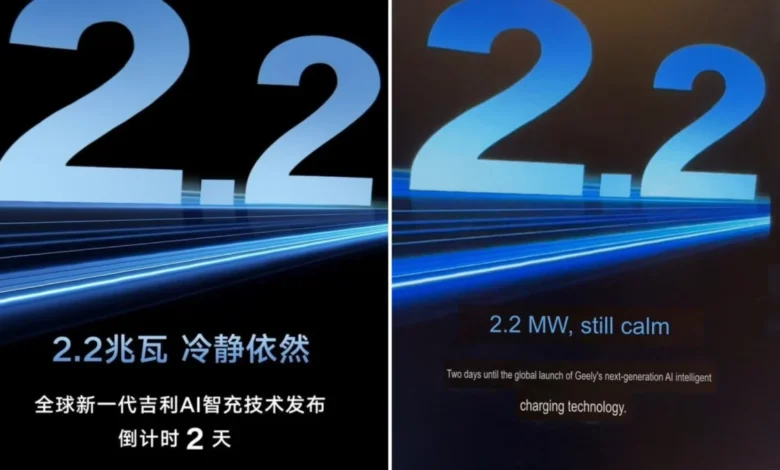
The global electric vehicle infrastructure landscape is on the verge of another monumental shift as Chinese automotive giant Geely prepares to unveil its next-generation AI-powered battery and ultra-fast charging ecosystem. Scheduled for an official global launch on September 23 at the Geely Global All-Domain Safety Center in Ningbo, China, the breakthrough technology promises consumer EV charging times reduced to a staggering four minutes.
This upcoming announcement underscores the relentless pace of innovation within China’s electric vehicle sector, where ultrafast charging has evolved from a competitive advantage into an aggressive technological arms race. By pushing the boundaries of charging speeds and power delivery, Geely is positioning itself to outpace domestic rivals and widen the widening chasm between Asian EV infrastructure standards and those of Western markets.
The Escalating Charge-Time Arms Race in China
China’s domestic electric vehicle market operates at a technological velocity that continually redefines consumer expectations. While traditional automotive markets in North America and Europe continue to grapple with the widespread deployment of 150kW to 350kW DC fast chargers, Chinese automakers are routinely shattering previous benchmarks.
The industry has reached a developmental milestone where standard metrics are shifting. Charging intervals are increasingly measured in seconds rather than minutes, transforming the refueling experience of an electric vehicle so that it closely mirrors, or even improves upon, the time required to pump conventional fossil fuels.
Earlier advancements set high benchmarks across the industry. For instance, rival manufacturer BYD introduced its Blade 2.0 battery architecture, capable of facilitating rapid power replenishment in approximately five minutes. Meanwhile, Geely’s own engineering portfolio includes innovations like the Golden Brick battery, which previously brought charge times down to roughly four minutes and twenty-two seconds. The upcoming September 23 announcement, however, aims to compress these windows further while introducing hardware capable of unprecedented power outputs.
Technical Specifications and the 2.2MW Power Threshold
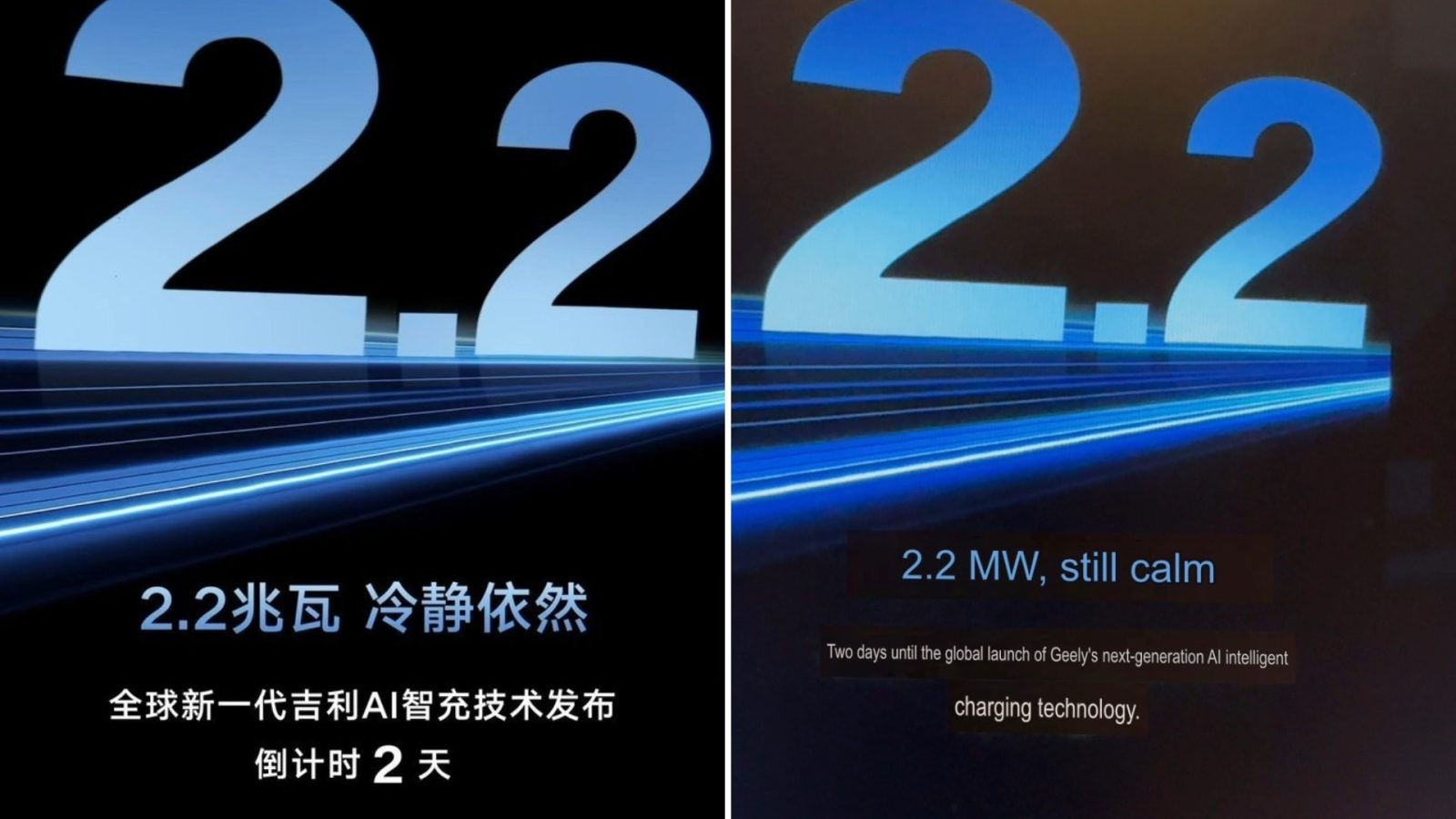
According to preliminary teasers and promotional materials released by Geely over the weekend, the centerpiece of the upcoming showcase is a proprietary charging system capable of delivering a massive 2.2 megawatts (MW) of power.
To contextualize this capability, Geely’s 2.2MW infrastructure outpaces BYD’s recently launched 1.5MW "Flash Charging 2.0" system by approximately 50 percent. More broadly, the sheer output of Geely’s consumer-focused hardware eclipses heavy-duty commercial installations in the West. For comparison, Tesla’s pioneering Megacharger locations—such as the 1.2MW installation deployed in Ontario, California—were specifically engineered to supply heavy-duty commercial semi-trucks with massive battery packs. Geely’s new architecture, by contrast, is designed to channel these immense electrical currents into standard consumer passenger vehicles outfitted with comparatively compact batteries.
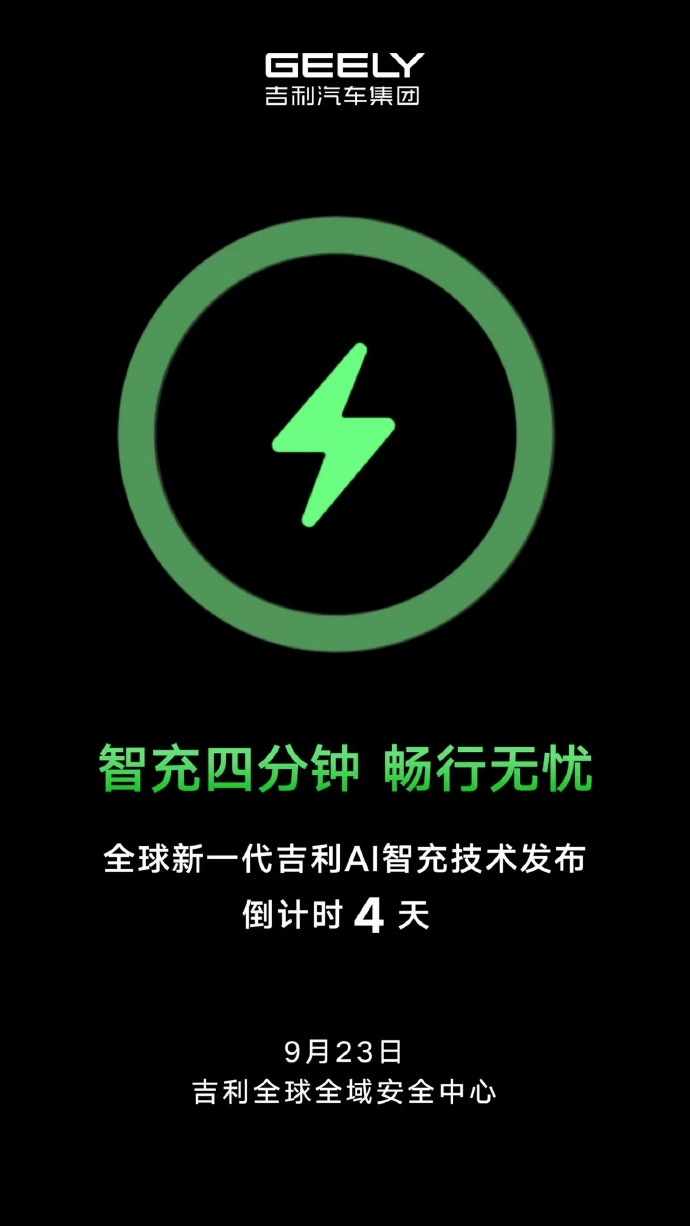
Translating promotional teasers distributed via social media channels, Geely’s messaging highlights the core philosophy of the new architecture: "Charge in Four Minutes, Drive with Peace of Mind." Yet industry analysts note that while the four-minute figure serves as a compelling headline, the real technical achievement lies in thermal management and battery longevity.
AI-Driven Smart Charging and Thermal Management
Achieving a four-minute replenishment cycle without severely degrading the underlying chemistry of a lithium-ion or solid-state battery requires sophisticated engineering. When electrical currents of this magnitude are forced into a battery pack, internal resistance generates extreme heat, which has historically accelerated capacity degradation and posed severe safety risks.
Geely’s upcoming platform integrates proprietary artificial intelligence algorithms designed to govern the charging curve dynamically. This "smart charging" technology continuously monitors ambient conditions, internal cell temperatures, and voltage states to optimize the flow of electrons in real time.
Crucially, preliminary reports associated with this technological rollout indicate that Geely has managed to maintain structural and chemical integrity across an extraordinary number of cycles. Industry insiders suggest the system is engineered to withstand up to 3,500 charge and discharge cycles with minimal capacity loss. If validated during the official presentation, this longevity would significantly outlast the typical operational lifespan of the vehicle itself, alleviating long-term consumer anxieties regarding battery replacement costs.

Chronology of the Announcement
The rollout of Geely’s latest technological leap follows a structured timeline designed to build momentum across global markets:
- Mid-2026: Continued deployment of existing ultra-fast systems by Chinese manufacturers, shifting public discourse toward sub-five-minute charging intervals.
- Weekend Prior to Launch: Geely releases cryptic promotional posters and social media teasers across Chinese digital platforms, highlighting the September 23 global launch date and hinting at the four-minute threshold.
- September 23: Official global unveiling hosted at the Geely Global All-Domain Safety Center in Ningbo, China, where full technical specifications, vehicle compatibility lists, and rollout schedules will be detailed.
- Post-Launch Phase: Integration of the technology into upcoming production models under Geely’s expansive umbrella, which includes brands like Lynk & Co, Zeekr, and Volvo.
Global Implications and the Growing Trans-Pacific Tech Gap
The debut of a 2.2MW consumer charging architecture highlights a stark and widening disparity between EV infrastructure developments in Asia and the West. With systems like BYD’s 1.5MW chargers and now Geely’s 2.2MW platform entering operational status, Chinese charging infrastructure is operating at velocities roughly six times faster than the standard DC fast-charging networks currently available to consumers in the United States.
While American and European charging networks continue to prioritize the rollout of 350kW hardware—often plagued by reliability issues and maintenance backlogs—Chinese automakers are solving the secondary and tertiary problems of ultra-fast charging, such as grid stabilization, localized energy storage buffers, and advanced liquid-cooled cable management.
The implications for legacy international automakers are profound. As Chinese automotive brands expand their export footprints into Europe, Southeast Asia, South America, and potentially North America, the expectation of ultra-fast refueling will likely become a baseline consumer demand. Vehicles that require twenty to thirty minutes to achieve a substantial charge may soon face severe market friction against competitors capable of completing the task during a brief stop at a service station.

Industry Reception and Verification
As the global automotive press prepares for the live stream and on-site demonstrations in Ningbo, several technical questions remain open. Observers will be closely scrutinizing the exact percentage boundaries used to define the "four-minute charge." In standard industry metrics, charging speeds are typically quoted between 10% and 80% state-of-charge (SoC), as the final 20% invariably requires a tapered current to protect cell chemistry.
Furthermore, analysts will seek clarification on the grid infrastructure required to support 2.2MW dispensers. Delivering megawatts of power instantaneously to individual vehicles demands either massive local battery-buffered storage systems or substantial upgrades to municipal electrical grids to prevent localized brownouts.
Despite these logistical hurdles, Geely’s upcoming presentation promises to set a new benchmark for what is physically possible in mass-market electric vehicle development. As the event unfolds on Wednesday, the global automotive industry will be watching closely to see how competitors respond to a standard of charging that reduces refueling downtime to mere minutes.