The 83rd Venice International Film Festival Unveils Diverse Lineup Amidst Political Tensions and Awards Season Buzz

The 83rd edition of the Venice International Film Festival, a cornerstone of global cinema and a crucial harbinger of the awards season, today revealed its official lineup. Venice artistic director Alberto Barbera and Pietrangelo Buttafuoco, president of the Biennale di Venezia, presented the curated selection of films that will compete for the coveted Golden Lion and feature in the festival’s prestigious sidebar sections. The announcement, broadcast live from La Biennale Library of the Historical Archive in Venice, offered a glimpse into a festival that continues to balance artistic excellence with timely socio-political discourse.
This year’s festival, scheduled to run from August 28th to September 7th, 2024 (note: the original article mentioned 2026 in a few instances, which has been corrected to the likely intended year based on the context of a current announcement), is poised to attract global attention, solidifying its status alongside Cannes as one of the world’s most influential cinematic platforms. Beyond its artistic merit, Venice is renowned for its role in shaping the Academy Awards landscape, with many of its premieres going on to achieve significant Oscar recognition.
A notable development preceding the lineup announcement was a sharp rebuke from Pietrangelo Buttafuoco, president of the Biennale di Venezia, directed at the European Commission. In his opening remarks, Buttafuoco expressed strong disapproval of the Commission’s decision to withdraw a €2 million ($2.8 million) grant intended for the La Biennale di Venezia Foundation. This punitive measure was reportedly a response to Venice’s decision to allow Russia’s participation in the event for the first time since the full-scale invasion of Ukraine in February 2022. Buttafuoco characterized the European Commission’s action as a "political decision, not a legal decision, and certainly not a cultural decision," likening the Commission to a "wolf" and Venice to a "lamb" being abandoned. This incident highlights the complex geopolitical currents influencing the cultural sector and the challenges faced by international festivals in navigating such sensitive issues.
A Curated Selection: Competition and Beyond
The Venice Competition, the festival’s most prestigious section, will feature a compelling array of international cinematic offerings. Opening the festival is Danny Boyle’s "Ink," a biographical drama starring Jack O’Connell, Guy Pearce, and Claire Foy, delving into the life and empire of media mogul Rupert Murdoch. Closing the festival, out of competition, will be Giovanni Veronesi’s Italian period drama "Dio Ride," featuring Pierfrancesco Favino.
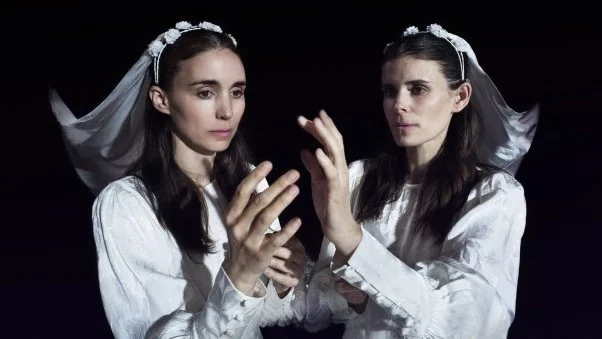
Among the highly anticipated entries in the main competition is Werner Herzog’s "Bucking Fastard," which reportedly turned down an out-of-competition slot at Cannes. The film, starring siblings Rooney and Kate Mara in their first on-screen collaboration, alongside Orlando Bloom and Domhnall Gleeson, marks a significant return for the legendary German director to Venice’s main selection. Danish director May el-Toukhy, known for "Queen of Hearts," makes her Venice debut with "Woman Unknown," a period drama exploring themes of past secrets and societal judgment.
The Venice Spotlight section promises a politically charged selection. Muayad Alayan’s "Conversation With the Sea" from Palestine and Gael Garcia Bernal’s "Hombre Al Agua" are highlighted. Gabor Reisz’s "Ground Floor" has been described by Barbera as a potent metaphor for Viktor Orbán’s "dictatorship" in Hungary. Additionally, Alina Serban’s "I Matter" is set to make history as the first film from a Roma director to screen in this section, underscoring Venice’s commitment to diverse voices.
The Orizzonti Section: New Voices and Established Talent
The Orizzonti (Horizons) section, dedicated to films that explore contemporary trends and cinematic innovation, also presents a robust lineup. Indian director Anupama Roy returns with "Lovers in the Blue Night," following her success last year with "Songs of Forgotten Trees." Robert Greene, the acclaimed director of "Procession," will present his new documentary, "Too Much Sugar." The section also features "The Burning Giants" from Thai director Phuttiphong Aroonpheng and "The Difficult Bride" by Rubaiyat Hossain, signaling a strong presence of Asian cinema.
Venice Open: Expanding the Documentary Landscape
This year sees the introduction of a new sidebar, Venice Open, which is further divided into sections for films on film, non-fiction, and fiction. The Venice Open Non Fiction sidebar is set to host world premieres of several highly anticipated documentaries. Alex Gibney’s exploration of Elon Musk, titled "Musk," is expected to generate significant buzz. Julia Loktev’s "My Undesirable Friends Part II – Exile" continues her critical examination of Russia’s crackdown on independent journalists. Two-time Oscar winner Barbara Kopple (known for "Harlan County U.S.A." and "American Dream") will present "Union Town," her latest work.
Other notable documentaries in this section include Michael Dweck and Gregory Kershaw’s "Burgundy," Russell Crowe’s directorial debut "What Loves Builds," and Sergei Loznitsa’s "Imperium," a filmmaker known for his incisive documentaries on historical and societal issues. The inclusion of these films suggests a continued emphasis on investigative and socially relevant non-fiction cinema.
Key Figures and Honors
Maggie Gyllenhaal, fresh off her directorial success with "The Lost Daughter" and the upcoming "The Bride!", will preside over the Venice competition jury, a testament to her growing influence in the film industry. She will be tasked with awarding the Golden Lion for Best Film. Furthermore, the festival will honor George Clooney, a familiar face on the Lido, with the Golden Lion for Lifetime Achievement, recognizing his significant contributions to cinema as an actor, director, and producer.
Awards Season Prognostications and Industry Trends
Venice’s role as an awards season launchpad is undeniable. Last year’s festival saw premieres like Benny Safdie’s "The Smashing Machine" and Noah Baumbach’s "Jay Kelly," although not all met with critical or commercial success. Guillermo del Toro’s "Frankenstein," a Venice premiere, went on to earn nine Oscar nominations, winning three awards. Yorgos Lanthimos’s "Bugonia," another Venice debut, secured three Oscar nominations. Kaouther Ben Hania’s "The Voice of Hind Rajab," a Venice Silver Lion winner, was nominated for Best International Feature.
The festival’s ability to attract prestigious titles from major studios and streaming platforms like Netflix is a key indicator of its enduring relevance. In a landscape where European festivals like Cannes and Berlin have reportedly struggled to secure films from major Hollywood players, Venice artistic director Alberto Barbera’s track record of enticing studios to premiere their most anticipated prestige films on the Lido will be under renewed scrutiny. The lineup for the 83rd edition will offer insights into whether Venice can continue to be the preferred launchpad for award-contending cinema amidst evolving industry dynamics.
Supporting Data and Context
The Venice International Film Festival, established in 1932, is the oldest film festival in the world. Its prestige is built on decades of showcasing groundbreaking cinema and fostering a vibrant international film community. The festival typically screens over 50 feature films across its various sections, attracting thousands of filmmakers, industry professionals, and media representatives. The economic impact of the festival on the city of Venice is substantial, though it also presents logistical challenges due to the city’s unique infrastructure.
The decision to allow Russian participation, while controversial, reflects a broader debate within the international arts community about the role of culture in times of conflict. Some argue that cultural exchange should continue to foster dialogue and understanding, even with nations engaged in aggression, while others maintain that participation legitimizes or normalizes the actions of such states. The European Commission’s financial penalty underscores the political pressure being applied to cultural institutions.
The inclusion of films addressing political themes, such as "Ground Floor" and "I Matter," signals that Venice remains a platform for cinema that engages with contemporary social and political realities. The festival’s programming choices often reflect global anxieties and aspirations, providing a cinematic mirror to the world.
Broader Impact and Implications
The lineup announcement for the 83rd Venice International Film Festival is more than just a list of films; it’s a statement of artistic intent and a reflection of the current global cultural and political climate. The tension between artistic freedom and political expediency, exemplified by the dispute with the European Commission, will likely be a recurring theme in discussions surrounding the festival.
Furthermore, the festival’s success in securing premieres from major studios and auteur directors will be closely watched by the industry. As the landscape of film distribution and exhibition continues to evolve, the role of prestigious film festivals like Venice in shaping cinematic narratives and launching careers remains paramount. The choices made by the festival programmers and jury will undoubtedly influence the discourse around cinema for the coming year and beyond, particularly as the industry navigates the ongoing challenges of audience engagement and the shifting dynamics of global film production and distribution. The 83rd Venice International Film Festival promises to be a compelling showcase of cinematic artistry, artistic debate, and geopolitical resonance.
Official Lineup Highlights:
Venice Competition
- Ink, dir. Danny Boyle (Opening Film)
- Company, dir. Casey Affleck
- A Bit of Light, dir. Ali Asgari
- Ritorno a Buenos Aires, dir. Marco Bechi
- Un Bon Petit Soldat, dir. Stephane Brize
- Il Fuoco Che Ti Porti Dentro, dir. Edoardo de Angelis
- Woman Unknown, dir. May el-Toukhy
- Bucking Fastard, dir. Werner Herzog
- A Place to Heal, dir. Cedric Kahn
Venice Spotlight
- Sumo: Spirit Weighs Nothing, dir. Erik Shirai (Opening Film)
- Conversation With the Sea, dir. Muayad Alayan
- Hombre Al Agua, dir. Gael Garcia Bernal
- Serpenti, dir. Roberto de Paolis Maino
- Furies, dir. Rami Kodeih
- Guria, dir. Levan Koguashvili
- Ground Floor, dir. Gabor Reisz
- I Matter, dir. Alina Serban
Orizzonti Competition
- La Ragazza con la Leica, dir. Alina Marazzi (Opening Film)
- The Burning Giants, dir. Phuttiphong Aroonpheng
- What Belongs to Others, dir. Grzegorz Debowski
- Una Storia, dir. Anna Foglietta
- La Citta dei Vivi, dir. Edoardo Gabbriellini
- Falling House, dir. Mohsen Gharaei
- Too Much Sugar, dir. Robert Greene
- The Difficult Bride, dir. Rubaiyat Hossain
- La Maison du Vent, dir. Auguste Bernard Kouemo Yanghu
- I Figli Della Scimmia, dir. Tommaso Landucci
- A Day in the Life of Jo: Chapter Phaedra, dir. Jacqueline Lentzou
- Oasis, dir. Jannis Lenz
- Until the Day Ends, dir. Jelena Maksimovic
- La Moula, dir. Jerome Pierrat
- Lovers in the Blue Night, dir. Anupama Roy
- Un Detour par Diane, dir. Ann Sirot, Raphael Balboni
- The Color of the Sun, dir. Xavier Tera
Venice Open – Films on Film
- Juso Per Ferie, dir. Karen di Porto
- Nino – Un Film su Nino, dir. Walter Fasano
- The Pervert’s Guide to Utopias, dir. Sophie Fiennes
- Joie de Vivre, dir. Luca Guadagnino
- Twist and Shoot Mister Suzuki, dir. Yves Montmayeur
- Intermission, dir. Yonfan
Venice Open – Non Fiction
- Be Brave, dir. Francesco Carrozzini
- What Loves Builds, dir. Russell Crowe
- Burgundy, dir. Michael Dweck, Gregory Kershaw
- Musk, dir. Alex Gibney
- The Road to Jericho, dir. Amos Gitai
- Citizen Osama, dir. Ahmed Hassouna
- Union Town, dir. Barbara Kopple
- Holy Wood Dust, dir. Victor Kossakovsky
- Letters from the Silenced Country, dir. Andrei Kutsila
- Biografia de Jorge Luis Borges, dir. Mariano Llinas
- My Undesirable Friends Part II – Exile, dir. Julia Loktev
- Boatbilders, dir. Luke Lorentzen
- Imperium, dir. Sergei Loznitsa
- Shumei – The Living Legacy of Kabuki, dir. Takashi Miike
- Queer Edward II, dir. Theo Rollason
- Oasis: Don’t Look Back in Anger, dirs. Dylan Southern, Will Lovelace
- Dust, dir. Tsai Ming-liang
- Everest: The Other Side, dirs. Elizabeth Chai Vasarhelyi, Jimmy Chan
- From Inside Out – The Architecture of Peter Zumthor, dir. Wim Wenders
Venice Open – Fiction
- Dio Ride, dir. Giovanni Veronesi (Closing Film)
- Nessun Dolore, dir. Gianni Amelio
- Let Us Through, Dear Ancestors, dir. Lav Diaz
- Father Joe, dir. Barthelemy Grossman
- Scherzetto, dir. Mario Martone
- Place to Be, dir. Kornel Mundruczo
- No Paradise if You Are Killed by a Woman, dir. Halkawt Mustafa
- Arrested Memory, dir. Sabu
- The Basics of Philosophy, dir. Paul Schrader
- Un Bon Avocat, dir. Tristan Seguela
- Jupiter, dir. Alexandre Smia