The Artificial Intelligence Boom is Reshaping the American Workforce Through Specialized Data Center Education

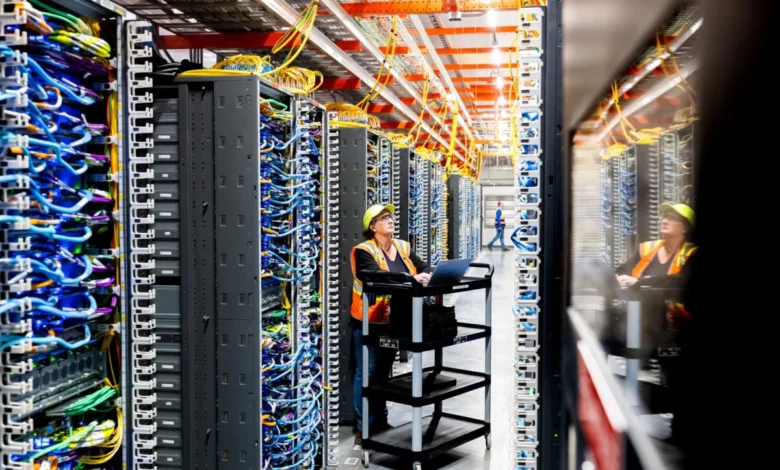
The rapid ascent of artificial intelligence has catalyzed a massive infrastructure expansion across the United States, transforming local landscapes into hubs of technological power. As sprawling data centers—massive, nondescript facilities housing thousands of servers, complex cooling systems, and high-capacity fiber optics—rise from the soil, they bring with them a short-term deluge of construction jobs. However, as the heavy machinery falls silent and the facilities move into their operational phases, a pressing question confronts economists and county planners: what happens to the local economy once the bulldozers leave?
While the immediate economic windfall of construction is undeniable, the long-term employment outlook for these regions remains a subject of intense scrutiny. A project that might employ thousands of construction workers over several years often requires only a few hundred permanent staff members once operational. To bridge this gap and ensure that these facilities do not become isolated islands of automation, major tech conglomerates—including Microsoft, Amazon Web Services (AWS), Google, and Oracle—are increasingly pivoting toward a strategy of workforce cultivation, partnering with community colleges to train the next generation of data center technicians.
The Evolution of the Data Center Landscape
The surge in data center development is not merely a modern trend but a multi-decade evolution of digital infrastructure. Since the early 2000s, the U.S. has seen a steady increase in server capacity, but the arrival of generative AI has accelerated this demand exponentially. According to Data Center Map, there are currently over 4,700 data center locations across the United States. Key clusters have emerged in regions like Northern Virginia, which remains the global epicenter for data storage, alongside rapidly expanding hubs in Texas, Ohio, Illinois, and Georgia.
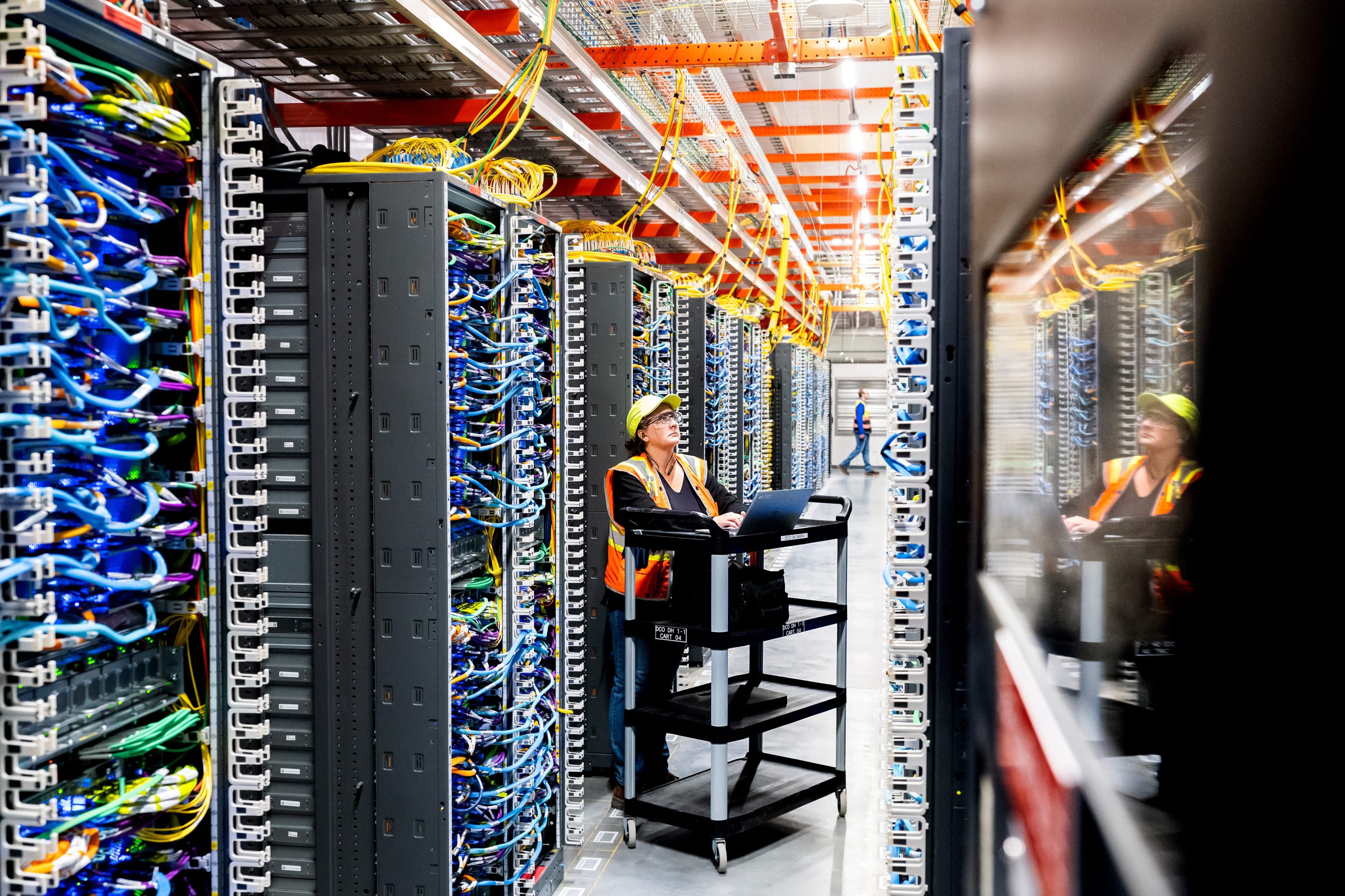
The U.S. Census Bureau reports that employment within the data center sector grew by more than 60 percent between 2016 and 2023. Despite this growth, the nature of the work is changing. Where once these facilities required massive onsite IT departments, modern, cloud-based data centers rely on a hybrid model of remote management and specialized, hands-on physical maintenance. This shift has created a unique "skills gap"—a chasm between the traditional IT education provided by four-year universities and the specific, ruggedized hardware maintenance required on the ground.
Building a Pipeline: The Role of Higher Education
To address this shortage, tech giants are embedding themselves directly into the curriculum of local educational institutions. This is not merely philanthropy; it is a strategic necessity. Nicholas Lee-Romagnolo, a principal for workforce and economic development at Amazon Web Services, notes that the environment inside a modern data center is in a constant state of flux.
"Those servers change all the time. The fiber changes all the time," Lee-Romagnolo explained. "Everything inside the data center is constantly being upgraded, especially in AWS data centers. So we have to make sure that curriculum isn’t three years old—that it’s constantly being updated to serve the present need."
Programs such as the Microsoft Datacenter Academy, currently hosted at institutions like Gateway Technical College in Wisconsin, represent the new model of industry-academia collaboration. The curriculum is intentionally granular: students spend their time peering into the literal "organs" of servers, learning the nuances of hardware support, power distribution, and climate control systems. By the end of the program, participants receive industry-recognized certifications that act as a fast track to employment.

For many students, this represents a viable alternative to the traditional four-year college degree. Louis Maxcy, a 30-year-old technician based in Umatilla, Oregon, serves as a prime example of this transition. After shifting his focus from computer science to a specialized data center program at Blue Mountain Community College, he secured a position at an AWS facility in his hometown. For Maxcy, the program provided a bridge from an agricultural-based local economy to the high-tech sector, proving that one does not necessarily need to relocate to a major metropolitan tech hub to find a sustainable, well-paying career.
Economic Implications and Community Resistance
Despite the promise of high-paying jobs—with average wages for data center technicians hovering around $32 an hour—the arrival of these facilities is not universally welcomed. In many regions, local communities have expressed significant concern over the environmental and social costs of hosting these massive structures. Issues such as excessive water consumption for cooling, the immense demand on the local power grid, and noise pollution have sparked grassroots resistance.
A report from the Brookings Institution has urged local governments to take a more assertive role in negotiations with tech companies. Rather than viewing data centers as passive additions to the tax base, the report suggests that local planners should treat them as leverage to secure long-term, regional prosperity. This includes demanding that companies commit to long-term workforce training investments that benefit the broader community, rather than just the immediate needs of the facility.
"We’ve seen workforce training just pop up organically in the wild," said Mark Muro, a senior fellow at Brookings and co-author of the report. "The next step is for this to become a standard part of negotiations."

Future-Proofing the Workforce
A critical concern for educators and students alike is the "portability" of these skills. With AI systems becoming increasingly autonomous, could the role of a data center technician become obsolete in the coming decades?
Academic experts argue that the role is inherently "AI-resilient." Chad Knights, chief academic officer at Northern Virginia Community College, emphasizes that the curriculum is designed to be cross-disciplinary. "Even if it does become subject to some level of automation, those individuals have their hand in no less than four different trades: plumbing, HVAC, electrical, and fiber," Knights noted. "That makes them versatile workers who can pivot if the technology changes."
This view is shared by Scott Adams, an economics professor at the University of Wisconsin-Milwaukee. Adams suggests that the economy is moving away from title-based employment toward a skill-based model. In this future, a worker might define themselves not by a job title, but by a "stack" of proficiencies—such as an individual who combines electrical certification with HVAC maintenance and fiber-optic troubleshooting.
A New Industrial Era
The current surge in data center construction is, in many ways, the "laying of the tracks" for the digital age, much like the expansion of the railroad in the 19th century. While we cannot fully predict how the AI-driven economy will look in 2050, the current educational initiatives are attempting to build a workforce that can adapt to rapid cycles of innovation.

The partnerships between companies like Microsoft, Oracle, and Amazon and local colleges are effectively creating a new form of vocational training. By covering tuition and providing equipment, these corporations are subsidizing their own talent pipelines while providing students with a path to middle-class stability.
As these programs continue to scale, the success of the data center industry will likely be measured by more than just terabytes of storage or megawatts of power. It will be measured by the ability of these facilities to integrate into local economies, providing not just fleeting construction jobs, but a permanent, skilled workforce capable of maintaining the digital backbone of the global economy.
For students like Louis Maxcy, the result is a tangible sense of security. "I feel like I’ve made it," he says, reflecting on his role in the high-tech sector. As the demand for AI continues to climb, the ability of these community-college-to-career pipelines to scale will remain one of the most important, if overlooked, factors in the success of the nation’s technological infrastructure.