Unlocking the Voice-to-Page Connection: How Verbal Rehearsal is Transforming Writing Instruction in K-12 Classrooms

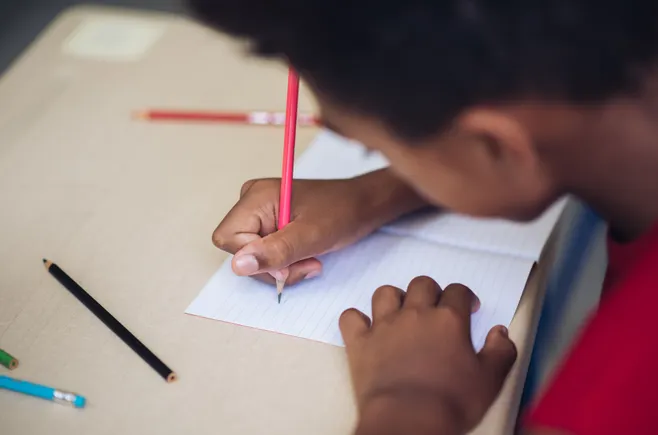
The transition from fleeting internal thoughts to structured, coherent written text remains one of the most persistent hurdles for students across the K-12 educational spectrum. While curricula often emphasize the mechanical aspects of grammar, syntax, and spelling, educators increasingly recognize that the root obstacle frequently lies earlier in the cognitive process: bridging the gap between verbal thought and physical transcription. To overcome this hurdle, writing instructors are turning to an effective, research-backed strategy known as verbal rehearsal—a pedagogical practice that encourages students to think out loud, articulate their ideas verbally, and use speech as a stepping stone to master the written word.
Originating largely within multilingual learning spaces as a tool to help English language learners solidify target vocabulary and grammatical structures, verbal rehearsal has since expanded into mainstream classrooms. Experts note that the technique is beneficial not only as a prewriting or brainstorming exercise, but also as an active intervention deployed mid-process when writers encounter mental blocks. By transforming abstract thoughts into spoken language before putting pen to paper (or fingers to keyboards), students can clarify their arguments, discover missing gaps in their reasoning, and build the self-assurance necessary to tackle complex writing assignments.
The Mechanics and Evolution of Verbal Rehearsal
Verbal rehearsal is fundamentally rooted in cognitive psychology and socio-cultural theories of learning, which posit that language and thought are deeply intertwined. Long before children learn to craft sophisticated essays, their oral communication skills outpace their literacy capabilities. By leaning into this natural developmental trajectory, teachers can bypass the intimidation factor of a blank page.
According to literacy experts, the practice can take several distinct forms depending on the age, developmental stage, and specific needs of the student. For a writer struggling to translate a complex concept into text, options range from direct transcription—where a teacher or peer writes down the student’s spoken words verbatim—to audio-recording methods, where students capture their own spoken ideas and replay them to transcribe at their own pace.
Tanya Baker, executive director of the National Writing Project, emphasizes that verbal rehearsal is far more than a simple prewriting warm-up. "It’s not just seen as a way to start or prewrite, but you can also use verbal rehearsal during the process of writing," Baker explains. When students hit a wall mid-assignment, pausing to talk through the problematic section aloud often illuminates the path forward.
Furthermore, the technique serves as a diagnostic tool for educators. As students talk through their topics, teachers can identify conceptual misunderstandings or structural weaknesses in real time. By asking targeted, follow-up questions—such as prompting a student to elaborate on an interesting detail they just mentioned—instructors can gently scaffold the student’s knowledge base and encourage deeper critical thinking. Baker notes that this interactive dialogue eventually internalizes, allowing students to ask themselves these probing questions and independently identify where their arguments require strengthening.
Developmental Applications: From Early Childhood to Higher Education
The versatility of verbal rehearsal lies in its adaptability across developmental milestones. While the core philosophy remains constant—using speech to scaffold writing—the implementation scales dramatically from kindergarten classrooms to graduate seminars.
For young children in grades K-2, or students exhibiting delayed developmental milestones in literacy, writing mirrors speech almost verbatim. At this stage, children write the way they talk. Consequently, any growth achieved in oral language proficiency directly translates to improvements in their written output. However, because younger learners require substantial guidance, verbal rehearsal at this level must be structured and focused. Teachers often employ guided repetition, asking students to repeat explicit verbal prompts or work closely in tandem with an instructor who acts as a scribe.
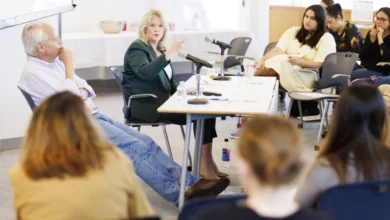
As students progress into middle and high school, the approach shifts toward fostering independence and metacognitive awareness. Cami Condie, a professor in the McKeown School of Education at Salem State University and an adjunct at the Harvard Graduate School of Education, utilizes partner-pairing strategies in secondary education. Pairing students with consistent partners over extended periods allows them to develop a deep familiarity with each other’s thought processes, enabling more intuitive peer prompting.
In these older cohorts, Condie transitions from direct prompts to reflective questioning. After students converse with a peer about their writing assignments, she poses open-ended inquiries: "What did you talk to your partner about? How did talking to your partner help you? How did that solidify your idea? What changed because you talked to your partner?" This deliberate reflection helps adolescents diagnose the exact nature of their writer’s block, transforming a vague sense of frustration into a tangible, solvable problem.
At the university level, the intervention requires minimal scaffolding. Graduate students often respond simply to prompts such as, "Talk about what you’re thinking about," using stream-of-consciousness verbalization to untangle dense research topics or theoretical arguments before committing them to academic prose.
Addressing Individual Needs and Overcoming Writer’s Frustration
Despite the clear frameworks associated with different grade levels, education specialists caution against relying exclusively on age-based metrics to determine a student’s readiness for independent writing. Developmental readiness is non-linear, and confidence levels vary widely even within the same classroom.
A high school senior suffering from acute writing anxiety may require significant scaffolding and extended verbal rehearsal sessions to overcome the fear of drafting, whereas a middle school student with extensive prior practice may draft fluently without needing to talk through their ideas first. Therefore, effective implementation demands differentiated instruction tailored to the individual learner’s psychological and academic profile.
When executed successfully, the psychological benefits of verbal rehearsal extend far beyond improved essay grades. Writing is an intensely personal and sometimes vulnerable endeavor; believing that one "has nothing to say" can paralyze a student’s academic progress. By offering a safe, low-stakes verbal runway, teachers help dismantle these mental barriers.
"I’ve seen real benefits in increased independence over time, and confidence from a student," Baker notes, highlighting the emotional toll of writing anxiety. "It’s frustrating as a writer not to have anything to say, or believe you have anything to say, or get it from your mind to paper. That gives them the confidence in their ability to do that."
This burgeoning self-efficacy fosters a sense of agency. When students realize they already possess the vocabulary and analytical capabilities needed to construct an argument—proved simply by listening to themselves speak—they transition from passive recipients of instruction to empowered, autonomous communicators.
Broader Implications for Literacy Curricula
As educational institutions nationwide continue to grapple with post-pandemic learning recovery and persistent literacy gaps, the integration of oral language practices into writing instruction offers a promising avenue for reform. Traditional writing instruction has frequently siloed language arts into discrete categories: reading, writing, listening, and speaking. However, cognitive research and expert consensus increasingly point toward an integrated model where oral discourse serves as the primary engine for written literacy.
By officially incorporating verbal rehearsal into daily lesson plans, schools can better support diverse student populations, including multilingual learners, students with learning disabilities, and those experiencing writing-related anxiety. The strategy bridges the gap between internal cognition and external expression without requiring expensive technological interventions or complex curricular overhauls.
Ultimately, verbal rehearsal validates a fundamental truth of human communication: we often do not know what we think until we hear ourselves say it. By honoring this cognitive reality in the K-12 classroom, educators are equipping a new generation of students with the tools, clarity, and confidence needed to turn their inner voices into enduring written works.
Related posts: