The best air purifiers for wildfire smoke tested: Our faves from Blueair, Coway Airmega, Shark, and more

As global climate patterns continue to intensify, the specter of severe wildfire seasons has become a grim annual reality for vast swathes of the planet. While the visible smog and hazardous air quality outside our homes often dominate headlines, an equally critical, yet frequently overlooked, concern is the insidious infiltration of wildfire smoke into our indoor environments. In an era where personal health and wellness are paramount, ensuring clean indoor air has transitioned from a luxury to a fundamental necessity. Mashable’s Senior Shopping Reporter Leah Stodart and Contributor Lauren Allain delve into the latest advancements in air purification technology, offering an expertly tested guide to the most effective devices available, designed to provide a vital sanctuary of clean air within your living spaces, even amidst the most challenging outdoor conditions.
The Escalating Global Wildfire Crisis and Its Transboundary Impact

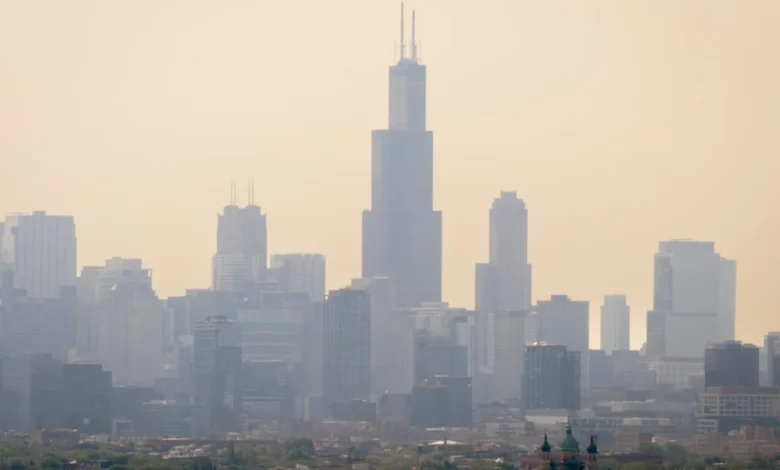
The mid-2020s have underscored a stark reality: wildfires are no longer confined to specific regions but are a global phenomenon with far-reaching consequences. Fueled by prolonged droughts, increased temperatures, and changes in land management, regions from the Western United States and Canada to Australia, the Mediterranean, and parts of Asia are experiencing wildfire seasons of unprecedented scale and intensity. The year 2026, for instance, has already seen significant fire activity in Canada, resulting in plumes of smoke drifting thousands of miles, impacting air quality across major North American cities like Chicago and New York. This transboundary pollution highlights that no community is entirely immune to the effects of distant blazes.
The immediate and long-term implications of this widespread smoke exposure are profound. Beyond the direct threat to communities near the fire lines, the particulate matter carried by these smoke plumes poses a significant public health challenge. Recognizing the growing severity, health organizations and environmental agencies worldwide are increasingly emphasizing the importance of indoor air quality management as a critical protective measure.
Understanding the Invisible Threat: PM2.5 and Comprehensive Health Risks

Wildfire smoke is a complex mixture of gases and fine particulate matter, predominantly PM2.5 – microscopic particles measuring 2.5 micrometers or less in diameter. To put this into perspective, a single human hair typically ranges from 50 to 70 micrometers in diameter, making PM2.5 about 20 to 30 times smaller. This minuscule size allows PM2.5 to easily bypass the body’s natural defenses and penetrate deep into the lungs, and critically, enter the bloodstream.
The U.S. Centers for Disease Control and Prevention (CDC) and Yale Medicine have extensively documented the adverse health effects of wildfire smoke exposure. Short-term symptoms can include respiratory irritation (coughing, wheezing, shortness of breath), headaches, fatigue, and rapid heartbeat. However, the long-term consequences are far more concerning. Repeated exposure to PM2.5 has been linked to an increased risk of severe health issues, including:
- Cardiovascular Disease: Smoke particles can contribute to inflammation and oxidative stress, potentially leading to heart attacks, strokes, and exacerbating existing heart conditions.
- Respiratory Illnesses: Chronic exposure can worsen asthma, chronic obstructive pulmonary disease (COPD), and increase susceptibility to respiratory infections. It may also contribute to the development of lung cancer.
- Cognitive Decline: Emerging research suggests a link between air pollution and cognitive issues, including an increased risk of dementia and impaired brain function.
- Skin Health: Particulate matter can compromise the skin barrier, leading to increased oxidative stress, premature aging, and exacerbation of skin conditions.
- Vulnerable Populations: Children, pregnant individuals, and those with pre-existing conditions such as asthma, heart disease, or diabetes are at a significantly elevated risk. Their developing or compromised systems are more susceptible to the toxic components of smoke.
- Pet Health: Our animal companions are not immune. The American Veterinary Medical Association (AVMA) warns that if humans can feel the effects of smoke, pets can too. Irritated eyes, breathing difficulties, and damage to their respiratory systems are common, particularly for pets with existing cardiovascular or respiratory ailments.
Furthermore, indoor air quality isn’t solely compromised by external wildfire events. Everyday activities and products contribute to indoor pollution, including volatile organic compounds (VOCs) from cleaning supplies and paints, cooking fumes, pet dander, and microscopic plastics embedded in household dust. This confluence of internal and external pollutants underscores the year-round necessity of effective indoor air purification.

The Science of Clean Air: How Air Purifiers Work
Air purifiers function by drawing in ambient air, passing it through a series of filters, and then releasing cleaner air back into the room. The efficacy of an air purifier hinges on its filtration system, with High-Efficiency Particulate Air (HEPA) filters forming the cornerstone of most high-quality units.
- HEPA Filters: A true HEPA filter is certified to capture at least 99.97% of airborne particles 0.3 micrometers in diameter. This standard is crucial because particles of this size (MPPS – Most Penetrating Particle Size) are the most difficult to capture. HEPA filters are exceptionally effective against wildfire smoke, pollen, dust mites, pet dander, and many bacteria and viruses.
- Pre-filters: Positioned as the first line of defense, pre-filters capture larger particles such as visible dust, hair, and larger pet dander. This prevents the more delicate and crucial HEPA filter from becoming clogged prematurely, extending its lifespan and maintaining its efficiency. These are often washable or easily vacuumed.
- Activated Carbon Filters: These filters are composed of porous carbon that chemically binds with gaseous pollutants through a process called adsorption. They are highly effective at removing odors from cooking, pets, chemicals, and the gaseous components of wildfire smoke.
- CADR (Clean Air Delivery Rate): This metric, typically provided in cubic feet per minute (CFM), indicates how quickly an air purifier can clean a room of a specific size. A higher CADR means faster air purification. When selecting an air purifier, it’s vital to match the unit’s CADR to the square footage of the room where it will be used, ensuring sufficient air changes per hour (ACH). For optimal performance, especially during wildfire events, aim for a purifier that can achieve at least 4-5 ACH for the designated room size.
Mashable’s Rigorous Testing Methodology

In compiling this definitive guide, Mashable’s team conducted extensive hands-on testing of each air purifier in real-world home environments. Our evaluation prioritized models equipped with true HEPA filters, as these offer the most reliable defense against wildfire smoke and other fine particulate matter. While more affordable purifiers exist, their filtration claims can often be questionable, and when it comes to respiratory health, compromising on assurance is not an option.
Our testing process focused on several critical factors:
- Filtration Effectiveness: Assessing the purifier’s ability to detect and reduce PM2.5 levels, often utilizing built-in air quality sensors and observing real-time data where available.
- Replacement Filters and Frequency: Evaluating the cost and availability of replacement filters, as well as their expected lifespan. We prioritized models with pre-filters to prolong HEPA filter life.
- Room Size Coverage: Verifying that each purifier efficiently covers its advertised square footage, ensuring effective air changes per hour for different living spaces.
- Noise Level: Measuring the operational sound across various fan speeds, prioritizing models that maintain a low decibel level, particularly for use in bedrooms or living areas.
- Ease of Use and Smart Features: Assessing the intuitiveness of controls, app connectivity, and additional functionalities such as auto modes, timers, and specialized settings.
- Design and Portability: Considering the aesthetic integration into a home environment and the ease of moving the unit between rooms.
Top Air Purifiers for Wildfire Smoke and General Indoor Pollution

Based on our comprehensive testing, here are Mashable’s top recommendations for air purifiers designed to combat wildfire smoke and maintain optimal indoor air quality:
1. Coway Airmega Mighty (AP-1512HH) with Intense Smoke Filter
The Coway Airmega Mighty has long been a benchmark in the air purifier industry, and its continued excellence is well-deserved. Covering an impressive area of up to 1,748 square feet with a four-stage filtration system, it’s a powerhouse for large, open-concept spaces. The system includes a true HEPA filter, an activated carbon filter for odor control, and a washable pre-filter to manage larger debris.
- Why We Picked This: The Airmega Mighty’s standout feature for wildfire season is its optional Intense Smoke Filter. While not part of the standard package, these specialized filters are specifically engineered and third-party tested to effectively capture harmful pollutants from wildfire smoke. This dual-layer filtration, combining a standard HEPA with a dedicated smoke filter, offers superior protection for individuals with asthma or other respiratory sensitivities living in high-risk areas. Its robust performance and proven track record make it an indispensable tool for serious air quality concerns.
- Key Details:
- Coverage Area: Up to 1,748 sq ft (with multiple air changes per hour in smaller rooms).
- Filtration: 4-stage (Pre-filter, Activated Carbon, True HEPA, Intense Smoke Filter – optional).
- Features: Air quality sensor with indicator, auto mode, eco mode, timer.
- Noise Level: Quiet operation at lower settings.
- Filter Life: Standard HEPA/Carbon filters last approximately 12 months; Intense Smoke Filter may vary based on usage.
2. Shark NeverChange Air Purifier Max
For those seeking comprehensive air purification across multiple rooms or an expansive open-plan layout, the Shark NeverChange Air Purifier Max is an exceptional investment. Engineered to clean up to 1,400 square feet, its most compelling feature is the Shark NeverChange HEPA filter, designed to last an astounding five years before requiring replacement.

- Why We Picked This: The extended filter lifespan significantly reduces long-term maintenance costs and hassle. The unit also incorporates two easily removable and vacuumable pre-filters, which diligently trap larger particles, thereby safeguarding the primary HEPA filter. The integrated Clean Sense IQ display provides real-time air quality metrics as a precise percentage, complemented by a color-coded indicator. This granular feedback, observed during testing, proved invaluable in identifying areas of poor airflow, such as kitchen zones during cooking, and enabling the auto mode to dynamically adjust fan speed for optimal purification.
- Key Details:
- Coverage Area: Up to 1,400 sq ft.
- Filtration: NeverChange HEPA filter (up to 5 years), 2 pre-filters.
- Features: Clean Sense IQ air quality display (percentage & color-coded), auto mode.
- Noise Level: Effective purification without excessive noise.
- Filter Life: HEPA filter up to 5 years; pre-filters are washable.
3. Levoit Core 300P
Consistently ranked as one of Amazon’s best-selling air purifiers, the Levoit Core 300P represents outstanding value and simplicity. With nearly 110,000 five-star reviews, its popularity is a testament to its reliable performance and user-friendly design. It’s an ideal choice for single rooms and first-time air purifier owners looking for an effective, no-fuss solution under $100.
- Why We Picked This: The Levoit Core 300P offers a true HEPA filter in a compact, unobtrusive form factor. Several Mashable editors, including Digital Culture Editor Crystal Bell, commend its efficiency relative to its size. Measuring just 14.2 inches tall and under nine inches in diameter, it can comfortably sit on a floor or tabletop, and its lightweight design allows for easy relocation between rooms as needed. It’s a true "unbox-and-go" solution that delivers dependable air purification without breaking the bank.
- Key Details:
- Coverage Area: Ideal for small to medium rooms (e.g., bedrooms, small offices).
- Filtration: 3-stage (Pre-filter, True HEPA, Activated Carbon).
- Features: Quiet operation, sleep mode, timer.
- Noise Level: Very quiet, suitable for bedrooms.
- Filter Life: Approximately 6-8 months, depending on usage.
4. Shark NeverChange Air Purifier Compact Pro
For smaller, more intimate spaces such as bedrooms, home offices, or dorm rooms, the Shark NeverChange Air Purifier Compact Pro is an excellent choice. Its playful, robot-like aesthetic and available color options add a touch of personality to its functional design. It’s specifically engineered to filter air in rooms up to 250 square feet.
- Why We Picked This: Like its larger sibling, the Compact Pro boasts the long-lasting NeverChange HEPA filter, promising up to five years of use before replacement, offering significant savings over time. It also features Shark’s Clean Sense IQ display, providing air quality readings as a clear percentage, which our reviewer preferred over simpler color-coded systems. During testing, the unit proved remarkably quiet, often requiring a double-check to confirm it was running while placed on a nightstand. While its lack of a dedicated carrying handle was a minor inconvenience, its quiet operation and effective filtration make it perfect for personal spaces.
- Key Details:
- Coverage Area: Up to 250 sq ft.
- Filtration: NeverChange HEPA filter (up to 5 years), pre-filter.
- Features: Clean Sense IQ air quality display, auto mode, compact design.
- Noise Level: Exceptionally quiet, ideal for sleeping environments.
- Filter Life: HEPA filter up to 5 years; pre-filter is washable.
5. Dreame FP10 FurCatcher Air Purifier
This review comes from Senior Shopping Reporter Leah Stodart.
For households with pets, the Dreame FP10 FurCatcher Air Purifier addresses a common pain point: pet fur rapidly clogging traditional HEPA filters. Its innovative design tackles this issue head-on, ensuring consistent filtration effectiveness.

- Why We Picked This: Pet fur can significantly reduce an air purifier’s efficiency by physically blocking airflow and filtration. The Dreame FP10 features a unique Furcatch roller that automatically cleans the pre-filter, preventing fur buildup. This self-cleaning mechanism ensures the HEPA filter remains clear to effectively capture fine particulate matter. The unit’s air quality tracker, accessible via its app, consistently demonstrated the filter’s sustained effectiveness over several months of testing. Dreame claims this filter can last up to two years. Additionally, the cylindrical design allows for 360-degree filtration, and its subtle white noise, even in "Pet Purify" mode, is remarkably tolerable. The thoughtful design, with a flat, sturdy top supporting up to 33 pounds, acknowledges that cats often find purifiers irresistible perching spots.
- Key Details:
- Coverage Area: Suitable for medium to large living spaces.
- Filtration: Multi-stage, including a self-cleaning Furcatch roller, pre-filter, and HEPA filter.
- Features: Auto-cleaning pet fur roller, app control, air quality tracking, pet purify mode.
- Noise Level: Subtle white noise, even on higher settings.
- Filter Life: Up to 2 years, thanks to the self-cleaning mechanism.
6. Levoit Sprout Air Purifier
The Levoit Sprout Air Purifier proves that essential health devices can also offer delightful and highly functional extras, particularly for children’s rooms or even adult bedrooms.
- Why We Picked This: Beyond its robust four-filter system (a three-stage pre-filter and a HEPA filter) designed to protect children from wildfire smoke and other pollutants, the Sprout integrates a built-in nightlight and a speaker for white noise. These features consolidate multiple nursery essentials into one device, a boon for parents. Kids are particularly vulnerable to wildfire smoke, and both the CDC and EPA recommend portable air cleaners for their safety. The Sprout’s superior air quality metrics are a major highlight, offering real-time readings on CO2 levels, TVOCs (total volatile organic compounds), PM1.0, PM2.5, and PM10, along with room temperature and humidity charts via its intuitive app. The app allows granular control over nightlight brightness and color warmth, white noise selection, and scheduling. While clearly designed for nurseries, its calming ocean sounds and gentle nightlight are undeniably appealing for adults too.
- Key Details:
- Coverage Area: Ideal for nurseries, bedrooms, or small offices.
- Filtration: 4-stage (3-stage pre-filter, True HEPA).
- Features: Integrated nightlight, white noise speaker, advanced air quality sensors (CO2, TVOCs, PM1.0/2.5/10), app control, temperature & humidity display.
- Noise Level: Quiet operation.
- Filter Life: Standard.
7. Blueair ComfortPure 3-in-1 (T10i)
When investing in an air purifier, maximizing its utility year-round is a smart strategy. The Blueair ComfortPure 3-in-1 distinguishes itself by combining air purification with both fan and heating functionalities, making it a versatile household appliance.
- Why We Picked This: In all its modes—purification, fan, or heating—the Blueair ComfortPure consistently circulates air filtered to remove 99.97% of particles, including smoke. During testing, its thoughtful design details, such as a convenient carrying handle and magnetic filter access, stood out. The Blueair app is particularly well-designed, offering a wealth of features, precise control options, and even a geofencing function that can activate the purifier when you’re nearing home. It also tracks outdoor air quality, providing valuable context for indoor usage. Aesthetically, its modern and minimalist design allows it to blend seamlessly into contemporary home decor.
- Key Details:
- Coverage Area: Suitable for medium-sized rooms.
- Filtration: Multi-stage, including a HEPA filter.
- Features: 3-in-1 functionality (purifier, fan, heater), app control with geofencing, outdoor air quality tracking, magnetic filter access.
- Noise Level: Quiet operation across modes.
- Filter Life: Standard, indicated by app.
8. LG PuriCare AeroTower Air Purifier
While functionality is paramount, the LG PuriCare AeroTower Air Purifier demonstrates that an air purifier can also be a sophisticated design element. Its sleek, modern tower aesthetic allows it to integrate gracefully into any room, occupying minimal floor space.

- Why We Like It: Beyond its attractive appearance, the AeroTower delivers impressive purification capabilities. It features a robust filtration system including a pre-filter for larger particles, a NanoFiber True HEPA filter that LG states captures 99.97% of particulate matter (including smoke), and an activated carbon deodorizer filter to eliminate unwanted odors. A significant endorsement of its efficacy is its certification as "allergy and asthma friendly" by the Asthma and Allergy Foundation of America—a rare and highly respected accreditation. In testing, the AeroTower effectively purifies a 185-square-foot room in just 15 minutes, achieving four complete air changes per hour, providing reassuring performance during high-smoke events. The intuitive LCD display, included remote control, and integration with LG’s ThinQ App offer comprehensive control and access to real-time air quality, temperature, and humidity data. Its ability to heat a room with 140-degree oscillation further enhances its year-round utility.
- Key Details:
- Coverage Area: Effective for medium to large rooms (e.g., 185 sq ft with 4 ACH).
- Filtration: Pre-filter, NanoFiber True HEPA, Activated Carbon Deodorizer.
- Features: Allergy and asthma friendly certified, LCD display, remote control, ThinQ App integration, heating function (140-degree oscillation).
- Noise Level: Quiet operation.
- Filter Life: Standard, indicated by app.
Beyond the Purchase: Maximizing Indoor Air Quality
While a high-quality air purifier is an invaluable asset, a holistic approach to indoor air quality is most effective. The Environmental Protection Agency (EPA) strongly recommends several complementary strategies during wildfire smoke events:
- Seal Your Home: Keep windows and doors closed. Use towels or weather stripping to seal gaps under doors and around windows.
- Limit Indoor Pollution Sources: Avoid burning candles or incense, vacuuming (which can stir up particles unless using a HEPA-filtered vacuum), and using harsh chemical cleaners.
- HVAC System Maintenance: Ensure your home’s HVAC system has a clean, high-efficiency filter (MERV 13 or higher) and is set to recirculate air rather than drawing from outside.
- Monitor AQI: Stay informed about local Air Quality Index (AQI) reports and adjust outdoor activities accordingly. Many air purifier apps also provide outdoor AQI data.
By combining these practices with the consistent use of a reliable HEPA air purifier, individuals can significantly mitigate the health risks associated with wildfire smoke and other indoor pollutants, safeguarding their well-being and that of their families and pets. As the climate crisis continues to reshape our environment, investing in robust indoor air quality solutions is no longer a luxury but a crucial component of modern health preparedness.