The Hand Turkey Paradigm: How Compliance-Based Arts Education Stifles Student Creativity and Innovation

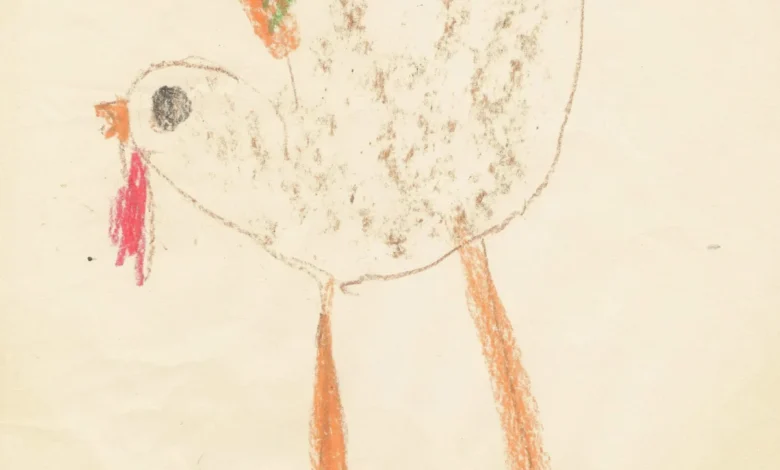
For decades, the construction-paper hand turkey has served as a quintessential fixture of the American elementary school classroom. It is a ritualized activity: students trace their hands, glue on a single wobbly eye, and construct a standardized bird to mark the arrival of the Thanksgiving season. While these projects are often viewed as harmless holiday crafts, education experts and policy analysts increasingly identify them as the visible manifestation of a systemic, decades-old failure in arts education policy—one that prioritizes procedural compliance over genuine creative inquiry.
This pedagogical approach reflects a broader, outdated model that treats the arts as a linear, product-driven discipline. By emphasizing the replication of a pre-determined outcome, schools often inadvertently teach students that artistic success is defined by how closely they can mirror an instructor’s instructions, rather than how effectively they can express a unique, original perspective.
A Historical Context of Arts Education in the United States
The current state of arts instruction is deeply rooted in the historical evolution of the American public school curriculum. Since the 19th century, music and visual arts have occupied a precarious position within the academic framework. Often classified as "specials" or relegated to extracurricular enrichment, these subjects have historically struggled to achieve the same institutional standing as core academic pillars like mathematics, reading, and science.
A significant shift occurred in 1994, when the federal government formally recognized the arts as a core academic subject through the passage of the Goals 2000: Educate America Act. This milestone was bolstered by the publication of the first voluntary National Standards for Arts Education, which provided a framework for what students should know and be able to do in dance, music, theater, and the visual arts.
Despite this federal recognition, the arts lacked the rigorous, high-stakes accountability systems—such as standardized testing and performance metrics—that fundamentally reshaped the teaching of math and literacy during the late 20th and early 21st centuries. Consequently, the implementation of arts standards became decentralized, left to the discretion of individual states and local school districts. In many jurisdictions, this resulted in curricula focused on "the vocabulary of the arts"— rote memorization of techniques, historical facts, and technical mimicry.
The Problem with Product-Based Pedagogy
The "hand turkey" model serves as a shorthand for this compliance-based education. In such environments, the definition of success is narrow: the product must look like the teacher’s example. This approach relies on a pedagogical loop that is inherently incomplete. Students are taught to follow a series of steps to achieve a specific result, but they are rarely asked to engage in the iterative process of artistic creation.
Research suggests that this model has long-term implications for how students perceive their own capabilities. When arts education is presented as an exercise in "getting it right," students who struggle to replicate a specific technique often internalize the belief that they are "not artistic." This exclusionary framing ignores the core purpose of the arts, which is to foster imagination, critical thinking, and the ability to solve complex problems through creative experimentation.
Reimagining the Framework: The 2014 National Core Arts Standards
In response to these systemic limitations, the field of arts education underwent a significant transformation in 2014 with the release of the National Core Arts Standards. This framework was developed through a multi-year, collaborative process involving educators, researchers, and policymakers. Unlike the 1994 standards, which focused heavily on content knowledge, the 2014 standards prioritized a holistic, four-part artistic process:

- Creating: Conceiving and developing new artistic ideas and work.
- Performing: Realizing artistic ideas and work through interpretation and presentation.
- Responding: Understanding and evaluating how the arts convey meaning.
- Connecting: Relating artistic ideas and work with personal meaning and external context.
This model shifts the focus from the finished product to the cognitive and creative loop. It encourages students to generate, refine, receive feedback, and adapt their work based on their own artistic intent. By moving toward this iterative process, educators can foster an environment where students see their unique points of view as valuable and defensible.
The Implications of Narrow Curricular Definitions
The persistence of the product-based model is not merely a matter of classroom tradition; it is also a question of equity. Traditional definitions of "good" art in the school setting have frequently been rooted in narrow, Eurocentric standards that prioritize specific aesthetic outcomes. When students are consistently rewarded for replicating these specific forms, they receive a subtle message that their own cultural traditions and lived experiences are secondary to an established, external canon.
Furthermore, the pressure to produce "shiny" results for public display—such as school hallway art galleries or high-pressure spring concerts—often forces educators to prioritize uniformity over experimentation. This pressure is often exacerbated by fiscal instability in school districts, where arts programs are frequently the first to face budget cuts. When programs are fighting for their existence, there is a natural, albeit counterproductive, impulse to demonstrate value by showing "successful" student products, even if the process behind them lacked genuine student agency.
Recommendations for Systemic Reform
To fully transition from a product-based to a process-based model, experts argue for a tripartite approach to systemic reform:
1. Reimagining Teacher Preparation Programs
Current teacher training curricula often emphasize technical skill in a single discipline. To support a shift in culture, training programs must ensure that new educators are skilled in facilitating the iterative artistic process. This includes training in pedagogical strategies that encourage student voice, feedback loops, and creative risk-taking.
2. Championing Equitable Access
The disparity in arts instruction across different districts remains a significant hurdle. Data from the National Center for Education Statistics (NCES) consistently shows that students in high-poverty schools have less access to specialized arts teachers and dedicated arts facilities compared to their peers in affluent districts. Achieving a more robust arts education requires dedicated funding and a commitment to maintaining these programs as core academic offerings, regardless of local fiscal fluctuations.
3. Cultivating "Boisterous Laboratories"
Schools must redefine the classroom environment. The goal should be to transform art rooms into collaborative laboratories where students feel safe to explore "messy" ideas. This necessitates a change in how administrators evaluate success. Instead of judging an arts program by the aesthetic quality of the projects on the wall, evaluations should focus on the quality of student discourse, the depth of their inquiry, and their ability to articulate the choices they made during the creative process.
Conclusion
The challenge, ultimately, is not the turkey itself, but the pedagogical system that uses it to measure student achievement. If the goal of arts education is to cultivate citizens who are capable of original thought, complex problem-solving, and meaningful self-expression, then the reliance on rigid, product-oriented activities must be dismantled.
By centering the student’s own perspective and emphasizing the process of creation over the final artifact, educators can ensure that the arts remain a vital component of a well-rounded education. When students are empowered to move beyond the outline of someone else’s hand, they are better equipped to draw their own conclusions about the world, to innovate, and to contribute their own unique voices to the broader cultural discourse. The transition from "compliance" to "curiosity" is not just an aesthetic upgrade—it is an essential requirement for preparing students to thrive in an increasingly complex and creative future.