The Leadership Ledger: A Turbulent Month of High-Profile Executive Shuffles Across American Higher Education

The landscape of American higher education experienced a seismic wave of administrative turnover, marked by high-stakes system overhauls, sudden resignations, and unconventional appointments from outside the traditional academic sphere. From major public university systems in the South and Midwest to prominent private institutions grappling with institutional crises and structural mergers, October proved to be a defining month for academic governance. Governing boards across the country found themselves navigating complex fiscal realities, enrollment declines, and reputational challenges, leading to sweeping changes in presidential suites.
While some institutions successfully recruited corporate and administrative veterans to steer them into new eras, others faced abrupt departures that left campus communities searching for answers. These transitions reflect the mounting pressures facing modern colleges and universities, where leadership stability has become increasingly rare amid financial headwinds and shifting public expectations.
Major Public System Transitions in Georgia and Wisconsin
Public higher education systems, which wield immense influence over regional workforce development and state economies, saw two of the most significant leadership appointments of the season.
The University System of Georgia governing board officially confirmed former utility executive Thomas Fanning as its next chancellor, capping a search that once again bypassed traditional academic candidates. Fanning, who spent more than four decades at the helm of Southern Company before retiring in 2023, was named the sole finalist and will assume office on January 1. He succeeds Sonny Perdue, a former U.S. Secretary of Agriculture and Georgia governor whose political background mirrored the board’s preference for corporate and public-sector leaders. Perdue’s four-year tenure, which concludes at the end of December, was characterized by aggressive administrative restructuring—including the appointment of 14 campus presidents across the system’s 25 institutions—and record-breaking enrollment figures.
Meanwhile, the Universities of Wisconsin found its permanent leader following a contentious period of interim management. The system’s Board of Regents unanimously selected Tonjanita Johnson, a high-ranking senior administrator with the University of Alabama system, to take over the presidency at the start of the new year. Johnson steps into the role following the controversial ouster of former president Jay Rothman in April. Rothman’s departure came after an abrupt ultimatum from trustees demanding his resignation or termination, a move that sparked intense debate over transparency and board governance within the state’s public higher education network. Johnson’s appointment is widely viewed as a stabilizing force designed to restore institutional trust and guide the multi-campus system through ongoing legislative and financial scrutiny.
Abrupt Departures and Financial Pressures at Private and Public Institutions
While system-level changes often involve prolonged searches and strategic planning, individual campuses experienced abrupt leadership shocks. Texas Christian University stunned the academic community when Chancellor Daniel Pullin abruptly resigned on October 22 after less than two years in the top post. The sudden exit was communicated to the campus via an email from Victor Boschini, Pullin’s predecessor, who had led TCU for more than two decades before stepping down in 2025. The board quickly tapped Boschini to return to the chancellorship on an interim basis, though university leadership offered no official explanation for Pullin’s sudden departure, fueling speculation and concern among faculty and alumni.
Financial strain and institutional restructuring also claimed leadership casualties at Colorado State University and Pennsylvania’s Gannon University. At CSU, President Amy Parsons announced in an October 28 letter that she would step down on December 31, concluding a tenure marked by heightened national visibility and student access initiatives. Parsons, a CSU alumna who assumed the presidency in 2023 after decades of internal service, leaves as the university grapples with severe budgetary constraints. Colorado’s fiscal 2027 budget maintained flat funding for higher education while capping in-state tuition hikes at 3.5 percent, forcing CSU to enact a staggering $39 million in budget cuts, primarily through staff layoffs and operational reductions. Rico Munn, the incoming CSU System chancellor, will oversee the search for Parsons’ permanent successor in the spring, while longtime faculty member and former interim president Rick Miranda steps in as acting leader in January.
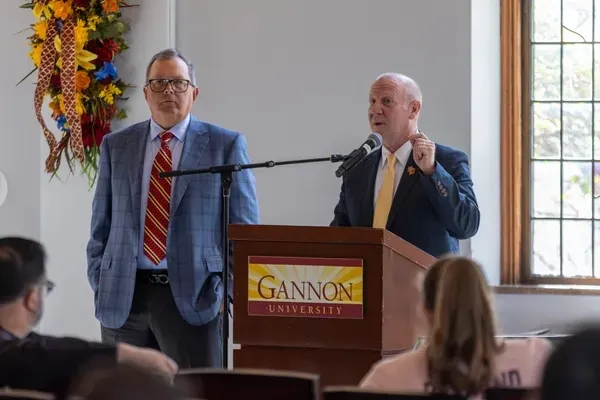
At Gannon University, Walter Iwanenko stepped down as president effective October 8 to pursue other opportunities, as the institution nears the completion of a complex merger with nearby Ursuline College. The consolidation of the two Catholic institutions, slated for mid-December, was the primary mandate of Iwanenko’s brief administration. To guide the final stages of the merger, Gannon’s board brought back Keith Taylor, who previously led the university for more than a decade. However, Taylor’s return is explicitly temporary, and he immediately signaled that the institution faces imminent reductions in force and organizational restructuring driven by sharp enrollment declines and broader demographic challenges.
Reputational Crises and New Beginnings at Private Colleges
Private liberal arts institutions also navigated turbulent waters, none more publicly than Bard College in New York. The college’s board announced the appointment of Marvin Krislov, currently the president of Pace University and former president of Oberlin College, as its 16th president. Krislov signed a three-year contract beginning July 1, following a unanimous board vote.
Krislov’s arrival is intended to steady an institution rocked by intense public scrutiny surrounding the departure of Leon Botstein, who led Bard for five decades. Botstein resigned over severe backlash regarding his professional relationship with convicted sex offender Jeffrey Epstein and Epstein’s subsequent integration into college initiatives. Although Botstein initially retained a faculty position and professorship, he relinquished those roles after federal lawmakers raised fresh allegations regarding his potential involvement in Epstein’s exploitation of victims—allegations that Botstein has consistently denied. Longtime senior administrator Jonathan Becker has managed day-to-day operations as acting president during the interim period.
Broader Implications for Higher Education Governance
The concentration of executive turnover observed over this single month highlights the compounding pressures confronting modern college and university presidents. Higher education leaders are increasingly caught in a crossfire between declining traditional-age student demographics, escalating operational costs, tightening state appropriations, and intense political or reputational polarization.
The rising frequency of non-traditional appointments—such as corporate executives leading massive public systems—suggests that governing boards are prioritizing crisis management, financial restructuring, and public relations over traditional academic credentials. At the same time, the sudden exits of executives like Pullin and Parsons underscore the precarious nature of executive leadership in an era where institutional survival often requires deeply unpopular decisions, including workforce reductions, program prioritization, and asset mergers.
As these newly appointed leaders prepare to take office in the coming months, their early priorities will undoubtedly center on fiscal stabilization, restoring community morale, and redefining institutional missions to meet the demands of an evolving economic and social landscape. The ripple effects of October’s leadership ledger will likely shape the trajectory of American higher education well into the next decade.
Related posts: