New Lawsuit Alleges NIH Resumes Ideological Grant Terminations Using Coded Keywords And Political Litmus Tests

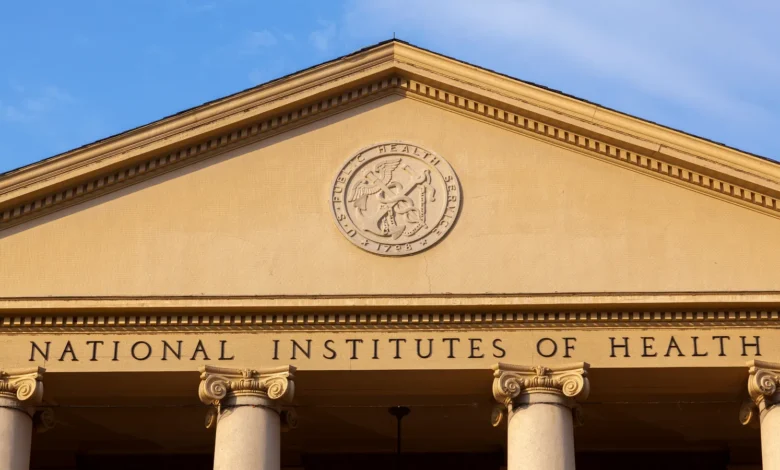
Federal scientific research funding has once again been thrown into legal turmoil following the filing of a major new lawsuit targeting the National Institutes of Health. According to the complaint, the agency has ramped up a sweeping wave of grant terminations and application rejections, systematically targeting scientific studies whose stated goals or terminology clash with the ideological and political priorities of the Trump administration.
The legal action contends that the NIH has circumvented previous judicial defeats by replacing older, invalidated administrative directives with new agency guidance issued by NIH Director Dr. Jay Bhattacharya. Plaintiffs in the lawsuit argue that these updated policies act as an unconstitutional political litmus test, stifling critical inquiry into pressing public health crises, marginalizing vulnerable populations, and unraveling decades of cumulative scientific investment.
The scope of the disrupted research is vast, affecting critical medical studies across the United States. According to legal filings, upended projects range from comprehensive epidemiological research tracking high-risk populations susceptible to early-onset dementia to detailed biochemical investigations examining disparities in kidney disease incidence across diverse racial demographics.
Legal Representation and Plaintiffs Speak Out
Legal advocacy organizations representing the affected academics and researchers argue that the federal government’s actions represent a fundamental overreach that harms public health and violates constitutional protections.
"This isn’t just illegal, it hurts every person served by this research and unravels years of work by the scientific community," stated Shalini Goel Agarwal, a special counsel at Protect Democracy, one of the primary legal groups representing the plaintiffs.
Legal teams argue that by injecting political ideology into the scientific peer-review and grant-allocation processes, the administration is subverting the foundational principles of objective research. Grayce Zelphin, a senior staff attorney at the American Civil Liberties Union of Northern California, echoed these concerns in a public statement released alongside the filing.
"The NIH’s new policies, which are essentially a political litmus test, violate the First Amendment, undermine science and education, and have cost universities tens of millions of dollars in cancelled grants," Zelphin said.
As the litigation moves forward, representatives for the National Institutes of Health have maintained a policy of declining public comment on ongoing legal matters. When contacted for statements regarding the latest complaint, representatives for the agency reiterated that the NIH does not comment on active litigation.
Chronology of a Policy Battle: From Executive Orders to Keyword Filters
The current legal confrontation is the latest chapter in a prolonged tug-of-war between federal researchers and the Trump administration over the boundaries of government-funded science. The conflict originated early last year with a series of executive orders signed by President Donald Trump, which directed federal agencies to review and prune grant portfolios that conflicted with executive priorities. These directives quickly resulted in the mass cancellation of billions of dollars in scientific funding nationwide.
However, the administration’s aggressive approach hit significant legal roadblocks in the autumn of 2025. Federal courts increasingly ruled against the administration’s arbitrary cancellation of peer-reviewed grants. A notable turning point occurred when U.S. District Judge William Young issued a landmark ruling striking down internal NIH guidance that had instructed agency staff to terminate grants touching upon topics deemed politically sensitive, such as diversity, equity, and inclusion (DEI) initiatives and vaccine hesitancy.
Judge Young subsequently ordered the NIH to reinstate the abruptly terminated research grants. The legal landscape shifted once more when the U.S. Supreme Court intervened, partially blocking Judge Young’s mandate to restore the canceled grants while leaving intact the lower court’s decision to vacate the underlying NIH guidance.
Rather than halting the review process, the administration adapted its strategy. According to the new lawsuit, the agency replaced the invalidated policies with fresh guidance issued under the authority of NIH Director Jay Bhattacharya. This revised framework sought to achieve similar ideological goals while altering the formal administrative justification.
Evolution of the NIH Guidance and Targeted Research Areas
The newly challenged guidance issued in August 2025 initially drew explicit lines regarding acceptable avenues of federally funded inquiry. For instance, the lawsuit details how the initial directives asserted that research projects investigating the potential harms caused by puberty suppression, hormone therapy, or surgical interventions were inherently more promising than studies evaluating those same medical approaches as legitimate treatments for gender dysphoria.
Under mounting legal scrutiny and public criticism, the NIH softened this specific language in a July policy update. Legal analysts and the plaintiffs note that this revision appeared to be an implicit acknowledgment of the legal perils associated with funding only viewpoints that align with a pre-determined hypothesis while defunding any scientific inquiry that might reach a contrary conclusion. Despite the semantic shift in the updated guidelines, the lawsuit alleges that the practical implementation and enforcement mechanisms within the NIH remained unchanged.
The August 2025 guidance and its subsequent iterations also cast a wide net over research examining health disparities and socioeconomic determinants of health. The lawsuit highlights that the NIH explicitly prohibited support for research attributing negative health outcomes within specific demographic groups to systemic factors such as structural racism.
While the initial August 2025 guidance briefly acknowledged that historic practices like housing discrimination and redlining could measurably impact minority health, the July update excised even these measured admissions. The updated rules explicitly directed that references to systemic racism must be omitted from all future research proposals.
The Mechanics of Keyword Censorship and Self-Censorship
To enforce these ideological parameters across its vast portfolio, the NIH implemented a computerized screening process. Internal divisions within the agency were instructed to comb through existing and newly submitted grant applications using expansive keyword filters.
The lists of targeted terms are remarkably broad, encompassing concepts and terminology related to "gender," "racist," "climate change," and "vaccine refusal." This practice aligns with revelations from a separate lawsuit brought by researchers from the University of California system, in which multiple federal agencies confirmed the widespread deployment of automated keyword searches to purge billions of dollars in research funding.
Under the current administrative enforcement regime, researchers whose ongoing grants are flagged during portfolio reviews face a coercive choice: they must substantially renegotiate the scope, methodology, and language of their projects to remove offending terminology and concepts, or risk the outright termination of their funding.
The chilling effect of these policies extends far beyond active grants. Academic researchers preparing proposals for upcoming funding cycles are increasingly engaging in preemptive self-censorship. Investigators are scrubbing critical terminology from their grant applications before submission, a practice that researchers warn renders their scientific proposals less clear, less rigorous, and scientifically compromised.
Implications for Academic Institutions and the Broader Scientific Enterprise
The broader economic and operational implications for American universities and research institutions are severe. Major research universities rely heavily on NIH funding to support laboratory infrastructure, employ post-doctoral researchers and graduate students, and purchase advanced scientific equipment. The sudden termination of grants, combined with the administrative burden of navigating shifting federal guidelines, has cost universities tens of millions of dollars.
Beyond financial losses, the policy has triggered widespread concern regarding the long-term integrity of the American scientific enterprise. Academics and legal scholars warn that conditioning federal grant distribution on ideological alignment sets a dangerous precedent. By penalizing researchers who investigate topics deemed politically disfavored by the executive branch, the government risks crippling innovation in critical areas of medicine, public health, and social science.
Legal Demands and Next Steps in Court
In response to these systemic hurdles, the plaintiffs have formally requested that the federal court certify two distinct classes of affected individuals.
The first class encompasses all researchers whose existing grants have been unilaterally terminated under the challenged policies since their inception. The second, broader class includes researchers who have had grant applications formally denied under the contested guidance, those who have been pressured to alter or renegotiate the scope of their ongoing projects, and those who have chosen not to apply for federal funding out of fear of political retaliation and viewpoint discrimination.
As the lawsuit proceeds through the federal judiciary, the legal battle promises to establish critical legal precedents regarding the constitutional boundaries of executive power over federally funded scientific research. The outcome of this litigation will determine whether federal funding agencies can continue utilizing political litmus tests and automated keyword filters, or if constitutional protections for academic freedom and scientific inquiry will prevail against partisan interference.