Deepest Ever Colony of Marine Life Discovered in the Mariana Trench Challenges Existing Models of Ocean Ecology

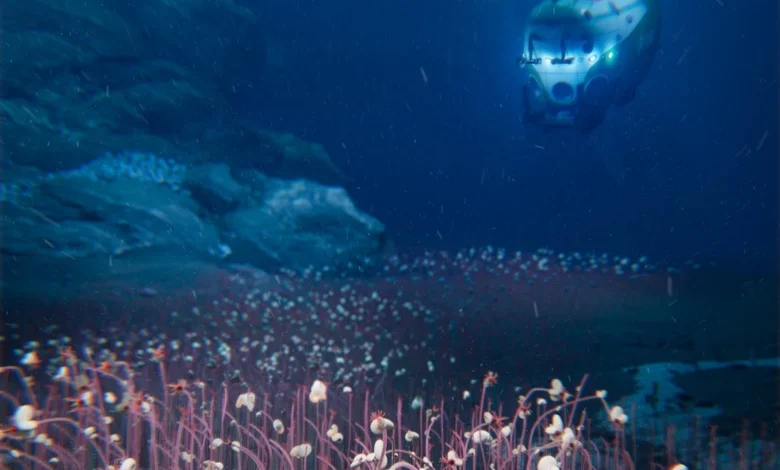
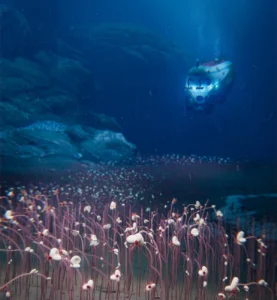
In a scientific breakthrough that has fundamentally altered our understanding of biological limits, researchers have documented the most extensive and deepest colony of animals ever observed on Earth. Utilizing the Chinese manned submersible Fendouzhe, a team from the Institute of Deep-sea Science and Engineering (IDSSE) at the Chinese Academy of Sciences identified thriving ecosystems of mollusks, tubeworms, and crustaceans at depths reaching nearly six miles below the surface of the Pacific Ocean. This discovery, detailed in a study published in the journal Nature, reveals that life in the hadal zone—the deepest reaches of the ocean—is far more abundant and diverse than previous biological models suggested.
A Journey into the Hadal Frontier
The Mariana Trench, a crescent-shaped scar in the Earth’s crust, represents the deepest point in the global ocean. To put the scale into perspective, if one were to place Mount Everest at the bottom of the trench, its peak would still be more than a mile underwater. For decades, the abyss was largely characterized as a desolate, nutrient-poor environment, believed to be incapable of supporting complex, multi-cellular life in significant numbers.
During a series of 23 rigorous dives conducted throughout the previous year, the Fendouzhe submersible traversed depths ranging from 3.6 to 5.92 miles. The expedition focused on the Kuril-Kamchatka Trench and the western Aleutian Trench, as well as the Mariana Trench. What the researchers encountered challenged the "desolate" narrative established by early explorers like James Cameron, who famously described the region as an alien, near-lifeless desert in 2012. Instead, the team documented a vibrant, high-density oasis of biological activity.
The Mechanism of Survival: Chemosynthesis in the Dark
The primary constraint for life in the deep sea is the total absence of sunlight, which renders photosynthesis—the engine of life for almost all surface-dwelling organisms—impossible. The organisms discovered by the Chinese team, including siboglinid Polychaeta (tubeworms) and various species of Bivalvia (clams and mollusks), rely instead on chemosynthesis.
This process involves the conversion of inorganic chemical molecules into energy. The study indicates that the ecosystem is sustained by hydrogen sulfide-rich and methane-rich fluids. These chemicals are transported along geological faults that traverse deep sediment layers. Isotopic analysis conducted by the research team suggests that the methane fueling this ecosystem is produced microbially from deposited organic matter, creating a localized food web that operates independently of the solar-driven energy cycle at the surface. The observation of tubeworms clustering around snow-like microbial mats provides compelling evidence of the symbiotic relationship between these animals and the bacteria that process the methane.
Chronology of Deep-Sea Exploration
The history of deep-sea exploration is marked by incremental advancements in submersible technology, each unlocking new layers of the ocean’s mysteries:

- 1960: The bathyscaphe Trieste makes history as the first vessel to reach the bottom of the Challenger Deep, the deepest point of the Mariana Trench, piloted by Jacques Piccard and Don Walsh.
- 2012: Director James Cameron completes the first solo dive to the bottom of the Challenger Deep, providing high-definition imagery that highlighted the extreme, albeit perceived, isolation of the trench.
- 2020: The Fendouzhe (Striver) submersible completes its maiden voyage to the bottom of the Mariana Trench, marking a significant leap in China’s deep-sea research capabilities.
- 2024–2025: A series of 23 dives by the Fendouzhe yields the discovery of the most extensive chemosynthesis-based community ever documented, spanning over 1,500 miles.
Scientific Implications and Data Analysis
The sheer scale of this discovery is what separates it from previous findings. While remotely operated vehicles (ROVs) had previously identified individual invertebrates or isolated clusters of life near hydrothermal vents, the Fendouzhe team observed a continuous, sprawling community. The identified organisms covered a distance of approximately 1,553.4 miles.
Mengran Du, a marine geochemist and co-author of the study, noted that the abundance and diversity of life found during these dives suggest that hadal trenches may function as "vibrant oases" rather than barren conduits. The findings indicate that the geological conditions required to support this life—specifically the presence of active faults that allow chemical-rich fluids to migrate from the crust—are common across other hadal trenches globally. Consequently, researchers now believe that these chemosynthetic communities may be widespread across the ocean floor, necessitating a complete revision of current carbon cycling models in deep-ocean environments.
Balancing Scientific Discovery with Environmental Protection
The publication of these findings comes at a critical juncture in international environmental policy. As the global demand for rare earth minerals grows, the debate surrounding deep-sea mining has intensified. Proponents of the industry argue that the ocean floor holds the necessary resources for a green energy transition, such as cobalt and nickel for battery production. Conversely, marine biologists and environmental advocates warn that the ecosystem is exceptionally fragile and that the long-term impacts of sediment disturbance and noise pollution are not yet fully understood.
The International Seabed Authority (ISA) is currently under pressure to finalize a regulatory framework for deep-sea mining. The discovery of complex, thriving ecosystems at such extreme depths provides a cautionary argument for the scientific community. If these trenches are not "dead zones" but rather critical hubs of biological diversity, the potential for irreversible damage from industrial mining operations becomes a major ecological concern. The researchers argue that the "compelling evidence" of life suggests that we have only scratched the surface of the deep-ocean’s role in global biodiversity.
Future Research Directions
The implications for the study of astrobiology are also significant. If life can thrive in the high-pressure, chemical-dependent environments of the Mariana Trench without any reliance on solar energy, it strengthens the hypothesis that similar life forms could exist in the subsurface oceans of icy moons within our solar system, such as Jupiter’s moon Europa or Saturn’s Enceladus.
For the researchers at the Institute of Deep-sea Science and Engineering, the work has only just begun. The team intends to continue their exploration of the hadal zone to determine the precise genetic makeup of these organisms and how they have evolved to withstand pressures that would crush most known terrestrial life forms. As technology continues to improve, the "hidden world" described by the researchers is slowly being brought into focus, forcing a re-evaluation of the boundaries of life on Earth.
Ultimately, the discovery serves as a reminder of the vast, unexplored territory remaining on our own planet. The deep ocean represents the final terrestrial frontier, and with every dive of the Fendouzhe, the scientific community is finding that the "desolate" trenches are, in fact, teeming with secrets that redefine the parameters of survival. As policy discussions continue, the data provided by this study will likely serve as a foundational pillar in the conservation of the deep-sea environment, ensuring that these newly discovered, ancient communities remain undisturbed by the encroachment of human industry.