Gorilla Habitats and Pristine Forests at Risk as Democratic Republic of Congo Opens Half of Country to Oil and Gas Drilling Bids

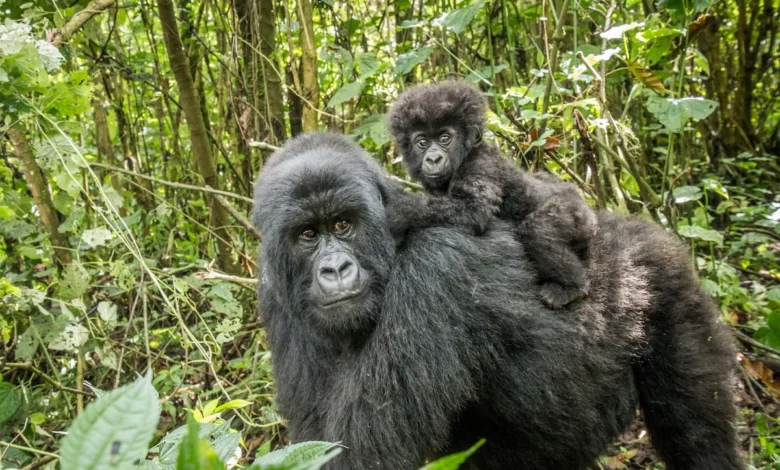
The Democratic Republic of the Congo (DRC) currently stands at a precarious environmental crossroads as its government pushes forward with an aggressive expansion of fossil fuel exploration. A new investigative report titled Forests to Frontlines: Oil Expansion Threats in the DRC, published by Earth Insight in partnership with local advocacy groups, reveals that the government has moved to auction off over 50 oil blocks. This decision effectively opens more than half of the nation’s total landmass—approximately 306 million acres—to oil and gas extraction. The proposed zones encompass some of the world’s most critical, intact tropical rainforests and serve as the final strongholds for endangered species, including the mountain gorilla, eastern lowland gorilla, and the bonobo.
A Chronology of Escalating Environmental Risk
The trajectory toward this massive expansion did not occur overnight. The current crisis is the culmination of a multi-year shift in the DRC’s national energy strategy, which has prioritized short-term resource exploitation over long-term ecological preservation.
In 2022, the Congolese government sparked international outcry by launching an auction for 30 oil and gas blocks. At the time, environmental organizations warned that these concessions overlapped significantly with protected areas and vital peatland complexes. Despite widespread condemnation from global climate scientists and indigenous rights activists, the government proceeded with the tender.
By mid-2025, the situation reached a new level of severity. The government initiated a new round of bidding for 52 additional oil blocks, further compounding the footprint of industrial activity. This latest move brings the total land area designated for potential extraction to over 50 percent of the country. This expansion is particularly alarming given that it directly contradicts previous government pledges to uphold the integrity of the Kivu-Kinshasa Green Corridor—a project designed to protect biodiversity and promote sustainable development.
The Ecological Stakes: Biodiversity and Carbon Sequestration
The environmental significance of the Congo Basin cannot be overstated. It is the second-largest tropical rainforest on the planet and functions as a primary "lung" of the Earth, absorbing gigatons of atmospheric carbon. Within its borders, the Cuvette Centrale peatlands represent one of the most sensitive carbon sinks on the planet. These vast, waterlogged forest areas store an estimated 30 gigatons of carbon—the equivalent of several years’ worth of global human-caused emissions.
Disturbing these peatlands for infrastructure, drilling rigs, and pipelines risks releasing this trapped carbon back into the atmosphere, potentially accelerating the global climate crisis. Furthermore, the sheer scale of the proposed drilling blocks threatens 64 percent of the country’s pristine forest.
The biological diversity at risk is equally staggering. The Congo Basin is home to an extraordinary array of endemic wildlife. Mountain gorillas, already under intense pressure from habitat loss and poaching, find their remaining territories squarely within the sights of potential oil exploration. Elephants, rare bird species, and thousands of unique plant species rely on the continuity of these ecosystems. The fragmentation of these habitats through road construction and industrial noise pollution is likely to have irreversible consequences for population viability.
Socio-Economic and Human Rights Implications
Beyond the environmental toll, the proposed auction threatens the livelihoods and human rights of approximately 39 million people. This population includes numerous indigenous communities and forest-dependent groups who have managed these lands for generations. For these communities, the rainforest and its river systems are not merely resources; they are foundational to their cultural identity, spiritual practices, and daily survival.

Pascal Mirindi, a campaign coordinator for Notre Terre Sans Pétrole (Our Land Without Oil), has been a vocal critic of the government’s logic. "Imagine: 39 million Congolese people and 64 percent of our forests could be directly affected by the awarding of these oil blocks," Mirindi stated. "Where is the coherence? We are reminding our leaders that the Congolese people are the primary sovereign. We will not remain silent while certain people organize themselves to sell off our future."
The conflict of interest between the government’s stated environmental goals—such as the Kivu-Kinshasa ecological corridor—and its licensing policies has created a profound trust deficit. Civil society organizations argue that the government is failing its own people by prioritizing speculative oil wealth over the proven, long-term benefits of ecosystem services, such as water regulation, soil fertility, and climate mitigation.
Analysis of International and Domestic Pressure
The Forests to Frontlines report provides a granular look at the overlap between industrial interest and conservation. Data shows that the new oil blocks intersect with 20.5 million acres of officially protected areas and 21.3 million acres of Key Biodiversity Areas (KBAs). Furthermore, 72 percent of the Kivu-Kinshasa Green Corridor, which was touted as a hallmark of the DRC’s commitment to sustainable growth, now overlaps with potential drilling sites.
International conservation groups, including the Rainforest Foundation UK and local partners like CORAP (Coalition des Organisations de la Société Civile pour le Suivi des Reformes et de Action Publique), are calling for an immediate moratorium on the 2025 licensing round. They argue that international financing and donor support must be explicitly conditioned on the protection of these high-value ecosystems.
From an economic perspective, analysts point out that the global transition away from fossil fuels makes these investments increasingly risky. By investing in long-term oil infrastructure, the DRC risks creating "stranded assets"—investments that become obsolete before they can be fully amortized due to international climate policies and the falling cost of renewable energy alternatives.
A Call for Transparent Governance
The report concludes with a set of urgent recommendations for the DRC government and its international partners. First and foremost is the demand for the total cancellation of the 2025 licensing round. Beyond this, the report emphasizes the necessity of:
- Respect for Indigenous Rights: Ensuring that the Free, Prior, and Informed Consent (FPIC) of local communities is not just a formality but a foundational element of any land-use decision.
- Alignment of Financing: Ensuring that international donors and financial institutions align their investments with the DRC’s international commitments under the Convention on Biological Diversity and the Paris Agreement.
- Meaningful Participation: Establishing a framework where civil society and local stakeholders have a seat at the table in environmental governance and monitoring, ensuring transparency in how natural resources are managed.
As Anna Bebbington, an Earth Insight research manager, noted, the development of oil and gas in such fragile ecosystems would have "devastating impacts on biodiversity, communities, land rights and the global fight against climate change."
The situation in the Democratic Republic of the Congo is not merely a local issue of resource management; it is a global concern. The health of the Congo Basin is inextricably linked to the stability of the global climate. As the DRC moves forward with its expansion plans, the international community faces the challenge of whether it can successfully persuade the Congolese government to pivot toward a model of development that honors its citizens’ rights and preserves the planet’s most vital natural legacy. The coming months will be critical, as the decisions made regarding these oil blocks will set the tone for the country’s environmental and social trajectory for decades to come.