The Critical Role of Methane in Global Climate Action: Sources, Impacts, and the Urgent Need for Mitigation Strategies

Methane is a colorless, odorless hydrocarbon that has emerged as one of the most significant challenges and opportunities in the global effort to stabilize the climate. While carbon dioxide (CO2) often dominates the conversation regarding greenhouse gas emissions, methane (CH4) is the second-most important contributor to the climate crisis, responsible for approximately one-third of current global heating. Composed of four hydrogen atoms bonded to a single carbon atom, methane is the primary component of natural gas, which currently generates about 25 percent of the world’s electricity. Despite its relatively short lifespan in the atmosphere—lasting roughly 12 years compared to the centuries that CO2 persists—methane’s ability to trap heat is extraordinarily potent. Over a 20-year period, methane is 86 times more powerful than CO2 on a mass-for-mass basis, making its immediate reduction a critical lever for slowing the rate of planetary warming in the near term.
The Evolution of Atmospheric Methane: A Chronology of Growth
The history of methane in the atmosphere is a story of rapid acceleration tied to human industrialization. Before the Industrial Revolution, methane concentrations in the atmosphere remained relatively stable. However, the expansion of fossil fuel extraction, intensive livestock agriculture, and modernized waste management has fundamentally altered the Earth’s chemical balance.

By 2023, atmospheric methane concentrations reached a record 1,934 parts per billion (ppb), representing a 265 percent increase over pre-industrial levels. This surge has not been linear. While concentrations plateaued briefly in the early 2000s, they began a sharp and unexplained ascent around 2007, a trend that has accelerated in the last five years. In 2021, the international community responded to this trend at the COP26 summit in Glasgow with the launch of the Global Methane Pledge. Led by the United States and the European Union, the pledge now includes 159 nations committed to reducing global methane emissions by 30 percent from 2020 levels by 2030. Despite these diplomatic efforts, real-world data from 2024 indicates that emissions continue to rise, driven by both industrial activity and climate-induced feedback loops in natural systems like wetlands.
Measurement Discrepancies: Bottom-Up vs. Top-Down Analysis
Accurately quantifying methane emissions is a complex scientific endeavor that relies on two primary methodologies: "bottom-up" and "top-down" assessments. Bottom-up methods involve ground-level measurements or estimations based on activity factors, such as multiplying the average methane output of a single cow by the total number of cattle in a region. Top-down methods, conversely, utilize aerial surveys, high-altitude platforms, and increasingly sophisticated satellite technology to measure methane concentrations in the atmosphere.
The discrepancy between these two methods is often stark. Scientific studies have revealed that direct top-down measurements of U.S. oil and gas operations are frequently 60 percent higher than the estimates provided by the Environmental Protection Agency (EPA). This "measurement gap" is largely attributed to "super-emitters"—specific facilities or incidents where equipment failure or intentional venting results in massive, localized leaks. Research indicates that just 5 percent of leaks in the gas industry are responsible for more than half of the total volume of leaked methane. The advent of satellites like GHGSat and the Environmental Defense Fund’s MethaneSAT is now providing the transparency needed to identify these super-emitters in real-time, offering a path toward more accountability in the energy sector.

Primary Drivers: Agriculture, Fossil Fuels, and Waste
Human activities are responsible for approximately 60 percent of global methane emissions, with the remaining 40 percent originating from natural sources. The human-caused portion is dominated by three major sectors:
Agriculture (40% of Anthropogenic Emissions)
Livestock production is the single largest source of human-caused methane, contributing 32 percent of the total. This occurs primarily through enteric fermentation, a digestive process in ruminant animals like cows and sheep where microbes break down plant matter and release methane as a byproduct. Additionally, the anaerobic decomposition of manure in large-scale storage lagoons contributes significantly to the sector’s footprint. Rice cultivation is another major factor, accounting for 8 percent of human-caused emissions; the flooded conditions of rice paddies create ideal environments for methane-producing archaea.
Fossil Fuels (35% of Anthropogenic Emissions)
The extraction, processing, and transport of coal, oil, and gas release vast quantities of methane. In the oil and gas sector, methane is released through intentional venting, flaring (when incomplete), and accidental leaks. Coal mining is also a significant contributor, as methane trapped within coal seams is released during the extraction process. Underground mines are particularly problematic, accounting for 70 percent of coal-related methane emissions.

Waste Management (20% of Anthropogenic Emissions)
Landfills and wastewater treatment plants act as massive biological reactors. As organic waste—such as food scraps and paper—decomposes in the oxygen-poor environment of a landfill, microbes produce methane. Due to rapid urbanization and population growth, waste-related emissions are projected to grow faster than any other human-caused source, with solid waste volumes expected to rise by 73 percent by 2050.
The "Bridge Fuel" Myth and the Risks of LNG Expansion
For over a decade, natural gas was promoted as a "bridge fuel" that would facilitate the transition from coal to renewable energy. The argument was based on the fact that burning natural gas for electricity produces roughly half the CO2 of coal. This narrative fueled a global boom in liquefied natural gas (LNG) infrastructure, particularly in the United States, which became the world’s leading LNG exporter by 2022.
However, recent climate science has scrutinized this "bridge" narrative. Because methane is so potent, even small leaks in the supply chain can negate the carbon benefits of switching from coal to gas. A 2023 study found that if as little as 0.2 percent of methane leaks during production and transport, natural gas becomes as damaging to the climate as coal. When accounting for the full lifecycle of LNG—including the energy-intensive process of liquefaction and shipping—its 20-year global warming potential may actually be 33 percent higher than coal. Policy experts now warn that the planned expansion of "methane bomb" gas fields could freeze global emissions at dangerously high levels, undermining the goals of the Paris Agreement.

Natural Feedback Loops and Tipping Points
One of the most concerning aspects of the methane challenge is the role of natural feedback loops. As the planet warms due to human activity, it triggers natural processes that release even more methane, creating a self-reinforcing cycle.
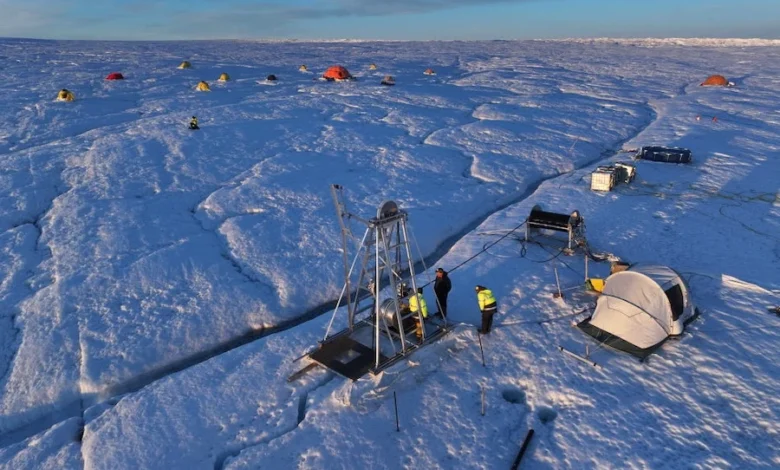
Wetlands are the largest natural source of methane, but climate-fueled changes in rainfall and temperature are causing these ecosystems to expand and emit methane at rates far exceeding historical norms. In the Arctic, the thawing of permafrost—frozen ground that contains twice as much carbon as the entire atmosphere—threatens to release massive quantities of methane and CO2. Arctic methane emissions have already increased by 9 percent since 2002. Similarly, warming oceans could destabilize methane hydrates on the seafloor, though scientists currently believe this risk is less immediate than permafrost thaw.
Public Health and Economic Implications
The impact of methane extends beyond temperature rise. Methane is a primary precursor to ground-level ozone (smog), a hazardous air pollutant. Ozone damages lung tissue, exacerbates asthma, and is responsible for approximately 500,000 premature deaths annually worldwide. It also inhibits plant growth, leading to significant agricultural losses. According to the United Nations Environment Programme (UNEP), every million metric tons of methane reduced could prevent 1,430 heat-related deaths and avoid the loss of 145,000 metric tons of essential crops like wheat and rice.

Pathways to Mitigation: Technical and Systematic Solutions
Despite the gravity of the situation, experts emphasize that methane emissions can be reduced rapidly using existing technology. The International Energy Agency (IEA) estimates that 70 percent of methane emissions from the oil and gas sector could be eliminated with current tools, often at little to no net cost, by simply fixing leaks and ending routine venting.
In agriculture, solutions include modifying livestock diets with additives like seaweed (which can reduce enteric emissions by up to 82 percent) and improving manure management through the use of anaerobic digesters. For rice production, techniques such as "alternate wetting and drying" can reduce emissions by 45 percent without sacrificing yields. In the waste sector, the focus is on organic waste diversion and the installation of gas capture systems at landfills.
While technical fixes are vital, systematic changes are equally necessary. This includes a rapid phase-out of fossil fuel subsidies, a transition to plant-based diets in high-consumption nations, and a shift toward a circular economy that minimizes waste.

Broader Impact and the Urgency of Action
The window for limiting global warming to 1.5 degrees Celsius is closing, and methane mitigation is widely regarded as the "strongest lever" available to slow warming over the next two decades. The Intergovernmental Panel on Climate Change (IPCC) has stated that methane emissions must be cut by 34 percent by 2030 to remain on a 1.5C-compatible pathway.
The challenge lies in the implementation gap. While 159 countries have signed the Global Methane Pledge, only 13 percent of global methane emissions are currently covered by enforceable domestic policies. The transition from voluntary pledges to mandatory regulations—such as the recent methane fee introduced in the United States and new satellite monitoring requirements in the EU—will be the deciding factor in whether the world can successfully curb this potent gas. As climate scientist Bill McKibben has noted, the sheer scale of planned gas infrastructure could overwhelm all other climate efforts unless immediate action is taken to prioritize methane reduction alongside the decarbonization of the global economy.
Related posts: