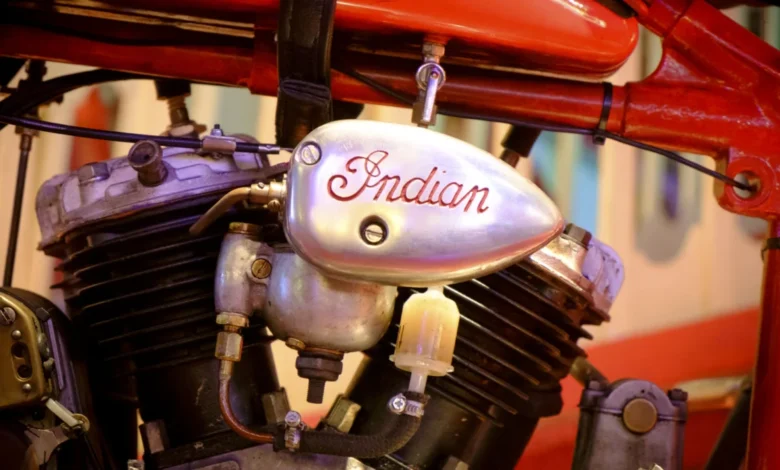
The history of the American motorcycle industry is often simplified into a binary narrative centered on the rivalry between Indian and Harley-Davidson. However, the true origins of the domestic motorcycling sector predate both companies. While Indian Motorcycle—founded in 1897 as the Hendee Manufacturing Company in Springfield, Massachusetts—frequently claims the title of America’s first motorcycle manufacturer, historical records confirm that smaller, earlier firms were active in the space. Despite this, Indian’s contributions to engineering, racing, and military logistics remain unparalleled. From its first production run in 1901 to its eventual dissolution in 1953, the company evolved from a bicycle manufacturer into a global industrial titan.
A Chronology of Innovation and Decline
The partnership between George Hendee and engineer Oscar Hedstrom proved transformative for the nascent industry. After meeting in 1900 and debuting their first prototype in 1901, the duo successfully transitioned from motorized bicycles to robust, gasoline-powered machines. By 1905, the company had produced its first 1,000 units. The growth was exponential; by 1913, production reached 32,000 units annually. This peak period was defined by the company’s dominance in racing and its aggressive expansion into new markets.
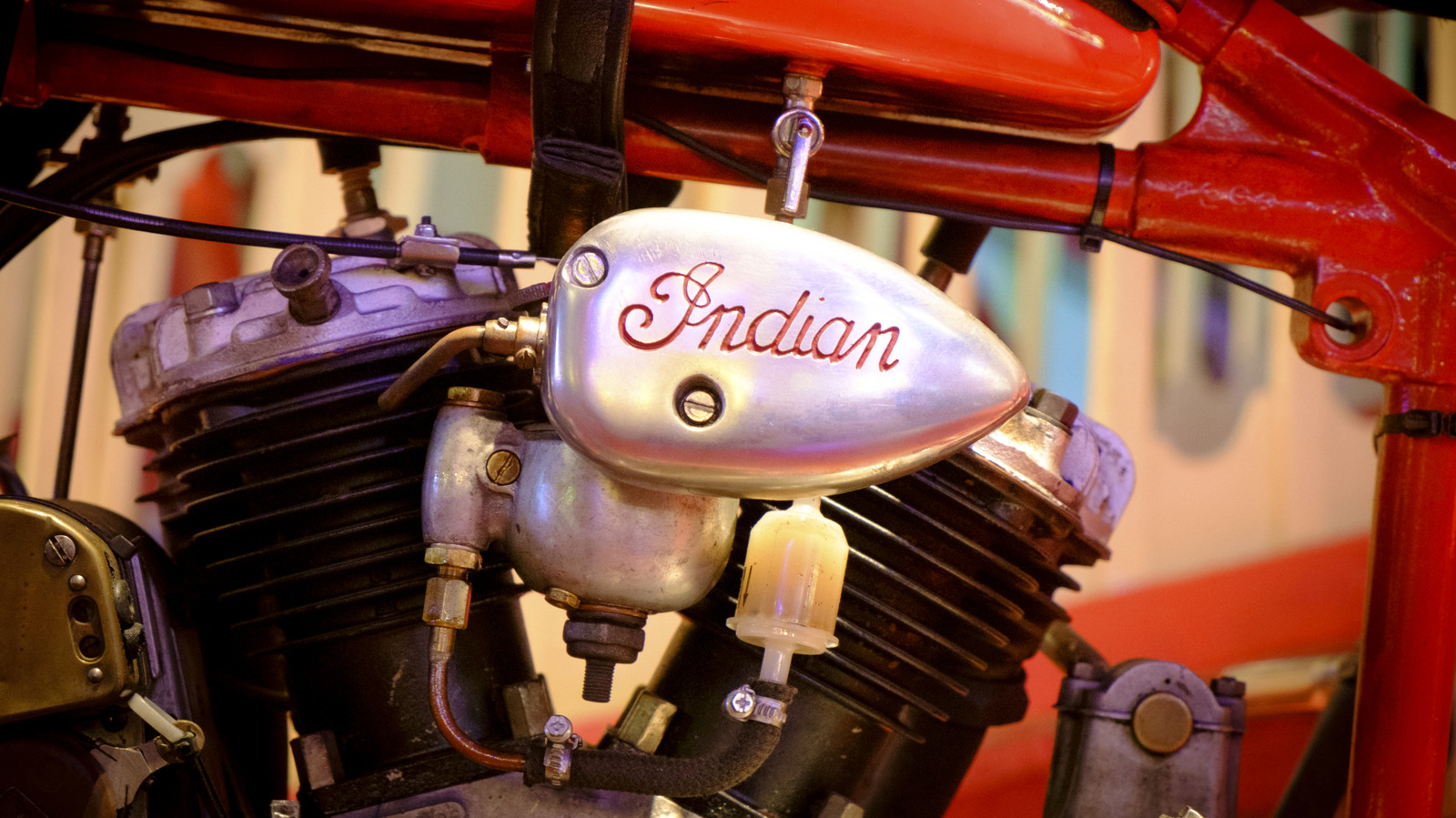
The mid-century proved difficult for the Springfield-based giant. Post-World War II economic shifts, labor disputes, and the rise of more agile international competition led to a steady decline in market share. The company famously shuttered its Springfield factory in 1953, an event that abruptly ended the production of the iconic Chief and transformed the final model-year bikes into some of the most sought-after artifacts in automotive history.
The 1902-1905 Indian Camelback: The Foundation
The Camelback represents the genesis of Indian’s manufacturing prowess. Named for its distinctive, humped rear-mounted fuel tank, this machine utilized a 2-horsepower, 13-cubic-inch air-cooled engine sourced from the Aurora Automatic Machinery Company. These early units were fundamentally motorized bicycles, yet they demonstrated surprising performance; in 1903, Oscar Hedstrom set a world speed record of 56 mph on a Camelback. Current estimates place the number of survivors in the low dozens, with auction prices for unrestored examples reaching as high as $77,867 when adjusted for modern currency.
The 1941-1943 Indian 841: A Military Misstep
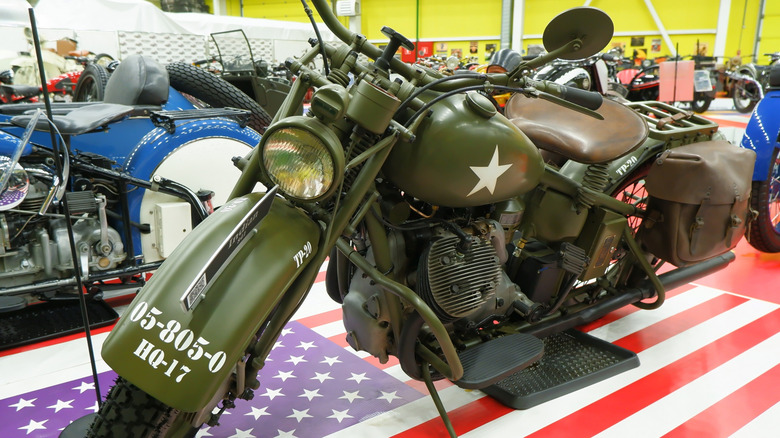
The Indian 841 remains a testament to wartime engineering under pressure. Commissioned by the U.S. government for desert warfare in North Africa, the 841 featured a 45-cubic-inch 90-degree side-valve V-twin engine with a longitudinal crankshaft. Designed for low-maintenance operation in extreme heat, the machine utilized an enclosed driveshaft and a four-speed foot-shift. Ultimately, the U.S. Army favored the versatility of the Jeep over dedicated military motorcycles. While approximately 1,000 prototypes were produced, fewer than 100 complete, original 841s are believed to exist today. Collectors view these as crucial historical documents, with recent sales figures hovering near $25,000 to $30,000 for civilian-adapted models.
The 1936-1937 Upside Down Four
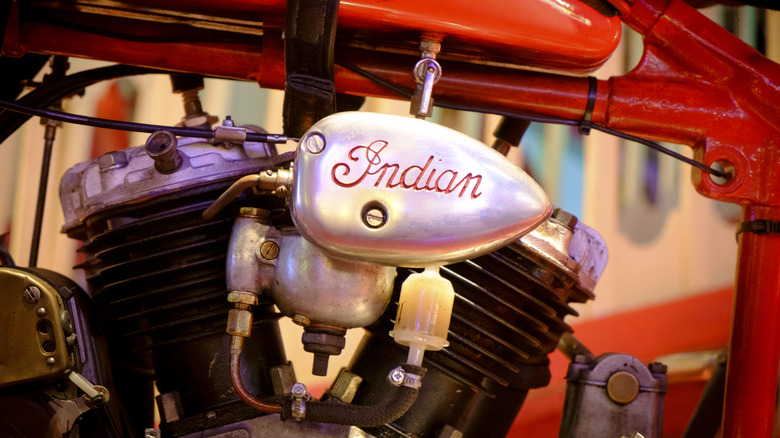
During the mid-1930s, Indian sought to refine its four-cylinder lineup. In an attempt to improve acceleration, engineers inverted the engine design, placing exhaust valves above the inlets. While the 436 and 437 models successfully increased power to 35 hp and a top speed of 95 mph, the "Upside Down" configuration resulted in significant heat exposure for the rider. The design was short-lived, replaced by 1938 with a more traditional inlet-over-exhaust layout. Due to their mechanical complexity and short production run, these bikes are highly prized, with rare examples fetching upwards of $140,000 at auction.
The 1927-1928 Indian Ace
Indian’s entry into the four-cylinder market was facilitated by the acquisition of the Ace Motor Company. These early machines were essentially rebranded Ace Fours, designed by William G. Henderson. Indian’s modifications—including pressurized crankshaft lubrication and increased displacement—cemented the brand’s reputation for power. With production estimated at only 260 units before the transition to the Indian 401, the Ace is a cornerstone of any serious collection. In 2024, a 1928 Indian Ace realized $220,000 at a major auction, reflecting the scarcity of this transitional model.
The 1953 Indian Chief: The Final Chapter
The 1953 Chief is arguably the most famous Indian motorcycle. As the final bike to roll off the Springfield assembly line, it represents the end of an era. While earlier Chiefs were produced in the thousands, the 1953 models were limited to approximately 600 units. These bikes featured 80-cubic-inch side-valve V-twin engines and modern hydraulic forks. Because they represent the "last of the line," their value has climbed steadily, with pristine, restored examples occasionally exceeding $90,000 in private sales.
The 1914 Hendee Special: The Recall Pioneer
Innovation often carries risk, as evidenced by the 1914 Hendee Special. It was the world’s first motorcycle to feature an electric starter. However, the battery technology of the era proved insufficient, and the starter system failed frequently. The resulting recall—the first of its kind in the industry—saw most starters removed and replaced with traditional kick-starters. An original example with the functional factory starter is an extreme rarity. Estimates suggest fewer than six survive, and auction results for these machines have frequently exceeded $170,000.
The 1948 648 Big Base Scout
The 648 Big Base Scout was a purpose-built racing machine intended to homologate Indian for the Daytona 200. With only 50 units manufactured, the model represents the pinnacle of Indian’s post-war racing development. Featuring a 45-cubic-inch V-twin and a specialized oil-capacity base, the 648 dominated the 1948 Daytona 200 under rider Floyd Emde. With only seven survivors currently accounted for, these machines are considered blue-chip assets, with prices eclipsing $250,000 in recent years.
The A45 Altoona and 1938/1939 Hill Climbers
The 1920s A45 Altoona Hillclimber and the late-1930s Scout Hill Climbers illustrate Indian’s dominance in specialized racing. These machines were often modified by their riders, making "factory-original" specifications a point of contention among historians. These bikes were fueled by alcohol and featured extended frames to navigate steep terrain. The A45 is particularly valuable, with high-condition survivors commanding over $340,000 at auction, reflecting the intense interest in the history of American motorcycle sport.
The 8-Valve Racers: The Rarest of All
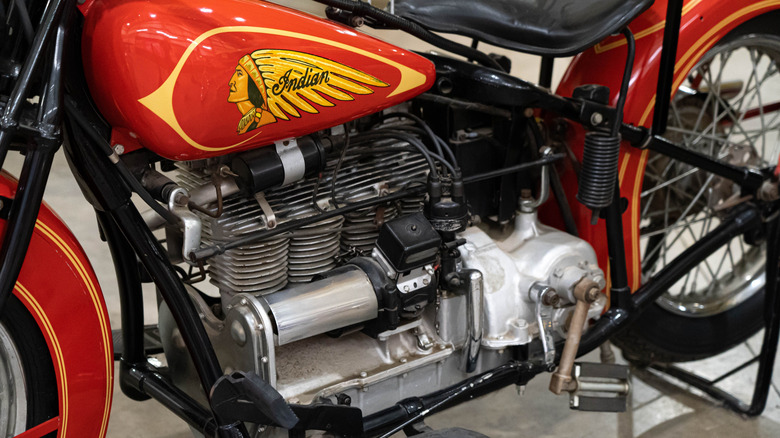
At the pinnacle of rarity sit the 1910s 8-Valve racers. Built specifically for the high-danger board track racing circuit, these machines were never mass-produced. The lack of standardized production, combined with the high attrition rate of board track racing, has left perhaps only four genuine survivors. One notable example, once exhibited at the Guggenheim Museum, sold for over $310,000. These machines are not merely motorcycles; they are considered significant works of kinetic art and engineering history.
Market Implications and Legacy
The high valuation of these vintage Indian motorcycles serves as a barometer for the broader collector car and motorcycle market. Prices are driven by a combination of provenance, authenticity, and historical significance. Auction houses and private collectors emphasize that the "survivor" status—bikes that retain original parts and history—far outweighs the value of highly restored replicas.
The legacy of the original Indian Motorcycle Company continues to influence the brand’s modern iteration. The company’s ability to leverage its heritage while modernizing its technology has kept the brand relevant in the 21st century. However, the true value of these 10 models lies in their role as markers of a period when American industry was at the forefront of the global mechanical revolution. As fewer examples remain in the public domain, it is likely that these prices will continue to appreciate, cementing their status as some of the most important artifacts in the history of motorized transport.