Deep Sea Oasis Discovered: Scientists Unveil the Most Extensive Chemosynthetic Ecosystem at the Bottom of the Mariana Trench

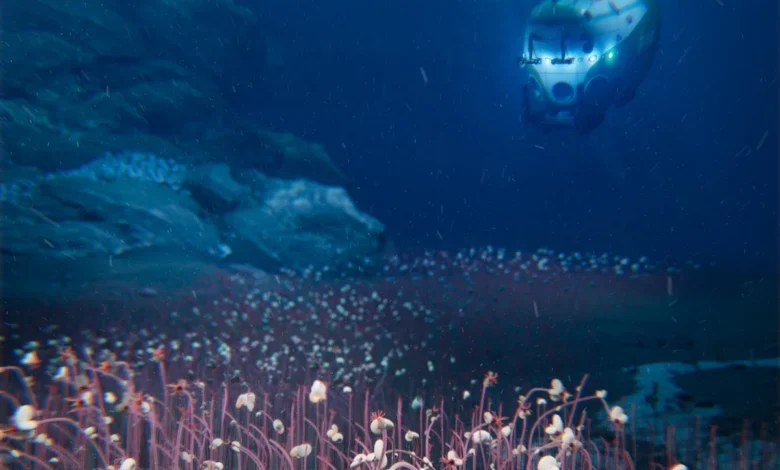
In a landmark achievement for marine biology and oceanography, a team of researchers from the Chinese Academy of Sciences has documented the deepest and most extensive chemosynthetic ecosystem ever observed on Earth. Utilizing the manned submersible Fendouzhe, the expedition identified vast, thriving colonies of mollusks, tubeworms, and crustaceans nearly six miles beneath the surface of the Pacific Ocean. The discovery, published in the journal Nature, fundamentally challenges existing scientific models regarding carbon cycling and the physiological limits of life in the Earth’s most extreme environments.
The expedition, which spanned multiple dives into the hadal zone—the deepest part of the ocean, typically ranging from 6,000 to 11,000 meters—revealed that life at these depths is not merely a collection of isolated organisms, but a complex, vibrant community. By documenting these creatures at depths between 3.6 and 5.92 miles, the study provides a new window into how life persists in high-pressure, lightless conditions.
A Chronology of Exploration and Discovery
The exploration of the deep ocean has historically been characterized by brevity and technical difficulty. The first human descent to the bottom of the Mariana Trench occurred in 1960, when Jacques Piccard and Don Walsh piloted the Trieste to the Challenger Deep. For decades, the abyss was largely characterized as a "desolate" and "alien" expanse, with few explorers—including filmmaker James Cameron in 2012—documenting the seafloor.
The recent expedition by the Institute of Deep-sea Science and Engineering represents a significant shift in methodology. Rather than a singular, brief visit, the Fendouzhe submersible completed 23 consecutive dives into the Mariana Trench over the course of the previous year. This consistent presence allowed researchers to map a biological footprint spanning 1,553.4 miles, moving beyond the anecdotal observations of the 20th century to a systematic, data-driven survey of the hadal trenches.
The process of discovery relied on advanced sensor technology capable of withstanding the immense hydrostatic pressure found at such depths. As the submersible traversed the western Aleutian Trench and the Kuril-Kamchatka Trench, it captured high-definition video of sprawling microbial mats, upon which larger organisms such as siboglinid Polychaeta (tubeworms) and Bivalvia (clams) were clustered.
The Mechanism of Hadal Life: Chemosynthesis
In the absence of sunlight, which typically fuels life through photosynthesis in the upper layers of the ocean, the organisms of the Mariana Trench rely entirely on chemosynthesis. This process allows life to thrive by converting inorganic molecules into energy.
According to the study, the ecosystem is sustained by fluids rich in hydrogen sulfide and methane. These chemicals are transported along seismic faults that penetrate deep into the oceanic sediment. Isotopic analysis conducted by the research team suggests that the methane is produced microbially from deposited organic matter, creating a localized, nutrient-rich environment.
The presence of "snow-like" microbial mats serves as the foundation for the food web. Tubeworms, some reaching lengths of up to one foot, were observed clustering in these areas, while spiky crustaceans, sea lilies, and sea cucumbers scavenged in the surrounding vicinity. Lead author Xiatong Peng noted that these communities are likely more widespread than previously anticipated, given the geological commonalities shared among various hadal trenches globally.
Supporting Data and Scientific Analysis
The implications of this research are significant for the field of biogeochemistry. Current models of deep-ocean carbon cycling often fail to account for the magnitude of methane-based energy production occurring in the deep trenches. The sheer scale of the discovery—thousands of individual organisms thriving in a contiguous zone—suggests that the deep sea is a far more active participant in the global carbon cycle than previously estimated.

The researchers highlighted several key findings:
- Depth Range: The observed life was found consistently between 3.6 and 5.92 miles (approximately 5.8 to 9.5 kilometers) below sea level.
- Geographical Scope: The study covered a distance of over 1,500 miles, indicating that these "oases" are not singular anomalies but a recurring feature of trench geology.
- Biodiversity: The community includes a mix of sedentary organisms like bivalves and mobile invertebrates such as crustaceans and marine worms, indicating a stable and mature ecological structure.
Co-author Mengran Du, a marine geochemist with the Institute of Deep-sea Science and Engineering, characterized the findings as a pivot point for marine science. "What makes our discovery groundbreaking is not just its greater depth—it’s the astonishing abundance and diversity of chemosynthetic life we observed," Du stated. "Unlike isolated pockets of organisms, this community thrives like a vibrant oasis in the vast desert of the deep sea."
Broader Impact and Environmental Implications
The announcement of this discovery comes at a critical juncture for international ocean policy. As nations and private corporations look toward the seafloor as a potential source for rare-earth minerals and metals, the debate over deep-sea mining has intensified.
Environmental advocates argue that these ecosystems are fragile and poorly understood. The fact that such complex life has been discovered in areas previously assumed to be nearly barren suggests that mining operations—which involve heavy machinery, sediment displacement, and chemical disturbance—could lead to irreversible loss of biodiversity.
The International Seabed Authority (ISA) is currently tasked with creating a regulatory framework for deep-sea mining, yet a consensus remains elusive. The new data provided by the Fendouzhe expedition adds a significant layer of complexity to these negotiations. If chemosynthetic communities are indeed widespread across the world’s trenches, the geographic footprint of "no-go" zones for industrial activity may need to be expanded significantly to ensure the protection of these unique biological habitats.
Furthermore, the study serves as a reminder of the limitations of current oceanic knowledge. As the scientific community continues to map the seafloor, the discovery of this "deep-sea oasis" demonstrates that our understanding of life’s capacity to adapt to extreme conditions remains in its infancy.
Future Research and Scientific Outlook
The Nature publication concludes that current models of life at extreme limits must be revised to incorporate the reality of these large-scale, chemosynthetic-based communities. Future research will likely focus on the connectivity between these trenches and whether the genetic makeup of these deep-sea populations suggests a migration pattern or isolated evolution over millions of years.
The work of the Chinese Academy of Sciences team has effectively moved the boundary of "known life" significantly deeper. As technology continues to improve, allowing for more frequent and longer-duration dives into the hadal zones, it is highly probable that more of these vibrant, chemical-eating colonies will be found.
Ultimately, this discovery underscores the need for a precautionary approach to the deep ocean. As the scientific community continues to pull back the curtain on this "hidden world," the necessity of balancing industrial interest with the preservation of one of the planet’s final frontiers remains a top priority for global ocean governance. The deep sea, once considered a vast, static desert, is now proven to be a dynamic, evolving component of the Earth’s biosphere, warranting continued protection and rigorous, non-invasive study.
Related posts: