New York Becomes the First U.S. State to Mandate All-Electric New Construction Requirements

New York has officially solidified its position as a national leader in climate policy, becoming the first state in the United States to mandate that new building construction transition entirely away from fossil fuel infrastructure. Following the finalization of regulations by the State Fire Prevention and Building Code Council in late July 2025, the state is set to implement a rigorous phase-out of gas hookups in most new residential and commercial developments. This landmark policy, rooted in the 2023 All-Electric Buildings Act, represents a fundamental shift in how the state addresses its carbon footprint, targeting a sector that contributes significantly to its greenhouse gas emissions.
The mandate requires that residential buildings up to seven stories and commercial or industrial projects under 100,000 square feet, which submit initial building permit applications on or after December 31, 2025, must be constructed without fossil fuel connections. Larger commercial and industrial structures will follow a staggered implementation schedule, with requirements taking full effect by 2029. While the policy includes targeted exemptions—covering facilities such as hospitals, laboratories, crematoriums, and specific agricultural buildings—the regulation signals a definitive move toward the electrification of the state’s built environment.
A Chronology of the Legislative Push
The journey toward this mandate began in earnest with the passage of the All-Electric Buildings Act in 2023, a legislative centerpiece aimed at aligning New York’s construction standards with the state’s ambitious Climate Leadership and Community Protection Act (CLCPA) goals. For two years, the policy faced intense scrutiny and legal pressure. Industry groups, primarily representing fossil fuel interests, sought to challenge the legislation by drawing parallels to a 2023 federal appeals court ruling in California. In that instance, the Ninth Circuit Court of Appeals overturned a municipal ban on natural gas in new buildings in Berkeley, arguing that federal law—specifically the Energy Policy and Conservation Act (EPCA)—preempted local efforts to regulate energy efficiency in appliances.
New York’s legal path cleared significantly in July 2025, when the U.S. District Court for the Northern District of New York issued a pivotal ruling. The court upheld the state’s right to proceed with the All-Electric Buildings Act, effectively distinguishing the state-level building code mandate from the municipal-level ordinance that had faltered in California. This judicial victory provided the necessary momentum for the State Fire Prevention and Building Code Council to finalize the administrative rules that govern the transition.
Environmental and Economic Data
The urgency of this transition is underpinned by stark environmental data. According to the New York State Department of Environmental Conservation, the building sector is responsible for approximately 31% of the state’s total greenhouse gas emissions. These emissions stem primarily from the combustion of fossil fuels for space heating, water heating, and cooking. By mandating the use of electric heat pumps and induction technology, the state aims to achieve a significant reduction in direct carbon output.
The economic implications for residents are equally significant. Research from the New Buildings Institute suggests that the transition to all-electric construction is not merely an environmental imperative but a fiscally sound strategy. Analysis indicates that for single-family homes, the initial construction costs can be lower when building 100% electric compared to traditional homes, with estimated savings ranging between $7,500 and $8,200 per unit. Over a 30-year lifecycle, residential households are projected to see a reduction in energy usage by approximately 17%, translating to nearly $5,000 in cumulative utility bill savings per household.
These figures are crucial for policymakers who have faced criticism regarding the perceived costs of the transition. Proponents of the act argue that the long-term volatility of natural gas prices, combined with the rising efficiency of modern electric heat pump technology, creates a clear economic benefit for both property owners and tenants.
Perspectives from Stakeholders
The policy has been met with a spectrum of reactions, reflecting the tension between environmental progress and industry stability. Dawn Wells-Clyburn, executive director of PUSH Buffalo, framed the court’s decision as a triumph for public health and community equity. In a statement following the ruling, she noted that the health and prosperity of local communities must take precedence over the financial interests of fossil fuel companies, characterizing the act as a vital step toward a more sustainable future.

Conversely, industry trade groups have expressed concerns regarding the technical feasibility and the timeline of the rollout. There remains a persistent effort by some organizations to challenge the mandate through federal channels. Canary Media has reported that various industry stakeholders have petitioned the U.S. Department of Justice to intervene and block the implementation of the rules, citing concerns over potential conflicts with federal energy regulations. The outcome of these requests remains a key variable in the long-term implementation of the policy.
Alex Beauchamp, the Northeast region director at Food & Water Watch, emphasized the political significance of the move, noting that the victory was secured despite the immense financial lobbying power of opposing interests. For activists, the success of the All-Electric Buildings Act is viewed as a blueprint for other states looking to decarbonize their infrastructure.
The Broader Implications for Urban Development
The move to all-electric buildings will necessitate a profound transformation in how developers, architects, and engineers approach projects in New York. The construction industry is already beginning to pivot, with increased investment in heat pump training programs and supply chain adjustments to accommodate the demand for electric-only heating and cooking systems.
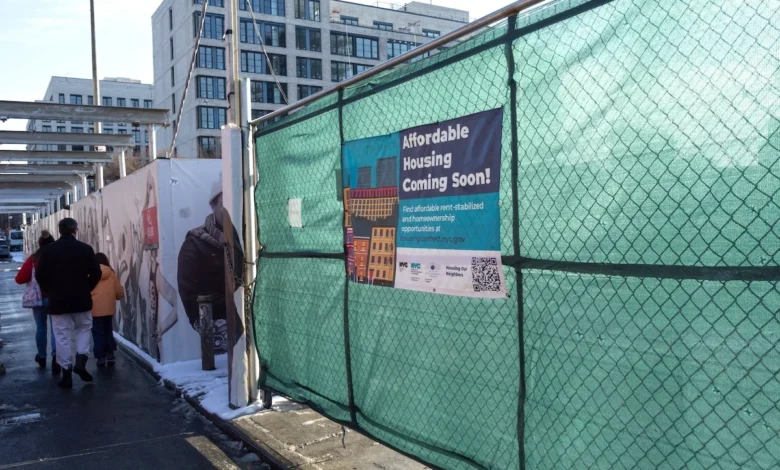
For developers in high-density areas like Brooklyn, where new residential projects continue to alter the skyline, the challenge lies in scaling these technologies to meet the needs of larger, multi-story buildings. The 2029 deadline for larger commercial structures provides a buffer for the market to mature, but the transition will require significant coordination with utility companies to ensure that the electrical grid can handle the increased load.
Critics of the policy have pointed to the strain on existing electrical infrastructure, suggesting that a successful transition requires not just the banning of fossil fuels, but a simultaneous investment in grid hardening and renewable energy generation. The state’s commitment to the CLCPA, which mandates a zero-emission electricity grid by 2040, is inextricably linked to the success of the building mandate. Without a clean grid, the electrification of buildings provides only a partial solution to the climate crisis.
Looking Toward the Future
As New York moves toward the December 31, 2025, implementation date, the state is effectively creating a real-world pilot program for the rest of the nation. The successful execution of this mandate will likely serve as a benchmark for other jurisdictions. If New York can demonstrate that the transition to all-electric construction lowers costs for consumers while simultaneously reducing emissions, it will likely accelerate similar legislation across the United States.
However, the path forward is not without potential pitfalls. The possibility of continued litigation and the logistical challenge of upgrading the energy grid remain significant hurdles. Furthermore, the success of the policy depends on the state’s ability to ensure that the transition remains equitable, particularly for lower-income households who may be more sensitive to shifts in energy markets.
As it stands, the All-Electric Buildings Act represents a landmark evolution in state-level climate governance. By moving beyond voluntary incentives and into the realm of mandatory building codes, New York has established a new regulatory paradigm. Whether this policy survives subsequent legal challenges or sets a precedent that sweeps through the country remains to be seen; however, the impact of the decision is already being felt in the design rooms of architecture firms and the boardrooms of energy companies across the nation. The coming years will reveal whether this bold regulatory step proves to be the definitive catalyst for a fossil-fuel-free future in the American built environment.