NASA Astronomy Picture of the Day Unveils Stunning Deep-Space Portrait of Omega Centauri Packed with Ten Million Ancient Stars

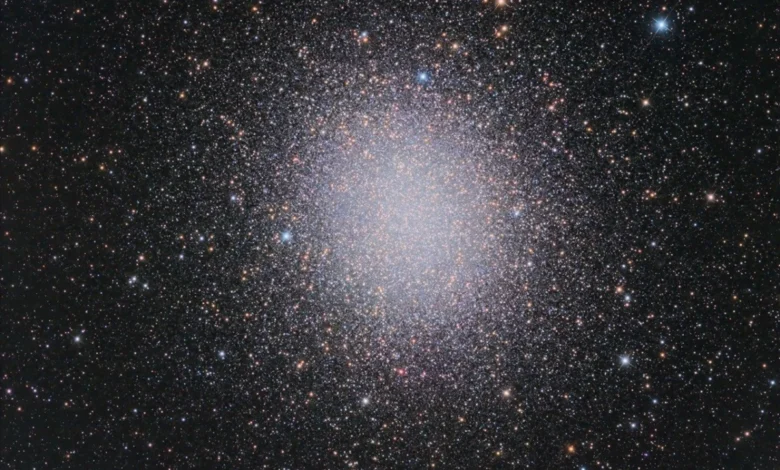
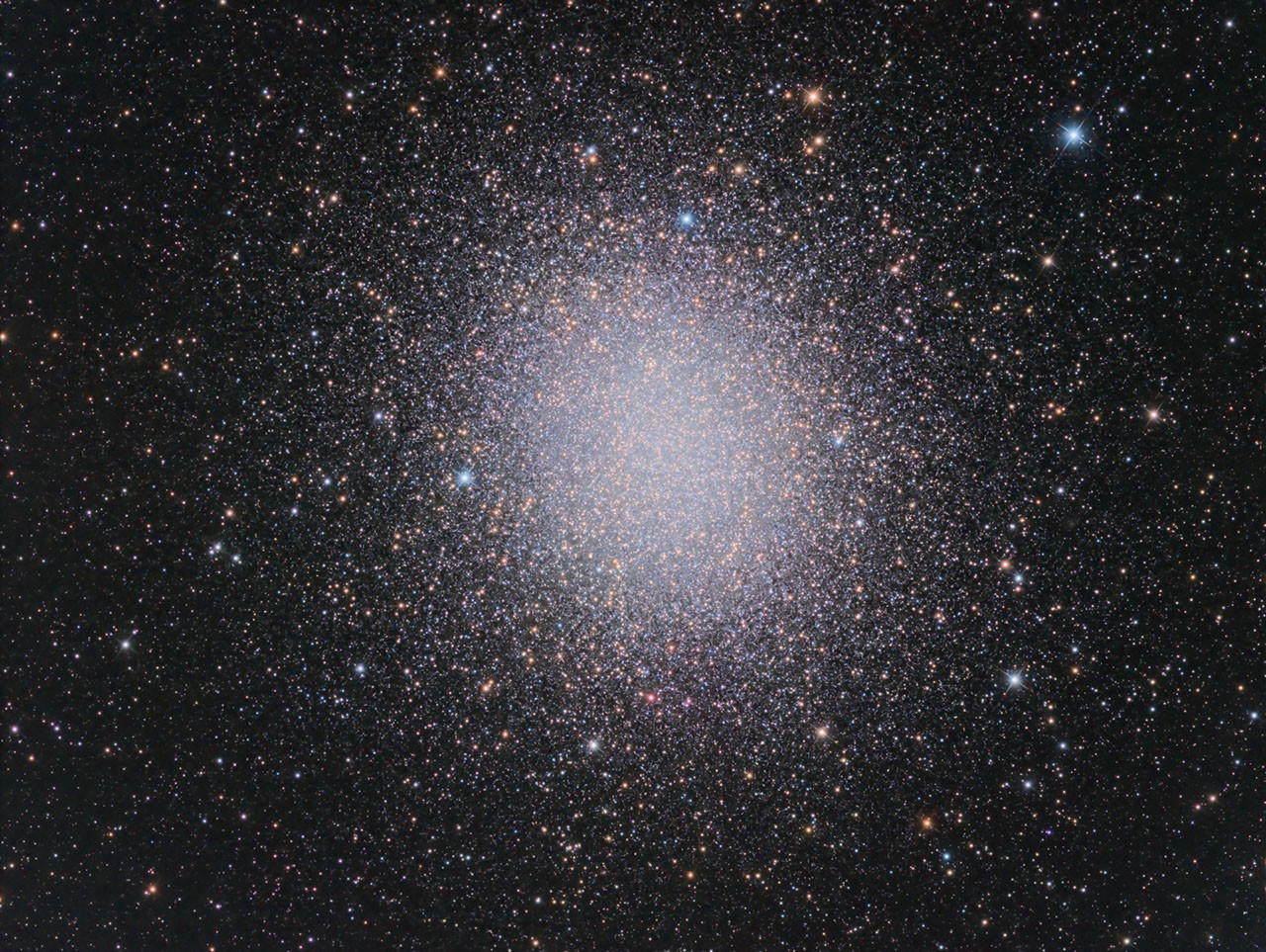
The National Aeronautics and Space Administration has featured a remarkably sharp telescopic capture of the magnificent globular star cluster Omega Centauri as its Astronomy Picture of the Day. Officially cataloged as NGC 5139, this celestial behemoth is the largest and most luminous of the approximately 200 known globular clusters that roam the expansive halo of our Milky Way galaxy. Located roughly 15,000 light-years from Earth, the cluster packs an estimated ten million stars—most of which are significantly older than our Sun—into a compact volume measuring approximately 150 light-years in diameter.
The newly highlighted image, captured and processed by astrophotographers, showcases the dense swarm of stellar bodies with striking clarity, prominently featuring the distinct yellowish hue of the cluster’s numerous red giant stars. While the daily feature continues to serve as a primary window for public astronomical education, it also arrives amid notable administrative updates from the platform, including the migration of its primary hosting infrastructure to the unified science.nasa.gov domain and updated guidelines for public image submissions.
Main Facts of the Omega Centauri Observation
Omega Centauri is not merely a dense gathering of ancient stars; it represents one of the most enigmatic and heavily studied objects in the Milky Way’s galactic neighborhood. Spanning 150 light-years across, the cluster’s sheer population density makes it a unique laboratory for stellar dynamics. Unlike standard open clusters, whose constituent stars typically form together from the same giant molecular cloud and share identical ages and chemical compositions, Omega Centauri defies conventional classification.
Spectroscopic analyses and deep-field observations reveal that Omega Centauri possesses multiple distinct stellar populations. These groups display a wide spread of ages and varying chemical abundances, suggesting a complex evolutionary history that sets it apart from standard globular clusters. Modern astrophysical consensus increasingly points to the possibility that Omega Centauri is not a traditional star cluster at all, but rather the stripped, remnant core of a dwarf galaxy that was gravitationally captured and cannibalized by the Milky Way billions of years ago.
Furthermore, long-term observations conducted over the span of two decades using the Hubble Space Telescope have uncovered compelling evidence of an intermediate-mass black hole lurking near the dense core of the cluster. This elusive central engine provides crucial insights into how supermassive black holes might form and grow through the accretion of surrounding stellar material in dense galactic environments.
Chronology of Discovery and Exploration
The history of Omega Centauri spans millennia, transitioning from an ancient naked-eye observation to a prime target for space-based observatories.
In ancient antiquity, classical astronomer Claudius Ptolemy cataloged the object in his Almagest during the 2nd century AD, classifying it not as a star cluster or galaxy, but as a single, fuzzy star located in the constellation of Centaurus. Because it was observed as a solitary point of light in the night sky without the aid of optical magnification, its true nature remained concealed for centuries.
The paradigm shifted in the 17th century with the advent of the telescope. In 1677, English astronomer Edmond Halley identified Omega Centauri as a luminous patch or nebula using a telescope while stationed on the island of Saint Helena. However, it was not until the 1830s that British astronomer Sir John Herschel recognized its true identity as a globular cluster, following extensive observations conducted from the Cape of Good Hope in South Africa.
By the late 20th and early 21st centuries, technological advancements propelled Omega Centauri to the forefront of modern astrophysics. Ground-based observatories equipped with adaptive optics began resolving individual stars within the core. The launch and subsequent servicing missions of the Hubble Space Telescope allowed astronomers to pierce through the dense stellar congestion, leading to precise kinematic measurements, stellar population mapping, and the groundbreaking discovery of the cluster’s central intermediate-mass black hole candidate.
Supporting Data and Astrophysical Metrics
To fully comprehend the scale and significance of Omega Centauri, astrophysicists rely on precise quantitative measurements gathered across the electromagnetic spectrum.
- Distance: Approximately 15,000 light-years (4,600 parsecs) from Earth.
- Spatial Diameter: Roughly 150 light-years across.
- Stellar Population: Estimated at approximately 10 million stars.
- Classification: Globular cluster (NGC 5139), with strong indications of being a stripped dwarf galaxy remnant.
- Age of Stars: Predominantly older than the Sun, featuring multiple generations of star formation.
- Apparent Magnitude: Roughly 3.9, making it visible to the naked eye under dark skies as a hazy, non-stellar object.
- Central Mass Concentration: Supports an intermediate-mass black hole, estimated to be thousands of times the mass of the Sun, based on stellar velocity dispersion measurements.
Official Responses and Institutional Perspectives
Astronomers and institutional bodies have long regarded Omega Centauri as a cornerstone object for testing theories of galactic formation and stellar evolution. Researchers analyzing data from NASA’s Hubble Space Telescope and the European Space Agency note that the presence of multiple stellar populations serves as a smoking gun for galactic archaeology.
"When you examine an object like Omega Centauri, you are looking at the fossilized remnants of an ancient cosmic collision," noted theoretical astrophysicists studying galactic cannibalism. "The chemical diversity of its stars simply cannot be explained by standard single-cloud collapse models. It tells a story of a once-independent satellite galaxy that interacted with our Milky Way’s gravitational field over billions of years, losing its outer envelope of stars and gas while its dense, heavily populated core survived intact."
Regarding the central black hole evidence, researchers emphasize that intermediate-mass black holes are notoriously difficult to detect because they occupy a mass gap between stellar-mass black holes and the supermassive black holes found at the centers of large galaxies. The kinematic data extracted from Hubble observations of Omega Centauri’s core provide some of the most robust observational constraints yet obtained for this elusive class of objects.
Broader Impact and Implications for Modern Astronomy
The ongoing public dissemination of such imagery through NASA’s Astronomy Picture of the Day initiative carries profound implications for public engagement and scientific literacy. By pairing high-resolution astrophotography with accessible yet rigorous explanations written by professional astronomers, the platform bridges the gap between complex astrophysical research and the global public.
Scientifically, the continued study of Omega Centauri informs broader cosmological models concerning how galaxies grow through hierarchical merging. As the Milky Way continues to interact with smaller satellite galaxies in its local group, objects like Omega Centauri offer a direct look at the end stages of galactic integration. Future observations utilizing next-generation instrumentation—such as the James Webb Space Telescope and upcoming ground-based extremely large telescopes—promise to peel back even more layers of Omega Centauri’s complex history, potentially revealing finer details about its central black hole and the chemical signatures of its earliest stellar generations.