Media professionals are cordially invited to participate in a virtual news conference hosted by NASA on Wednesday, July 29, 2026, at 2 p.m. EDT, to delve into the eagerly anticipated Nancy Grace Roman Space Telescope mission. This pivotal briefing will precede the telescope’s scheduled launch from the agency’s Kennedy Space Center in Florida on Sunday, August 30, 2026, marking a significant milestone in space exploration. The event, designed to offer a comprehensive preview of the mission and its current status, will be streamed live across various NASA platforms, accessible via https://www.nasa.gov/live, ensuring broad public and media engagement.
The virtual conference is expected to feature key mission leaders, principal investigators, and NASA officials who will provide in-depth insights into the scientific objectives, technological innovations, and operational plans for the Roman Space Telescope. While specific participants were not detailed in the initial announcement, the briefing is anticipated to cover everything from the telescope’s design and instrumentation to its profound potential for transforming our understanding of the universe. Media members keen on posing questions during the briefing are required to RSVP no later than two hours prior to the event’s commencement by contacting Rob Garner at [email protected]. Adherence to NASA’s agency-wide media accreditation policy, available online, is mandatory for participation.
The Legacy of Nancy Grace Roman: A Visionary Pioneer
The Nancy Grace Roman Space Telescope carries a name steeped in astronomical history, honoring Dr. Nancy Grace Roman, NASA’s first chief astronomer. Often hailed as the "Mother of Hubble," Roman’s visionary leadership and unwavering advocacy were instrumental in the conceptualization, development, and eventual launch of the Hubble Space Telescope. Her profound contributions laid the groundwork for modern space astronomy, establishing the discipline of space-based observatories that have since revolutionized our perception of the cosmos. Born in 1925, Roman’s career at NASA, which began in 1959, broke significant barriers for women in science, demonstrating exceptional scientific acumen and strategic foresight. She championed the idea that placing telescopes above Earth’s obscuring atmosphere would unlock unprecedented views of the universe, a concept that manifested gloriously in Hubble’s success. Naming this next-generation observatory after her is a fitting tribute to her enduring legacy and her pivotal role in shaping NASA’s astrophysical endeavors. It also serves as an inspiration, highlighting the profound impact an individual’s dedication can have on scientific progress and human understanding.
Unveiling the Universe’s Deepest Secrets: Roman’s Scientific Mandate
The Nancy Grace Roman Space Telescope is poised to usher in an unprecedented era of cosmic surveys, promising a deep, panoramic view of the cosmos unlike anything seen before. Its primary mission objectives are ambitious and multifaceted, designed to address some of the most profound mysteries in astrophysics today.
Probing Dark Energy and Dark Matter
One of Roman’s paramount scientific goals is to investigate the enigmatic phenomena of dark energy and dark matter, which together constitute approximately 95% of the universe’s total mass-energy content, yet remain largely invisible and poorly understood. Dark energy is believed to be responsible for the accelerating expansion of the universe, a discovery that earned the Nobel Prize in Physics in 2011. Roman will employ multiple independent techniques to precisely measure the effects of dark energy across vast cosmic distances and over cosmic time. These techniques include:
- Type Ia Supernovae: These "standard candles" are exploding stars with a consistent intrinsic brightness, allowing astronomers to measure their distances from Earth. By observing Type Ia supernovae at various redshifts, Roman will track the universe’s expansion history with unprecedented accuracy, revealing how dark energy’s influence has changed over billions of years. Its wide field of view will enable the discovery and monitoring of thousands of these crucial cosmic markers.
- Weak Gravitational Lensing: This technique measures the subtle distortions in the shapes of distant galaxies caused by the gravitational pull of intervening dark matter structures. Roman’s expansive field of view and exquisite image quality will allow it to map the distribution of dark matter across vast swathes of the sky, providing critical insights into its nature and how it influences galaxy formation and evolution.
- Baryon Acoustic Oscillations (BAO): These are fossilized sound waves from the early universe imprinted on the distribution of galaxies. By precisely measuring the characteristic scale of these oscillations, Roman can act as a "cosmic ruler" to determine distances to galaxies and constrain the expansion rate of the universe, offering another independent probe of dark energy.
By combining these complementary methods, Roman aims to constrain the properties of dark energy with a precision far exceeding current capabilities, potentially revealing whether it is a constant force or evolves over time, and offering clues about its fundamental nature.
Pioneering Exoplanet Exploration with the Coronagraph Instrument
Beyond cosmology, the Roman Space Telescope will make groundbreaking contributions to exoplanet research through its state-of-the-art Coronagraph Instrument (CGI). This technological marvel represents the most advanced technology ever flown in space for directly imaging exoplanets and characterizing their atmospheres. Directly imaging exoplanets is exceptionally challenging because the faint light reflected by a planet is easily overwhelmed by the blinding glare of its host star. The CGI utilizes a complex system of deformable mirrors and advanced optics to precisely block out starlight, revealing the much fainter planets orbiting nearby stars.
The CGI is designed to demonstrate key technologies that will be essential for future missions aiming to find and characterize Earth-like planets around other stars, a crucial step in humanity’s ongoing search for life beyond Earth. While not designed to image Earth-sized planets, CGI will be able to directly image gas giants and super-Earths, and analyze their atmospheric compositions. By studying the light from these directly imaged planets, scientists can search for spectral signatures of molecules like water, methane, and carbon dioxide, providing vital clues about their environments and potential habitability. This technological demonstration is a high-risk, high-reward endeavor, paving the way for future observatories capable of detecting biosignatures in the atmospheres of distant exoplanets.
Broadening Our Cosmic View: General Astrophysics
While dark energy and exoplanets are primary drivers, Roman’s unique capabilities will also enable a wide array of general astrophysics research. Its 2.4-meter primary mirror, identical in size to Hubble’s, combined with a wide field of view that is 100 times larger than Hubble’s WFC3 instrument, will allow it to conduct vast surveys of the infrared sky. This combination will enable:
- Galaxy Evolution: Roman will map millions of galaxies across cosmic time, providing an unparalleled view of how galaxies form, evolve, and interact over billions of years, from the early universe to the present day.
- Star Formation: Its infrared sensitivity will penetrate dust clouds, revealing hidden nurseries of star formation within our own Milky Way and in distant galaxies.
- Transient Phenomena: The ability to survey large areas of the sky repeatedly will allow Roman to discover and study a multitude of transient events, such as supernovae, gamma-ray bursts, and tidal disruption events, providing new insights into extreme cosmic phenomena.
- Population Studies: Roman will create enormous catalogs of celestial objects, from asteroids in our solar system to distant quasars, enabling statistical studies of cosmic populations that are impossible with narrower-field instruments.
These comprehensive surveys will generate an unprecedented volume of data, revolutionizing our understanding across virtually every field of astrophysics.
From Concept to Cosmos: A Decade of Development
The journey of the Nancy Grace Roman Space Telescope began over a decade ago under the moniker WFIRST (Wide Field Infrared Survey Telescope), emerging from the recommendations of the 2010 Decadal Survey for Astronomy and Astrophysics. This scientific blueprint, formulated by the National Academies of Sciences, Engineering, and Medicine, identified the need for a major infrared survey mission to tackle fundamental questions in cosmology and exoplanetary science.
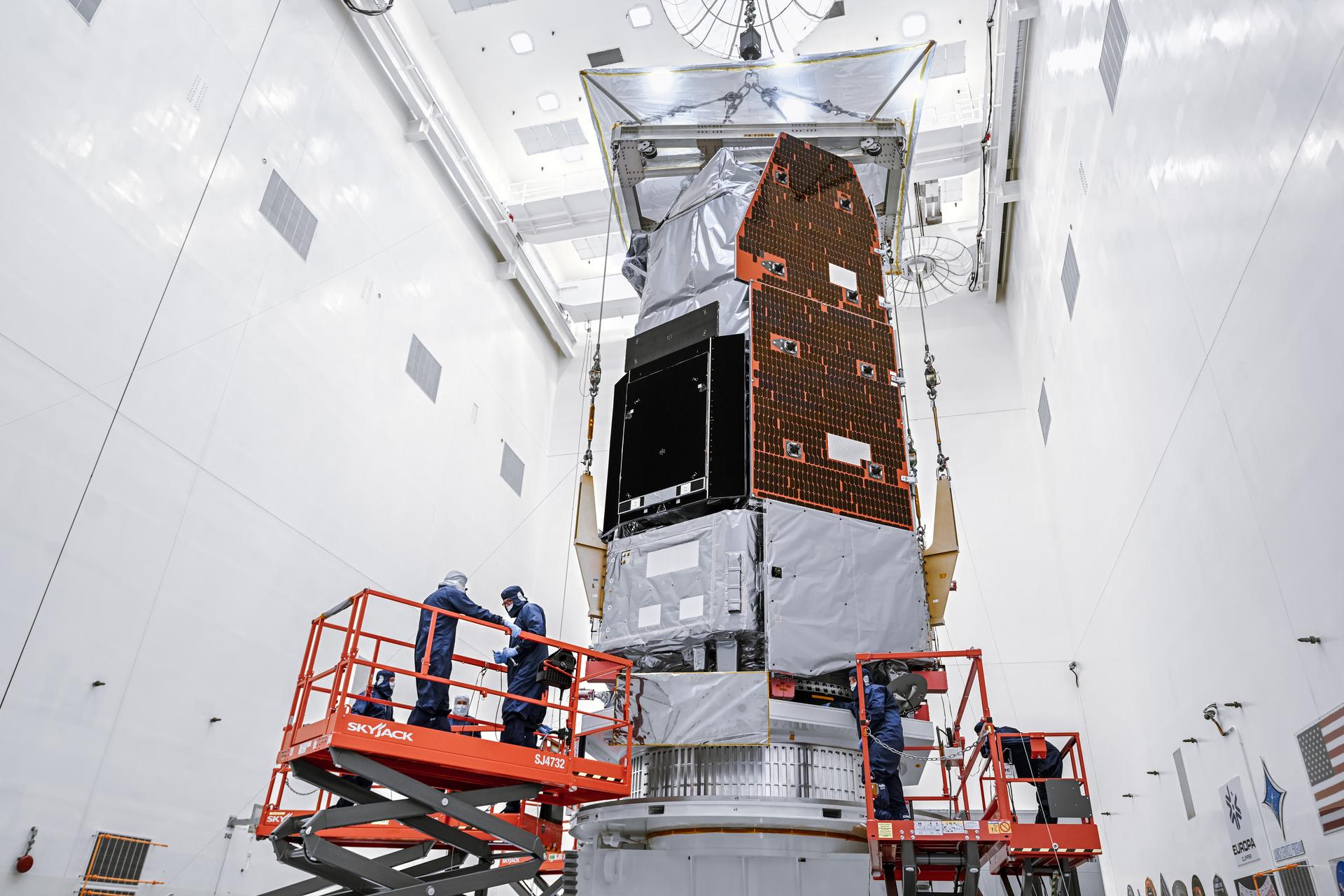
Throughout its development, the mission has undergone rigorous design, engineering, and testing phases. Managed at NASA’s Goddard Space Flight Center in Greenbelt, Maryland, the project has leveraged expertise from across NASA centers and an extensive network of academic and industrial partners. The 2.4-meter primary mirror, originally a spare for a spy satellite, was provided by the National Reconnaissance Office, significantly reducing costs and development time. Engineers and scientists have worked tirelessly to integrate the Wide Field Instrument (WFI) and the Coronagraph Instrument (CGI), ensuring their precision and resilience in the harsh environment of space. Extensive thermal vacuum testing, vibration tests, and acoustic tests have simulated launch conditions and the operational environment, verifying the telescope’s robustness and functionality. The naming of the telescope after Nancy Grace Roman in 2020 further cemented its identity and purpose, celebrating a pioneer whose vision continues to guide NASA’s pursuit of cosmic knowledge.
A Symphony of Collaboration: Global Partnerships Fueling Discovery
The ambitious scope of the Nancy Grace Roman Space Telescope mission is a testament to the power of international and inter-agency collaboration. The project is a monumental undertaking, drawing on the collective expertise and resources of numerous entities. NASA Goddard Space Flight Center leads the overall management and integration, with critical participation from the agency’s Jet Propulsion Laboratory (JPL) in Southern California, which is responsible for the Coronagraph Instrument, and Caltech/IPAC in Pasadena, California, which handles data processing and science operations. The Space Telescope Science Institute (STScI) in Baltimore, renowned for its work on Hubble and JWST, will also play a crucial role in mission operations and data archiving.
Industrial partners are foundational to the mission’s hardware and software development. BAE Systems Inc. has contributed to various systems, while L3Harris Technologies has been instrumental in the development of key optical components. Teledyne Scientific & Imaging has provided advanced detectors for the Wide Field Instrument, critical for capturing Roman’s expansive infrared views.
Beyond national boundaries, the Roman mission benefits significantly from international contributions. The European Space Agency (ESA) has provided components for the Coronagraph Instrument, demonstrating a shared commitment to advancing exoplanet imaging capabilities. The Japan Aerospace Exploration Agency (JAXA) and the French space agency CNES (Centre National d’Études Spatiales) have also contributed through scientific collaboration and potentially hardware development, fostering a global scientific endeavor. Furthermore, the Max Planck Institute for Astronomy in Germany is a notable contributor, bringing European scientific expertise to bear on the mission’s ambitious goals. This extensive network of collaborators underscores the global nature of scientific inquiry and the shared human desire to explore and understand the universe.
The Path Ahead: Launch, Operations, and Expected Impact
Following the virtual briefing on July 29, the focus will shift squarely to the launch of the Nancy Grace Roman Space Telescope on August 30. Once successfully launched and deployed, the telescope will undergo a meticulous commissioning phase. This period involves carefully unfolding its sunshield and antenna, calibrating its instruments, and performing initial observations to ensure all systems are functioning optimally in the space environment. Scientists anticipate "first light" images a few months after launch, followed by the commencement of its primary science mission, which is expected to last at least five years, with potential for extension.
The impact of Roman’s data on astrophysics and cosmology is anticipated to be profound and far-reaching. By providing a panoramic, deep-field view of the infrared universe, it will generate an unprecedented volume of high-quality data. This data will not only address the specific questions about dark energy, dark matter, and exoplanets but will also undoubtedly lead to serendipitous discoveries, opening up entirely new avenues of research. Roman’s surveys will complement the observations of other major observatories, such as the Hubble Space Telescope, the James Webb Space Telescope (JWST), the Euclid mission (ESA’s dark energy mission), and the Vera C. Rubin Observatory (which will conduct optical wide-field surveys from Earth). This synergy will create a multi-wavelength, multi-faceted picture of the universe, allowing scientists to piece together a more complete cosmic narrative. The sheer scale and depth of Roman’s surveys are expected to generate public data sets that will be utilized by generations of astronomers worldwide, fostering new discoveries for decades to come.
Media Participation and Public Engagement
NASA is committed to transparent communication and broad public engagement regarding the Roman Space Telescope. The virtual news conference serves as a crucial platform for media to gain direct access to mission experts and critical information ahead of the launch. For media interested in participating by phone, the RSVP deadline ensures that logistical arrangements can be made to facilitate their involvement. The live streaming of the event across various NASA platforms, including NASA TV and the agency’s social media channels, underscores a commitment to making this information widely available to the public, fostering interest and excitement in space science.
Further information about the Nancy Grace Roman Space Telescope mission, including detailed science goals, instrument specifications, and the latest news and updates, can be found on NASA’s dedicated mission website at https://nasa.gov/roman. This resource will continue to be updated throughout the mission’s lifecycle, serving as a comprehensive hub for all things Roman.
Concluding Remarks and Future Outlook
The upcoming launch of the Nancy Grace Roman Space Telescope represents a pivotal moment for NASA and the global scientific community. Named after a pioneering figure in space astronomy, this observatory embodies a legacy of relentless curiosity and technological innovation. Its mission to unravel the mysteries of dark energy, directly image exoplanets, and conduct vast cosmic surveys promises to redefine our understanding of the universe. The virtual news conference on July 29 offers a final, critical opportunity for the public and media to engage with the architects of this ambitious endeavor before it embarks on its journey to reshape the frontiers of knowledge. The data it will collect, the discoveries it will enable, and the new questions it will inspire are poised to leave an indelible mark on astronomy and humanity’s quest to comprehend its place in the vast cosmos.
For media inquiries, please contact:
Alise Fisher, Headquarters, Washington: 202-358-2546, [email protected]
Claire Andreoli / Rob Garner, Goddard Space Flight Center, Greenbelt, Md.: 301-286-1940 / 301-286-5687, [email protected] / [email protected]