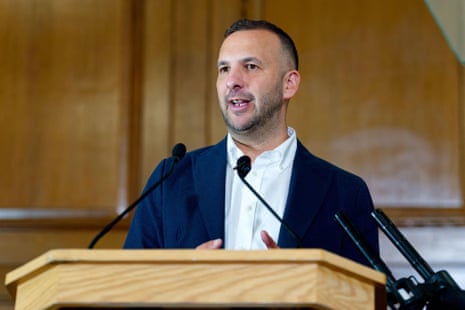
The political landscape in Holborn and St Pancras has intensified sharply following a volatile exchange at a recent Jewish community hustings. Zack Polanski, the Green Party leader and candidate for the upcoming byelection to fill the seat formerly held by Prime Minister Keir Starmer, faced significant public backlash after explicitly declaring himself an anti-Zionist. The event, intended to allow candidates to engage with local Jewish constituents, devolved into a scene of open confrontation as attendees vocally expressed their disapproval of his remarks.
Polanski, who is himself Jewish, characterized Zionism—the foundational movement advocating for the self-determination of the Jewish people in their ancestral homeland—as a form of systemic racism. He justified this position by asserting that the movement is inherently linked to the displacement and the ongoing humanitarian crisis involving Palestinians. His comments were met with audible boos and heckling from segments of the audience, highlighting the deep-seated divisions and heightened sensitivities surrounding the conflict in the Middle East and its impact on domestic British discourse.
Context and Rhetorical Stance
During the hustings, Polanski sought to frame his stance as a matter of historical and political perspective. “I’m an anti-Zionist,” he stated. “I think countries have always been ideas and I think things change over time.” By articulating this view, Polanski attempted to distinguish between his opposition to the political ideology of Zionism and his position on antisemitism. He argued that equating criticism of the Israeli government, or the occupation of Palestinian territories, with antisemitism is not only inaccurate but potentially damaging to the security of Jewish communities in the United Kingdom.
“We need to come together to recognise that when we call that antisemitic, we are making ourselves as Jewish people less safe,” Polanski contended. This rhetorical strategy aims to decouple Jewish identity from political Zionism, an approach that has gained traction within certain segments of the political left but remains a subject of intense controversy within the broader Jewish community and the political establishment.
The Green Party’s Internal Policy Debate
The controversy surrounding Polanski’s comments arrives at a critical juncture for the Green Party. As the organization prepares for its annual autumn conference, internal tension is mounting over a proposed motion to formally declare Zionism as a form of racism. This move, if successful, would elevate a contentious political definition to the status of official party policy, a shift that carries significant implications for the party’s platform and public image.

According to reports, there is substantial anxiety among party officials regarding the timing of the conference. Because the gathering is scheduled just one week before the Holborn and St Pancras byelection, there are concerns that the party’s core, moderate-leaning activists may be preoccupied with campaigning, potentially allowing more radical elements to steer the outcome of the vote.
Internal documents and leaked communications have further complicated the narrative. Some Green activists have expressed concerns about the potential for alienating Jewish voters, many of whom may be critical of the current Israeli administration but nonetheless find the conflation of Zionism with racism to be an offensive or historically illiterate position. Furthermore, private exchanges have revealed deep-seated, sometimes vitriolic, disagreements among party members, with some critics of Polanski suggesting that his views are indicative of an inability to move beyond ideological rigidities.
Chronology of Tensions
The trajectory of this incident can be traced back to the broader, ongoing debate regarding the definition of antisemitism within British political parties. Following the Labour Party’s own protracted struggle to address claims of systemic antisemitism under the leadership of Jeremy Corbyn, other parties have faced increased scrutiny regarding their own internal policies and rhetoric.
- Early 2026: The Green Party begins discussions regarding the definition of Zionism in the context of international human rights and anti-racism policies.
- September 2026: As the byelection campaign for the vacant Holborn and St Pancras seat commences, candidates are invited to various community forums, including those hosted by Jewish organizations.
- Mid-September 2026: Reports emerge of leaked WhatsApp conversations among Green Party members criticizing Polanski’s approach to the Middle East, signaling internal instability.
- Late September 2026: The hustings event takes place, where Polanski’s public declaration of anti-Zionism triggers immediate public and media scrutiny.
Analysis of Electoral Implications
The Holborn and St Pancras constituency is a high-profile seat, previously held by Keir Starmer. A victory here for the Green Party would be a major upset and a significant symbolic milestone. However, the current controversy risks alienating a demographic that, while traditionally diverse in its political leanings, is sensitive to the language used regarding the state of Israel.
Political analysts suggest that while the "anti-Zionist" label may appeal to the party’s base and attract voters who are deeply disillusioned with the mainstream parties’ handling of the conflict in Gaza, it carries the risk of isolating the party from the political center. For a party aiming to transition from a fringe movement to a serious contender in urban centers, the challenge lies in balancing ideological purity with broad-based appeal.
Furthermore, the controversy has placed the Green Party’s leadership in a difficult position. If they support the motion to condemn Zionism, they risk being labeled as hostile to Jewish concerns. If they attempt to block or soften the motion, they face an internal rebellion from members who feel strongly about the issue.
Broader Political Context
The debate over the nature of Zionism is not unique to the Green Party; it is a recurring point of contention across the political spectrum in the UK. The International Holocaust Remembrance Alliance (IHRA) definition of antisemitism, which has been adopted by many institutions, includes certain criticisms of Israel. The debate often centers on whether anti-Zionism—the rejection of a Jewish state—is inherently discriminatory or whether it constitutes a legitimate political expression.
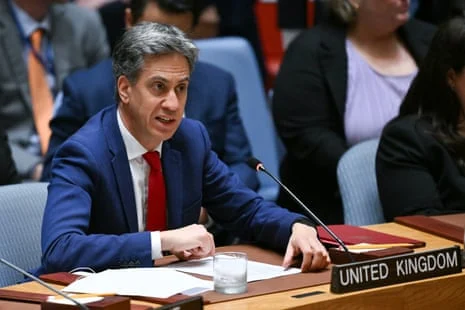
As the government, led by the Labour Party, attempts to navigate its own foreign policy regarding the Middle East, the rhetoric coming from opposition parties like the Greens adds a layer of complexity to the national conversation. The Foreign Secretary, Ed Miliband, has recently been involved in high-level discussions at the UN General Assembly, emphasizing a balanced approach to the regional conflict, which contrasts sharply with the categorical language currently being employed by candidates like Polanski.
Conclusion
The incident in Holborn and St Pancras serves as a microcosm of the intense pressure exerted on contemporary political candidates to take definitive stances on global issues that have deep-seated local implications. By positioning himself as an anti-Zionist, Zack Polanski has firmly staked his claim in a debate that is as much about the future of his party as it is about the geopolitics of the Middle East.
Whether this approach will resonate with the electorate of Holborn and St Pancras remains to be seen. What is clear, however, is that the rhetoric surrounding this byelection has ensured that the definition of Zionism, and the limits of political speech regarding Israel, will remain at the forefront of the campaign. The upcoming Green Party conference will likely serve as the definitive test of whether the party is prepared to adopt a formal position on the matter, and if so, what the long-term consequences of that decision will be for its electoral viability and internal cohesion. For now, the party and its candidate face a period of significant uncertainty as they navigate the fallout from a deeply polarized and sensitive debate.