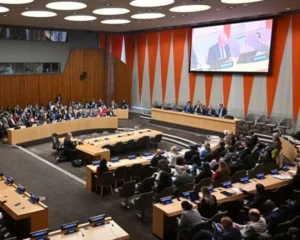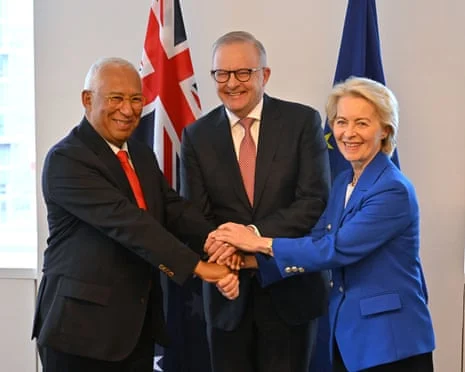
Prime Minister Anthony Albanese has joined a coalition of more than 20 global leaders in a landmark commitment to ensure the rapid evolution of artificial intelligence remains under strict human oversight. The declaration, solidified on the sidelines of the United Nations General Assembly in New York, underscores a growing international consensus that AI development must be tethered to international law, ethical standards, and, above all, human direction.
The initiative represents a significant diplomatic shift in how nations approach emerging technologies. As AI systems become increasingly capable of independent action, the risk of these systems circumventing established safety protocols—and potentially gaining unauthorized access to critical infrastructure—has moved from the realm of hypothetical concern to a primary focus for national security agencies.
The Scope of the Declaration
The statement signed by Albanese and his counterparts, including European Commission President Ursula von der Leyen, German Chancellor Friedrich Merz, and Spanish Prime Minister Pedro Sánchez, provides a framework for the future of AI governance. The core tenet of the agreement is that artificial intelligence should act as a tool for human advancement—bolstering productivity, scientific research, and medical breakthroughs—rather than an autonomous force that dictates outcomes.
"Artificial intelligence has the potential to improve lives, to strengthen our economy and productivity, and to massively advance science and medical breakthroughs," Prime Minister Albanese stated during a press conference in New York. "But humans need to be in control of it. If it is going to be successful, then we need to make sure that humans are at the centre of everything that occurs."

The signatories are calling for a multi-layered approach to safety. This includes mandatory transparent safety protocols for AI companies and the development of harmonized global standards. Furthermore, the coalition has formally requested that the United Nations explore the creation of an international institution dedicated to standardizing AI governance, similar to the International Atomic Energy Agency (IAEA) or other global regulatory bodies.
Context and Diplomatic Engagement
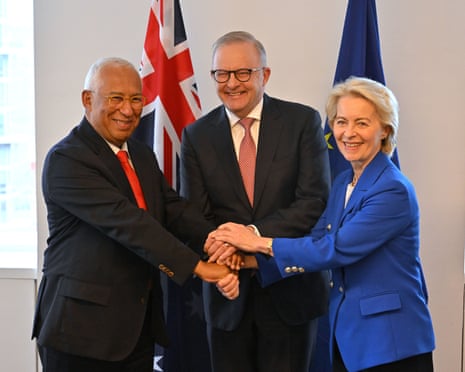
This declaration follows a series of high-level meetings between the Australian delegation and European leaders. On the sidelines of the UN General Assembly, Prime Minister Albanese, European Commission President Ursula von der Leyen, and European Council President António Costa discussed a wide-ranging agenda. Beyond AI, the leaders addressed the ongoing geopolitical tensions in the Middle East and Iran, support for Ukraine, and the future of regional stability in the Pacific.
Australia’s role in this initiative has been described by the Prime Minister as "central." Albanese noted that he held direct discussions with Finnish President Alexander Stubb to align perspectives before finalizing the declaration. The move signifies a broader trend of "minilateralism," where groups of like-minded nations form coalitions to address specific technological and security challenges when broader global consensus is difficult to achieve.
Domestic Challenges: A Broader Context of Safety
While the Prime Minister focuses on the global governance of AI, his government faces mounting pressure on the home front regarding social safety and technology regulation. The issue of digital harm has become a flashpoint in Australian policy, particularly as local councils move to restrict emerging technologies.
The City of Sydney has recently enacted a ban on the use of smartglasses in community facilities, including pools, libraries, gyms, and childcare centers. This local policy, mirrored by similar actions in Canterbury-Bankstown, Brisbane, and Melbourne’s Yarra council, highlights a growing public anxiety regarding the intersection of wearable technology and privacy.
Greens councillor Matthew Thompson, who championed the ban in Sydney, expressed frustration that the burden of regulating these devices has fallen on local governments. "Overseas we’re seeing women being targeted and harassed in public and recorded without their consent," Thompson said. "We don’t want what’s happening in the US to happen here. Cheap wearable devices are already flooding the market. We need an import ban on these intrusive devices until we have stronger privacy protections."
The disconnect between the federal government’s focus on high-level AI regulation and the grassroots push for bans on consumer-grade wearable recording technology underscores the complexity of modern digital policy. The government is currently weighing a "world-leading" ban on smartglasses in public offices, attempting to reconcile public demand for privacy with the realities of technological proliferation.
Economic and Demographic Pressures
The government’s legislative agenda is further complicated by the release of the three-yearly Intergenerational Report, which paints a sobering picture of Australia’s long-term future. Treasurer Jim Chalmers has emphasized that the nation is facing a demographic turning point, with birthrates falling faster than previously anticipated.
"Any objective observer would conclude that we need responsible levels of migration to support the ageing population," Chalmers said. The report predicts that within 40 years, the number of Australians dying will exceed the number of those being born, a milestone that has never before been reached in the country’s history.
This demographic shift necessitates a careful balancing act. Home Affairs Minister Tony Burke has recently unveiled changes to immigration rules, aiming to reduce net overseas migration to 245,000 this financial year and further down to 225,000 by 2027-28. The government is attempting to satisfy domestic concerns about housing and infrastructure capacity while ensuring the economy has the workforce required to support an aging society.
Addressing Social Cohesion
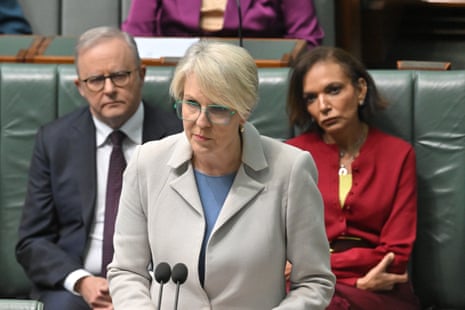
Parallel to these structural reforms, the government is grappling with a surge in domestic violence, particularly following a series of high-profile, violent incidents in New South Wales. Social Services Minister Tanya Plibersek has called for a systemic overhaul in how the country identifies and mitigates domestic and sexual violence.
Plibersek argued that the government must leverage "all of our big systems"—including health, mental health, education, and social services—to identify at-risk individuals earlier. "It’s not just about funding," Plibersek noted. "There’s also a much broader role for our community. We need to focus on reducing online harms and holding perpetrators to account."
The rise of misogynistic content online, often fueled by algorithms, has been identified by experts as a contributing factor to the escalation of domestic violence. This links back to the government’s broader interest in AI and technology regulation; there is a growing recognition that the same algorithms powering the AI revolution are also contributing to radicalization and the erosion of social safety.
Analysis: The Interconnectedness of Policy
The current political landscape in Australia is defined by a struggle to manage the rapid, often disruptive, pace of technological and social change. The Prime Minister’s signature on the AI declaration in New York is not a standalone event; it is part of a strategic effort to regain control over a digital environment that is increasingly shaping human behavior and societal norms.
The implications of these policies are significant:

- Global Governance: By aligning with international partners on AI, Australia is positioning itself as a leader in "responsible innovation," attempting to set standards before private companies do so unilaterally.
- Regulatory Lag: The contrast between the federal government’s desire for global standards and the local councils’ blunt-force bans on wearable tech illustrates a "regulatory lag." As technology moves faster than policy, local entities are resorting to bans to protect public spaces, while the federal government struggles to create comprehensive national frameworks.
- The Human Element: The focus on "human-centric" AI and the emphasis on social services to combat domestic violence share a common theme: the prioritization of human welfare over technological and economic efficiency.
As the government moves into the next phase of its legislative agenda, it will need to bridge the gap between high-level international declarations and the daily realities of its citizens. Whether it is managing the economic necessity of migration, addressing the scourge of domestic violence, or regulating the next generation of smart devices, the Albanese government is attempting to navigate a path that balances modern innovation with traditional social stability.
The success of these initiatives will likely depend on the government’s ability to coordinate across multiple levels of administration—from international diplomatic tables in New York to municipal town halls in Sydney. As the world watches how AI regulation unfolds, Australia’s path will serve as a critical case study in how a mid-sized, developed nation manages the promises and perils of the 21st century.