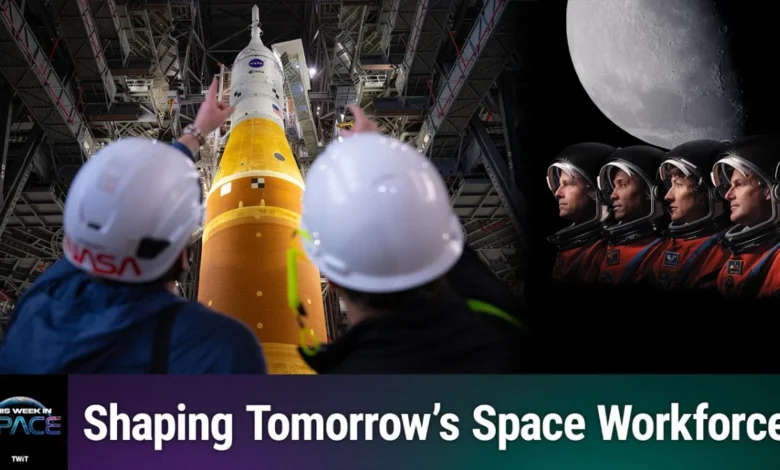
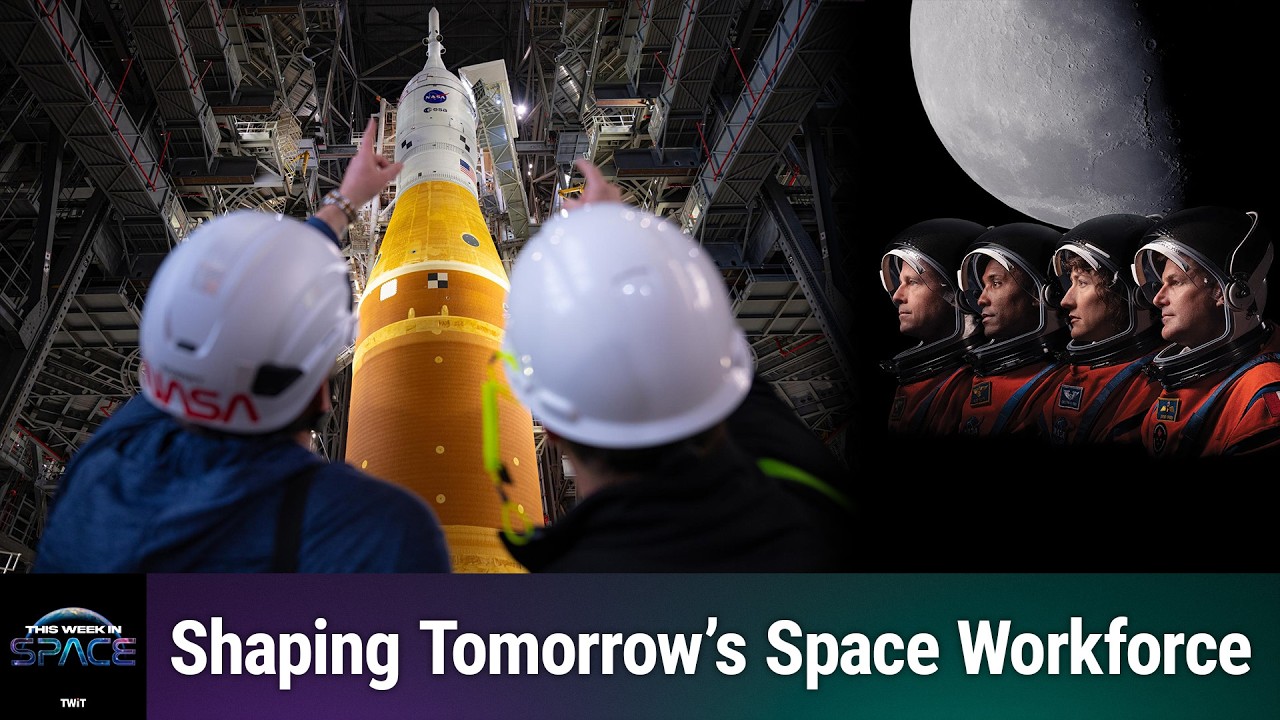
The rapid evolution of the commercial space industry, coupled with ambitious international lunar exploration goals, has necessitated a massive surge in workforce development. As space agencies and private enterprises transition from theoretical mission planning to active operations, the demand for a highly specialized Science, Technology, Engineering, and Mathematics (STEM) workforce has reached a critical juncture. On the latest installment of the podcast This Week In Space, episode 233, host Tariq Malik and guest host Rick Jenet explored this shifting landscape with Dr. Amanda Smith-Hackler, Director of Education for the Universities Space Research Association (USRA) and Principal Investigator for the Air Force Research Laboratory (AFRL) Scholars and STEM Workforce Development Programs. The discussion underscored that the so-called "Artemis Generation"—a cohort of students and young professionals inspired by current lunar missions—is the primary engine driving the future of the extraterrestrial economy.
The current hiring climate in the aerospace sector is characterized by an unprecedented "gold rush" mentality. Historically, the space industry was dominated by a small number of government-contracted prime manufacturers. Today, the landscape is defined by the emergence of "Newspace," a dynamic sector comprised of agile, venture-backed startups and established tech giants competing to dominate low-Earth orbit (LEO), lunar logistics, and beyond. This expansion has created a structural talent gap, where the pace of technological innovation is outstripping the immediate availability of qualified personnel in fields ranging from propulsion engineering and orbital mechanics to space law and telecommunications.
The Role of STEM in Modern Aerospace
The transition toward a sustainable presence on the moon and the eventual human exploration of Mars requires a robust, long-term commitment to education. Dr. Smith-Hackler, whose work centers on bridging the divide between academic preparation and industry requirements, noted that the pipeline for space careers begins long before a student enters a professional role. Programs like the AFRL Scholars initiative are designed to provide high school and undergraduate students with hands-on research experiences, ensuring that the theoretical knowledge gained in the classroom is tempered by the rigorous demands of laboratory and field environments.
The importance of this training cannot be overstated. As missions become more complex, the cost of failure increases. The Artemis program, for example, represents a multi-national effort that relies on the interoperability of systems developed by dozens of different organizations. A failure in one component—be it a software glitch in a navigation system or a metallurgical defect in a lunar lander support strut—can jeopardize a multi-billion-dollar mission. Therefore, the STEM pipeline must produce not only engineers who can solve complex problems but also professionals who understand the systems-engineering mindset required for safe, reliable spaceflight.
A Chronology of the New Space Race
To understand the current urgency in hiring, one must look at the timeline of the "New Space" era. The shift began in the early 2000s, but it accelerated significantly following the retirement of the Space Shuttle program in 2011. This created a void that was filled by commercial entities.
- 2011: The end of the Space Shuttle era leads to a pivot toward Commercial Crew and Cargo programs.
- 2017: The signing of Space Policy Directive 1 officially redirects NASA’s focus toward a return to the moon, eventually formalizing the Artemis program.
- 2020: The first crewed commercial flight to the International Space Station (ISS) by SpaceX’s Crew Dragon demonstrates that the private sector is capable of handling mission-critical human spaceflight.
- 2022: The successful launch of Artemis I signals the beginning of the infrastructure-building phase of lunar exploration.
- 2024 and Beyond: The focus shifts toward the deployment of the Lunar Gateway, the landing of the first woman and first person of color on the moon, and the normalization of private-sector lunar logistics.
Each of these milestones has necessitated a corresponding increase in specialized personnel. The transition from government-led missions to a public-private hybrid model has effectively doubled the potential employer pool for STEM graduates, forcing companies to compete for talent in a way that was largely unnecessary two decades ago.
Supporting Data and Industry Trends
Recent labor market reports indicate that the aerospace and defense sectors are seeing a sustained demand for workers. According to data from the Bureau of Labor Statistics and various industry-specific trade groups, jobs in aerospace engineering are projected to grow faster than the average for all occupations. The demand is particularly high for individuals with expertise in:
- Software Engineering: As satellites and launch vehicles become more autonomous, the need for robust, secure, and adaptable software architecture has become the single most significant hiring priority.
- Advanced Manufacturing: The adoption of 3D printing (additive manufacturing) and composite material science has changed how rockets are built, requiring a new breed of technician and engineer who understands these processes.
- Data Science and Analytics: With thousands of satellites entering orbit, the ability to process and act upon large telemetry datasets is vital for collision avoidance and mission optimization.
The AFRL and USRA programs mentioned by Dr. Smith-Hackler are specifically designed to address these niches, providing students with exposure to advanced technologies that are often not yet covered in standardized undergraduate curricula.
Official Perspectives and Institutional Challenges
Industry leaders and government officials frequently point to the "skills mismatch" as a significant bottleneck. While there is no shortage of interest in space careers—the "Artemis effect" has clearly ignited a passion in younger generations—the difficulty lies in the speed at which educational institutions can update their programs to reflect the latest industry standards.
Institutional responses have been mixed. Some universities have entered into direct partnerships with aerospace firms to create "pipeline" degrees, where students are guaranteed internships and potential employment upon graduation. Others are struggling to keep up with the rapid pace of change, particularly in fields like artificial intelligence and machine learning, which are increasingly critical to modern space operations. Dr. Smith-Hackler’s advocacy for broader, more inclusive STEM education highlights the need for diversity in the workforce; she argues that the complexity of modern space missions requires diverse perspectives and creative problem-solving styles that are often stifled in overly rigid or homogeneous environments.
The Broader Impact: Beyond the Rocket
The implications of this workforce development push extend far beyond the launch pad. The aerospace industry acts as a primary catalyst for innovation in materials, medical technology, environmental monitoring, and telecommunications. By fostering a large, capable, and highly motivated STEM workforce, nations are essentially investing in a "knowledge-based economy" that yields dividends far removed from the vacuum of space.
Furthermore, the democratization of space access means that these skills are becoming increasingly portable. An engineer trained to work on a lunar landing system is also qualified to work on autonomous vehicle navigation or advanced climate modeling systems. The "brain gain" generated by the aerospace sector is a fundamental driver of national economic competitiveness.
Conclusion: Engaging the Next Generation
For those looking to enter the industry, the message from experts like those featured on This Week In Space is clear: the opportunities are vast, but the barrier to entry is high. The industry is looking for individuals who are not just technically proficient, but also adaptable and curious. While traditional academic pathways remain the bedrock of the field, extracurricular involvement—such as the AFRL Scholars program or even hobbyist engineering projects—is increasingly viewed as a differentiator by hiring managers.
In addition to the professional labor market, the culture of space exploration is reaching the consumer level, as seen with the popularity of high-end educational products like the Estes model Falcon 9. While a scale model might seem trivial compared to a real rocket, it represents the beginning of the pipeline: a child or student who builds and launches a model, experiences the thrill of flight, and begins to wonder how the real thing works. This spark of curiosity, when nurtured through the appropriate educational and professional channels, is precisely what will sustain the ambitious lunar and Martian goals of the coming decades. As the Artemis Generation takes the helm, the future of humanity in space will depend entirely on the strength of the pipeline being built today.