Ferrari CEO Benedetto Vigna awards Tesla Roadster a perfect score for innovation and daring presentation.

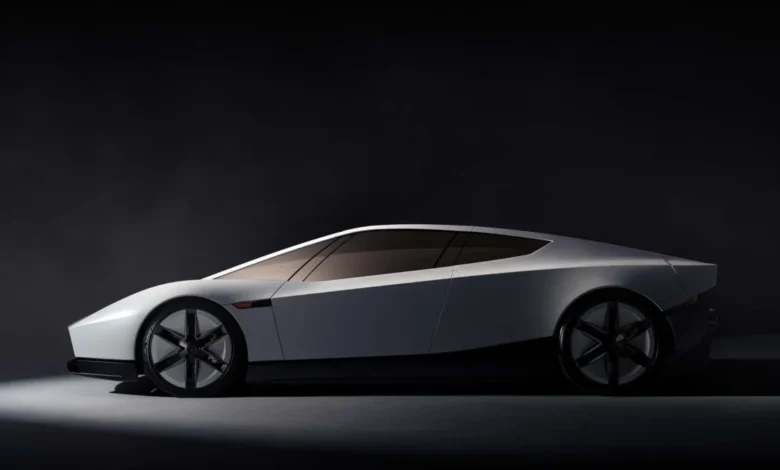
In a rare and candid moment of industry praise, Ferrari Chief Executive Officer Benedetto Vigna has awarded the redesigned Tesla Roadster a perfect 10 out of 10 score. This assessment, delivered during the prestigious Quattroruote automotive conference, focused on both the technological underpinnings of the vehicle and the theatrical, high-stakes nature of its recent unveiling at a SpaceX facility in Texas. Vigna’s remarks serve as a significant acknowledgment of Tesla’s ability to disrupt traditional automotive norms, even as the legacy Italian manufacturer navigates its own complex transition toward electrification.
The Anatomy of the Texas Reveal
The Tesla Roadster demonstration in McGregor, Texas, was designed to emphasize the intersection of aerospace engineering and automotive performance. Held at the SpaceX rocket test facility, the event was more than a traditional product launch; it was a technical exhibition intended to showcase the vehicle’s unique capabilities. Tesla utilized a specialized suction fan system to demonstrate the car’s ability to maintain grip while inverted on a ramp, followed by a gravity-defying maneuver where the vehicle utilized compressed-gas thrusters—technology derived from SpaceX’s Falcon rocket program—to adjust its orientation in midair before landing.
While Tesla has positioned the vehicle as a 2028 model, industry analysts remain cautious regarding the production timeline. The Roadster has experienced a protracted development cycle, with initial prototypes and promises dating back several years. Despite the skepticism surrounding delivery dates and the financial logistics of such an ambitious engineering project, Vigna’s critique ignored the "noise" of the market to focus exclusively on the spectacle and the boldness of the engineering challenge. For Vigna, the event was a masterclass in challenging the status quo of automotive design.
A Chronology of the Roadster Development
The trajectory of the next-generation Tesla Roadster is characterized by long-term anticipation and repeated delays. The project first entered the public consciousness as an aspirational goal, intended to serve as a halo car for the Tesla brand.
- 2017: The original concept for the new Roadster was unveiled, promising unprecedented acceleration and range.
- 2020–2023: The project underwent several internal redesigns as Tesla prioritized high-volume vehicles like the Model Y and the expansion of its manufacturing capacity in Texas and Germany.
- 2025–2026: The focus shifted toward integrating SpaceX-derived "Cold Air Thrusters" and advanced aerodynamic features, leading to the highly publicized Texas demonstration.
- 2028: Tesla’s current stated target for production, representing a multi-year effort to refine a vehicle that pushes the boundaries of traditional physics.
By focusing on this timeline, one can see that the Roadster is less a standard production car and more an ongoing experiment in how far electric vehicle (EV) performance can be pushed when budgetary and manufacturing constraints are temporarily set aside.
External Design and the Ferrari Parallels
One of the most insightful aspects of Vigna’s commentary was his analysis of Tesla’s collaborative approach. Vigna highlighted Tesla’s decision to engage external design studios to push the project beyond its internal limitations. This acknowledgment serves as a bridge to Ferrari’s own current strategies. Under Vigna’s leadership, Ferrari has been forced to rethink its traditional development cycles to accommodate the rapid evolution of software-defined vehicles and electric powertrains.
Ferrari’s recent partnership with LoveFrom, the design studio founded by former Apple design chief Jony Ive, underscores a similar philosophy. The development of the "Luce," Ferrari’s first fully electric vehicle, has been a central pillar of the company’s strategic shift. Vigna noted that external partners provide a necessary friction, forcing internal engineers to confront design questions and consumer expectations that might otherwise be overlooked in a vacuum.
"If we had worked on our own, we would not have done what we did," Vigna stated. This admission reflects a broader industry trend where even the most storied legacy manufacturers are realizing that the leap into high-performance electrification requires a departure from traditional "in-house only" engineering hierarchies.
Industry Implications and the Risk Appetite
Vigna’s praise for Tesla—specifically his remark, "As a European, thank you for showing us how that, even in an old world, you can still innovate and dare"—highlights a growing divide in the automotive sector between those who prioritize iterative improvements and those who prioritize "moonshot" engineering.
The automotive industry is currently grappling with a dual challenge: the necessity of decarbonization and the pressure to maintain the emotional appeal that defines luxury performance vehicles. Tesla’s willingness to utilize thrusters, suction fans, and aggressive, unconventional marketing tactics provides a template for risk-taking that is rarely seen in the conservative European luxury market.
However, the path forward is not without peril. Ferrari’s stock performance in May 2026, which saw a decline following the initial unveiling of the Luce, highlights the volatility inherent in transitioning a legacy brand to a new technological paradigm. Investors and enthusiasts are inherently skeptical of change, particularly when it involves moving away from the internal combustion engines that have defined the Ferrari brand for decades. Vigna’s defense of the Luce and his admiration for the Roadster suggest that he is attempting to foster a culture within Ferrari that is resilient to this market volatility.
Technical Convergence: Biofuels and Batteries
While the spotlight remains on the Roadster’s electric performance, Ferrari is pursuing a diversified strategy. Alongside its investment in battery-electric vehicles, the company has continued to emphasize the role of biofuels. This dual-track approach reflects a nuanced understanding of the global automotive landscape, where the transition away from fossil fuels may not be uniform across all markets or vehicle segments.
By maintaining expertise in both combustion-based sustainable fuels and cutting-edge battery technology, Ferrari aims to hedge its bets against the uncertainty of infrastructure development and consumer adoption rates. Vigna’s commentary suggests that he views the Roadster’s success not as a threat to Ferrari, but as proof that the appetite for automotive performance is alive and well, regardless of the powertrain.
The Path Forward
The dialogue between Ferrari’s CEO and the achievements of Tesla represents a significant moment of maturity for the automotive industry. It signals that the era of rigid, siloed competition is giving way to a more fluid environment where innovation, regardless of its source, is recognized as a vital component of industry survival.
As Tesla attempts to move the Roadster from a test-track stunt to a street-legal reality by 2028, and as Ferrari prepares to launch the Luce into a highly scrutinizing market, both companies are testing the boundaries of what consumers will accept. The success of these vehicles will likely depend on their ability to marry the raw, technical spectacle of the Roadster with the refined, emotional, and heritage-driven engineering that defines a brand like Ferrari.
Ultimately, Vigna’s perfect score is an invitation to the rest of the industry to "keep dreaming." It is a reminder that in the high-stakes world of automotive manufacturing, the ability to innovate, take public risks, and challenge the limits of engineering is what differentiates a successful company from one that merely follows the market. Whether Tesla can turn its Texas display into a profitable production reality remains to be seen, but the impact of that display on the psyche of industry leaders like Vigna is already clear. The bar for innovation has been set, and for the foreseeable future, the industry will be measured against the standard of "daring" that Tesla has championed.