Supreme Court Weighs Religious Freedom Versus Nondiscrimination in Colorado Universal Preschool Battle

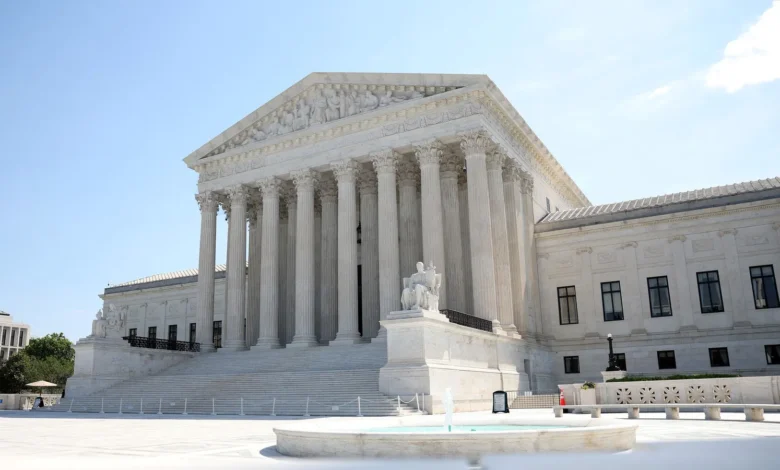
The intersection of religious freedom, public funding, and anti-discrimination mandates has once again taken center stage at the highest court in the United States. In the high-stakes legal battle of St. Mary Catholic Parish v. Roy, the Supreme Court is examining whether a state can condition participation in a popular universal preschool program on a school’s willingness to abide by comprehensive nondiscrimination agreements that conflict with religious teachings on marriage and human identity. At the heart of the litigation are Catholic parents and affiliated parish schools in Colorado contesting state regulations that they argue unlawfully penalize them for adhering to their religious doctrines regarding LGBTQ+ relationships.
The case brings forward profound questions regarding the limits of government-enacted civil rights conditions when applied to faith-based institutions seeking access to secular public benefits. As oral arguments unfold and the justices signal deep ideological divisions, the outcome of this dispute threatens to reshape the constitutional landscape surrounding public funding, religious autonomy, and equal protection mandates nationwide.
Overview of the Colorado Universal Preschool Program
The controversy originates from Colorado’s ambitious universal preschool initiative, designed to grant families approximately 15 hours of tuition-free preschool per week for every eligible child. Valued at roughly $6,000 annually per child, the program gives parents the flexibility to enroll their children in participating public, charter, or private preschools of their choosing.
To ensure broad access and maintain inclusive environments, the state of Colorado established a foundational requirement for all participating institutions: they must sign a formal nondiscrimination agreement. This policy explicitly prohibits participating schools from discriminating against students, families, or staff on the basis of protected characteristics, including sexual orientation and gender identity.
For many institutions, compliance is straightforward. However, for traditional Catholic parishes operating early-childhood education centers, the mandate creates an insurmountable moral and theological barrier. Because these religious schools adhere to doctrines defining marriage exclusively as the union of a man and a woman, they maintain policies that prevent them from enrolling children of same-sex couples or hiring staff whose lifestyles conflict with Church teachings. Consequently, the state’s requirement effectively bars these faith-based preschools from accessing the lucrative state-funded voucher system, shutting out families who desire a religiously grounded early-childhood education.
Legal Arguments and Oral Arguments Before the Supreme Court
Represented by legal advocacy groups, the petitioners—comprising Catholic parents and two religious parishes with preschool affiliations—filed a lawsuit invoking the First Amendment’s Free Exercise Clause. They contend that the state’s nondiscrimination condition constitutes an unconstitutional penalty on religious practice, forcing them to choose between relinquishing their religious tenets or forfeiting public benefits routinely made available to secular and compliant private providers.
Furthermore, the petitioners argue that Colorado has selectively applied its nondiscrimination rules by carving out numerous exemptions for other specialized programs. For instance, they point to accommodations made for schools targeting low-income families or specialized facilities addressing children with severe disabilities, arguing that the state’s refusal to grant similar accommodations for religious conscience reveals a discriminatory hostility toward traditional faith practices.
During oral arguments, attorneys for the state robustly defended the integrity of the nondiscrimination framework. Helen Norton, representing the Colorado Department of Early Childhood, pushed back against the petitioners’ characterization of state exemptions.
"They are wrong," Norton told the justices during oral arguments. "Schools advance equal opportunity when they recognize that a child with a visual impairment needs different treatment in order to learn. Schools advance equal opportunity when they understand that kids in poverty can’t learn if they’re hungry, or because they’re in pain because their parents can’t afford dental care to treat their cavities."
Conversely, Nicholas Reaves, arguing on behalf of the petitioners, emphasized that Catholic families and religious institutions are simply seeking parity. Reaves asserted that Catholic families want the same treatment as other citizens in being able to participate in a statewide universal preschool program funded by taxpayer dollars without compromising their religious integrity.
The Supreme Court’s Conservative Majority and Judicial Inquiries
The ideologically conservative members of the Supreme Court bench appeared sympathetic to the petitioners’ grievances, questioning whether the state’s rigid requirements placed an unconstitutional burden on religious exercise without providing a compelling justification in this specific context.
Justice Samuel Alito raised pointed questions regarding the tangible necessity and societal impact of the state’s policy. "So we have here a requirement that has a very severe impact on certain religions and that was something that everyone could’ve anticipated and almost must have anticipated when this requirement was imposed," Justice Alito noted. "And we have little evidence of a practical problem, little evidence—if any evidence, you’ll tell me if I’m wrong—that there are LGBTQ+ couples who cannot find other preschools to send their children to."
The questioning also explored the broader systemic boundaries of religious exemptions. Justice Brett Kavanaugh pressed the petitioners’ counsel on where religious institutions would draw the line regarding employment and admissions practices, posing hypothetical scenarios involving the refusal to hire gay athletic coaches or administrative staff.
In response, Reaves maintained that individual dioceses possess the theological autonomy to determine those boundaries internally, stating, "I think every diocese can make their own decision about where exactly that line is."
A Chronology of Recent Supreme Court Precedents
The St. Mary Catholic Parish litigation does not exist in a vacuum; rather, it represents the latest chapter in a multi-year judicial trajectory in which the Supreme Court has progressively expanded the protections of the Free Exercise Clause, particularly regarding the rights of religious organizations to participate in public funding programs.
In 2018, the high-profile case of Masterpiece Cakeshop, Ltd. v. Colorado Civil Rights Commission reached the Supreme Court. The justices ruled in favor of a Christian baker in Colorado who declined to create a custom wedding cake for a same-sex couple, establishing that state civil rights commissions must display neutral and respectful treatment toward religious objectors.
Two years later, in the 2020 ruling of Espinoza v. Montana Department of Revenue, the court addressed state-level restrictions on public funding. The justices decided in favor of a Montana mother who sought to utilize a state tax-credit-funded scholarship program to send her children to a Christian school, ruling that states cannot bar religious schools from public benefit programs merely because of their religious identity.
The expansion continued robustly in 2022 with Carson v. Makin. In that landmark decision, the Supreme Court ruled that Maine violated the First Amendment by restricting religious private schools from participating in a state tuition assistance program for rural areas where local public high schools were unavailable. The majority opinion reinforced the principle that public benefits generally available to private entities cannot be withheld simply because an organization is religious or incorporates religious instruction into its curriculum.
Broader Impact, Implications, and Future Outlook
The implications of St. Mary Catholic Parish v. Roy extend far beyond the borders of Colorado. As states across the country increasingly adopt universal preschool, school-choice vouchers, and publicly funded educational savings accounts, the clash between state anti-discrimination mandates and religious liberties has intensified.
A ruling in favor of the Catholic petitioners could significantly curtail the ability of state and local governments to attach comprehensive LGBTQ+ nondiscrimination conditions to public educational funding. Such a decision would likely empower faith-based schools to participate in state-funded programs while maintaining strict adherence to traditional religious codes regarding marriage, family structure, and personal conduct.
On the other hand, a victory for the Colorado Department of Early Childhood would reaffirm the authority of states to establish baseline civil rights protections as an uncompromisable prerequisite for the receipt of public funds, ensuring that state-subsidized programs remain fully accessible and welcoming to all families, irrespective of sexual orientation or gender identity.
Legal scholars note that the balance between the Free Exercise Clause and state anti-discrimination laws remains one of the most contentious and rapidly evolving areas of American constitutional law. As the Supreme Court continues its deliberation, the final decision—scheduled to be released before the conclusion of the 2026-27 term—will serve as a definitive benchmark for the coexistence of religious freedom and public civil rights enforcement in modern education.
Related posts: