The Tesla Roadster Stunt Demonstrations Have Sparked Intense Global Debate Regarding Engineering Feasibility and Production Realities

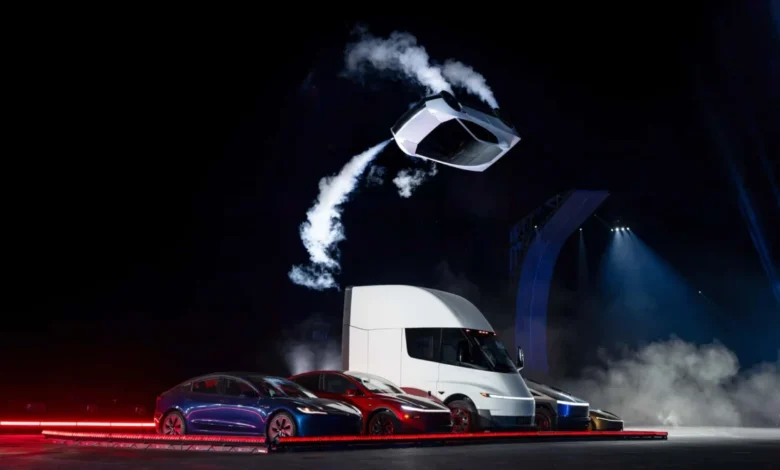
The recent exhibition of the Tesla Roadster performing high-stakes aerial maneuvers has ignited a firestorm of discussion across the automotive and aerospace industries. Featuring a vehicle that appears to perform mid-air flips and sustained inverted travel, the demonstration has challenged the public’s perception of what constitutes a production-ready vehicle. While Tesla has released additional footage providing various on-board perspectives of these uncrewed stunts, the industry remains sharply divided between those who view the performance as a masterful marketing display and those who question the physical legitimacy of the maneuvers.
The Chronology of the Roadster Project
The Tesla Roadster occupies a unique position in the manufacturer’s history. First unveiled as a concept in 2017 with ambitious performance claims, the project has faced repeated delays, with the current production target shifted to 2028. The vehicle was originally pitched as the ultimate expression of electric performance, promising acceleration figures that would outpace the world’s most elite internal combustion hypercars.
The narrative shifted significantly when Elon Musk began discussing a "SpaceX Package" for the vehicle, which would incorporate cold-gas thrusters. These thrusters, inspired by space-flight technology, were intended to provide unprecedented control over the vehicle’s dynamics. The recent demonstrations represent the most visible commitment to this vision, moving from theoretical concept art to what appears to be a functional, albeit heavily modified, prototype.
Engineering the Impossible: Cold-Gas Thruster Technology
At the heart of the "flying" Roadster’s capabilities is a sophisticated cold-gas thruster system. Unlike traditional propulsion methods that rely on chemical combustion, this system utilizes high-pressure nitrogen gas stored in a 200-liter tank. The engineering requirements for such a setup are extreme; the system must manage pressures reaching 10,000 psi to generate enough force to influence the vehicle’s trajectory during a jump or to stabilize it during unconventional maneuvers.
The logistical challenges of this system are substantial. Current testing data indicates that the system requires between two and six hours to fully recharge the nitrogen reserves after a mere five seconds of continuous operation. Tesla’s engineering teams are reportedly working to compress this recharge window to under 30 minutes, though the infrastructure required to support such high-pressure refills remains entirely conceptual. The placement of the tank, located directly behind the driver’s cabin, also presents significant safety and structural integrity concerns that must be addressed before the vehicle could ever be considered for road-legal status.
Distinguishing Between Models and Variants
Industry analysts have noted that the public must distinguish between the varying iterations of the upcoming Roadster. The base Performance model, which serves as the primary commercial offering, will not feature the specialized thruster hardware. This version is designed to appeal to the traditional high-end electric vehicle market, prioritizing long-range efficiency and standard luxury appointments.
The "Thrust" variant, which incorporates the rear-mounted thrusters, is specifically engineered to achieve sub-two-second 0-60 mph launch times. This model utilizes the gas system primarily for increased traction and acceleration assistance rather than sustained flight. Finally, there is the "Rocket" variant—a theoretical single-seat configuration that serves as the basis for the extreme stunts witnessed in the demonstration. Most automotive experts agree that the "Rocket" version is intended primarily as a technology demonstrator and is unlikely to meet the stringent safety, crash-test, and environmental regulations required for street legality in any major global market.
The Skepticism Gap: Marketing vs. Physics
The primary point of contention surrounding the Roadster footage is the legitimacy of the physics involved. Critics have pointed out that the aerial maneuvers shown in the videos defy traditional ballistic trajectories for a car of the Roadster’s mass. Even with the force provided by a cold-gas system, maintaining stability while upside down or achieving significant lift requires a balance of aerodynamics and thrust-to-weight ratios that are rarely seen outside of dedicated stunt aircraft.
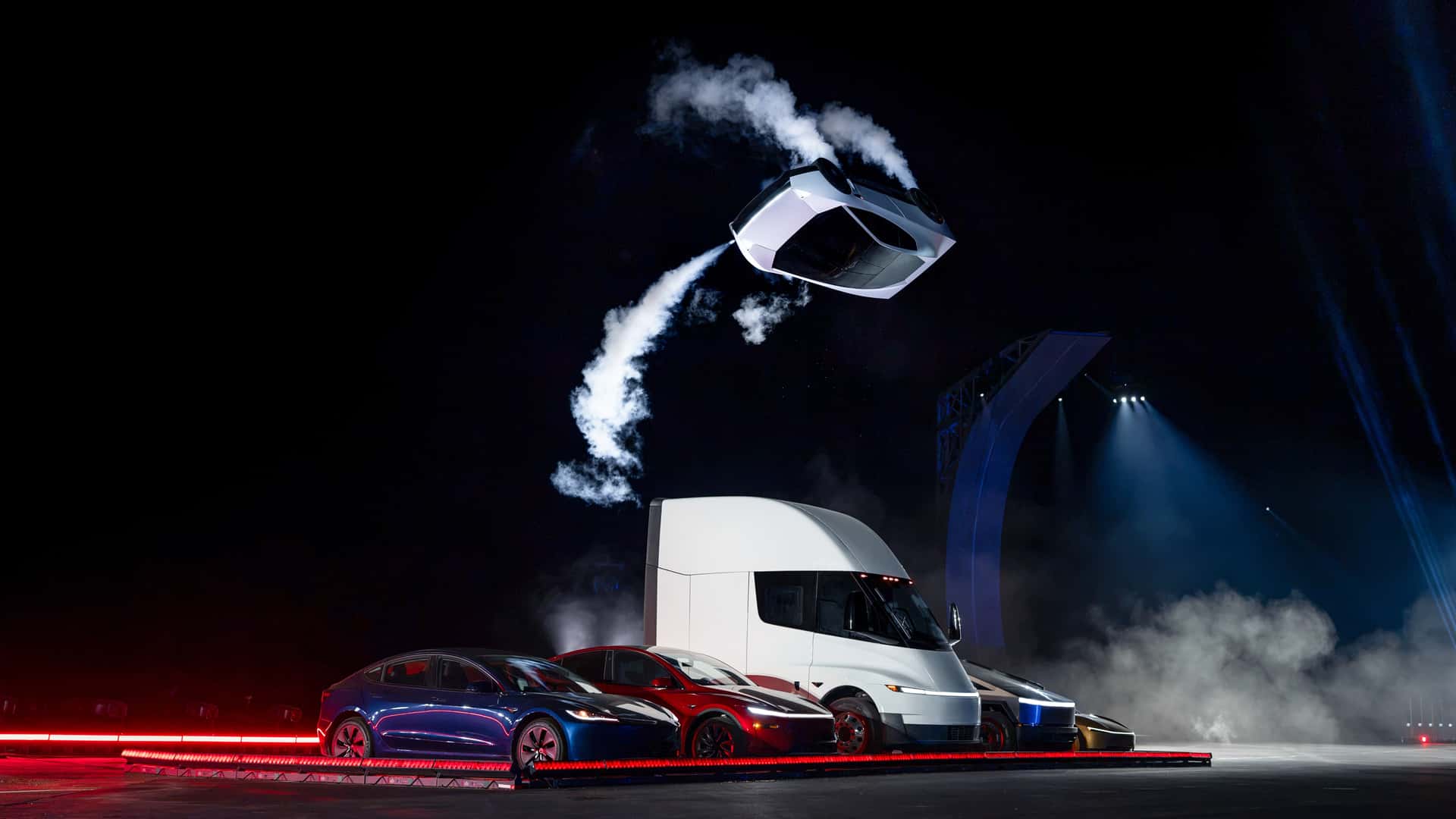
Tesla has responded to the growing skepticism by releasing multiple camera angles, including internal shots that capture the vehicle’s cabin during the maneuvers. While these clips provide a more immersive view of the action, they have not silenced the debate. Skeptics argue that the videos could be the result of a combination of high-precision remote-controlled rigging, sophisticated editing, and the potential use of specialized low-gravity or mechanical launch assist platforms hidden from the frame. Conversely, supporters of the company point to Tesla’s history of "impossible" engineering feats, such as the successful landing of orbital-class rocket boosters, as evidence that the company is capable of overcoming traditional automotive design limitations.
Broader Industry Implications
The implications of the Roadster’s potential production are twofold. First, it signals a shift in how automotive manufacturers approach performance metrics. For decades, power was measured in horsepower and torque; the introduction of cold-gas thrusters suggests a future where vehicle performance is measured in thrust-vectoring and directional control. If Tesla successfully brings any iteration of this technology to market, it could necessitate a complete overhaul of automotive safety regulations, particularly regarding the handling of high-pressure gases in consumer vehicles.
Second, the stunt serves as a potent tool for brand positioning. By associating the Tesla brand with the extreme, the futuristic, and the seemingly impossible, the company maintains its dominance in the public discourse. Even if the thruster-equipped models never reach the hands of retail consumers, the branding impact remains significant. The "car that is not just a car" persona helps Tesla maintain a high valuation and deep engagement with its core demographic of tech enthusiasts and investors.
Regulatory and Safety Hurdles
Transitioning from a prototype to a production vehicle is a monumental task under the best of circumstances. The National Highway Traffic Safety Administration (NHTSA) and international counterparts in the European Union and Asia maintain rigorous standards that prioritize the protection of passengers and pedestrians. A vehicle equipped with pressurized nitrogen tanks capable of emitting high-velocity blasts presents an unprecedented challenge for regulators.
The potential for fire, explosion, or accidental discharge in a collision scenario would require years of rigorous testing. Furthermore, the legal status of a car that can, by design, leave the ground would likely fall into a gray area between automotive and aviation law. It is highly probable that any version of the Roadster featuring these systems would be restricted to closed-course use, similar to a race-spec vehicle or a private aircraft, rather than being registered for daily public road use.
The Path to 2028
As Tesla moves toward the 2028 production goal, the focus will likely shift from these high-profile, viral stunts to the more mundane, yet equally difficult, aspects of mass production. Scaling the manufacturing of the standard Roadster chassis, finalizing the battery chemistry for long-range performance, and establishing a service network for such a complex machine will be the true test of the project’s viability.
The company is currently soliciting feedback and interest through various channels, and while the "Rocket" model makes for excellent viral content, the market reality will be dictated by the performance and price point of the base model. The conversation surrounding the Roadster will likely continue to oscillate between awe at its engineering ambition and frustration at its lack of transparency regarding production timelines and safety regulations.
Ultimately, the Tesla Roadster serves as a litmus test for the automotive industry. It challenges the boundaries of what consumers expect from a vehicle and forces the industry to confront the intersection of traditional mechanics and aerospace engineering. Whether the stunt is viewed as a triumph of physics or a feat of digital marketing, its success in capturing the world’s attention is undeniable. As the industry watches the 2028 horizon, the question remains: will the Roadster truly fly, or will it remain a permanent, albeit impressive, fixture in the realm of automotive fantasy?