Honda officially brings its first-generation NSX heritage parts program to the United States market.

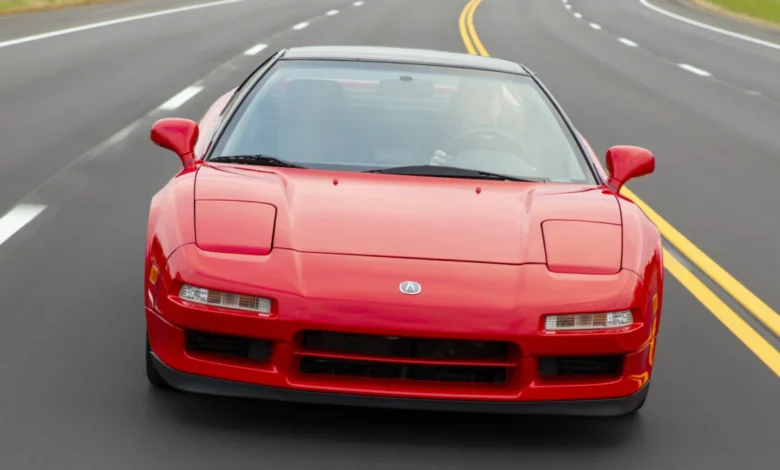
After months of speculation and a successful rollout in the Japanese domestic market, American Honda Motor Co. has officially transitioned its Heritage Parts program to the United States. This initiative marks a significant milestone for automotive preservation, as the automaker begins offering over 3,000 genuine reproduction components for the first-generation Acura NSX, a vehicle widely regarded as one of the most important sports cars of the 1990s. The availability of these parts, now accessible through authorized Acura dealerships and the digital Honda DreamShop, signals a shift in how major manufacturers approach the long-term support of legacy performance vehicles.
A Legacy Reborn: The Context of the NSX
The original Acura NSX, known internally as the NA1 and NA2 chassis, redefined the supercar segment upon its 1990 introduction. Designed with input from Formula One legend Ayrton Senna, the NSX featured an all-aluminum monocoque chassis, a high-revving V6 engine with VTEC technology, and a focus on daily drivability that embarrassed the exotic car establishment of the era.
For decades, NSX owners faced the common dilemma of "automotive obsolescence." As original factory-produced parts were depleted from global inventory, enthusiasts were forced to rely on limited aftermarket solutions or expensive salvage yard finds to maintain the integrity of their vehicles. By launching the Heritage Parts program, Honda is effectively extending the lifespan of these vehicles, ensuring that the engineering brilliance of the 1990s remains functional for future generations of collectors and drivers.
Chronology of the Heritage Program
The journey toward this U.S. launch began in Japan, where Honda first recognized the necessity of supporting its classic performance fleet. The following timeline outlines the progression of the program:
- Mid-2023: Initial reports emerge regarding Honda’s efforts to reverse-engineer discontinued components for the first-generation NSX.
- April 2024: Honda officially launches the Heritage Parts program in Japan, creating a centralized hub for the production and distribution of rare components.
- Late 2024: American Honda Motor Co. begins the integration process, auditing inventory needs for the U.S. market.
- November 2024: The program officially goes live in the United States, granting owners access to the DreamShop portal and dealership parts counters.
This phased rollout was calculated to ensure supply chain stability. By testing the logistics in Japan—a market with a dense concentration of NSX owners—Honda was able to refine the production process before scaling the operation for the larger, more geographically dispersed North American market.
Technical Scope and Inventory Data
While the full catalog remains proprietary and subject to inventory fluctuations, the scope of the program is extensive. The 3,000+ parts currently listed cover critical mechanical, structural, and aesthetic categories. Based on data from the Japanese pilot program, the range of available parts is comprehensive:
- Powertrain Components: Enthusiasts can source vital engine internals, including complete V6 cylinder blocks. The availability of these blocks, priced at approximately $6,300, is a major boon for owners dealing with catastrophic engine failures or those looking to perform a full factory-specification rebuild.
- Drivetrain and Suspension: Specialized components such as camshafts and suspension hardware are included, allowing for a "zero-mile" refresh of the vehicle’s handling dynamics.
- Interior and Cosmetic Trim: Beyond mechanical components, Honda is reproducing aesthetic elements that often degrade over three decades. Items such as the "NSX DOHC VTEC" armrest emblems and original owner’s manuals satisfy the high demand for "concours-correct" restoration, where originality is paramount to vehicle valuation.
The pricing structure, which mirrors the yen-to-dollar conversion of the Japanese program, suggests that Honda is keeping these parts accessible rather than treating them as high-margin luxury items. By pricing a camshaft at roughly $850 and an accelerator pedal assembly at $340, the company is prioritizing the utility of the parts for active owners over speculative collection.
Official Perspectives and Corporate Strategy
The decision to initiate this program with the NSX is far from coincidental. As an iconic halo car, the NSX serves as a branding pillar for the Acura marque. During the announcement, Mamadou Diallo, executive vice president of American Honda, emphasized the strategic importance of this move. "Honda Heritage Parts was created to help our customers enjoy their classic Acura and Honda performance models, and it’s appropriate that we begin with an iconic model like the first-generation Acura NSX," Diallo stated.
This language—specifically the use of the word "begin"—suggests that the NSX is merely the first in a broader corporate strategy. Industry analysts suggest that this is a proactive measure to cultivate brand loyalty. By supporting the cars that define a brand’s history, manufacturers like Honda ensure that current owners of modern Acura products—such as the Type S lineup—feel confident that their vehicles will be supported decades into the future.
Broader Implications for the Automotive Industry
The launch of the Honda Heritage Parts program represents a growing trend among OEMs (Original Equipment Manufacturers) to embrace the "hobbyist economy." As the transition to electric vehicles accelerates, legacy manufacturers are increasingly aware that internal combustion engine vehicles—particularly high-performance models—are becoming cultural artifacts.
- Standardization of Restoration: By producing parts in-house, Honda eliminates the variance found in aftermarket "knock-off" parts. This ensures that safety standards and material tolerances remain at factory specifications.
- Impact on Valuation: The presence of an official parts program typically stabilizes, and in some cases increases, the valuation of vintage vehicles. With a clear path to mechanical refurbishment, the risk profile for potential buyers decreases.
- Future Expansion: The industry is now looking toward which models might be next. The Honda S2000, which shares a similar cult-like following, is the most frequently cited candidate. The logistical infrastructure now in place for the NSX could easily be adapted for the S2000, the Integra Type R, or the CRX, all of which have high survival rates and passionate owner communities.
Analysis: Why This Matters
For the automotive enthusiast, this program provides a sense of long-term security. Modern cars are often criticized for their reliance on proprietary software and complex electronics that may become impossible to maintain once support ends. By contrast, the mechanical purity of the first-gen NSX makes it a prime candidate for long-term stewardship.
Honda’s investment in the Heritage program is also an exercise in public relations. It demonstrates a commitment to the "Acura" nameplate as a heritage-rich brand, rather than a transient manufacturer. In an era where many classic car parts are being lost to history, Honda’s initiative provides a blueprint for how other manufacturers—particularly those with deep performance roots—might preserve their most significant achievements.
As the program settles into the U.S. market, the next phase of the project will likely involve gathering feedback from owners regarding which specific parts are most in demand. The digital nature of the Honda DreamShop allows the company to collect real-time data on consumer needs, allowing for a dynamic production schedule that can adapt to the market’s requirements.
Ultimately, the availability of these 3,000 parts is not just a commercial event; it is a cultural preservation effort. It ensures that the first-generation NSX will continue to be seen on public roads, track days, and car shows for many years to come, maintaining its status as a pinnacle of automotive engineering. As enthusiasts await news of which model will receive the next "Heritage" designation, the NSX stands as a testament to the fact that, at least for some manufacturers, the past is just as important as the future.
Related posts: