Jungheinrich Reveals Next-Generation EFG M Series Electric Forklifts to Conquer the Asia-Pacific Industrial Market

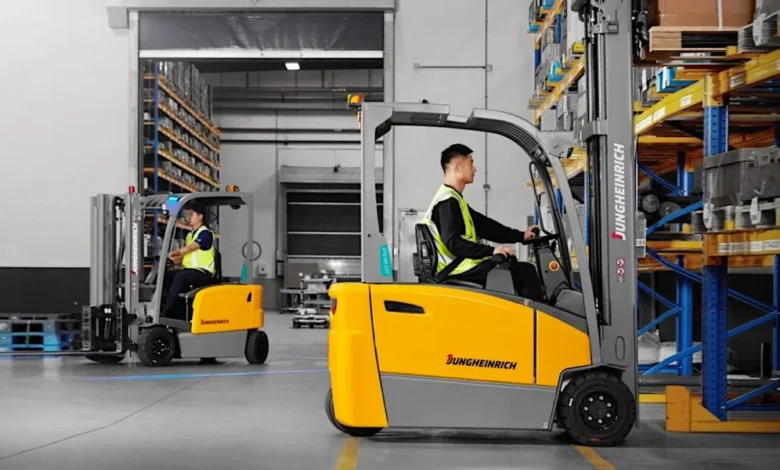
German material-handling equipment manufacturer Jungheinrich has officially taken the wraps off its next-generation EFG MB and MC electric counterbalance forklifts, tailored specifically for the dynamic and spatially constrained industrial landscapes of the Asia-Pacific region. Spanning the 1.6- to 3-ton capacity classes, the new product lineup represents a strategic and calculated maneuver by the European engineering giant to capture a stronger foothold in booming Asian manufacturing and warehousing hubs where traditional, bulky material-handling equipment often struggles to operate efficiently.
For decades, international industrial equipment brands have faced intense competition and localized operational hurdles when trying to break into the dense, high-traffic supply chain environments characteristic of East and Southeast Asia. Jungheinrich’s latest initiative relies on localized research, modular customization, and cutting-edge battery technology to bypass these historic barriers. By manufacturing the equipment closer to its target consumer base—highlighted by production outputs from the company’s Qingpu Plant in China—the company aims to deliver agile, high-performance machinery engineered
explicitly to meet the rigorous demands of modern Asian warehouses.
Background Context of the Asia-Pacific Logistics Boom

The rapid escalation of e-commerce, third-party logistics (3PL), and advanced manufacturing across the Asia-Pacific region has fundamentally altered warehousing architecture. Facilities in major commercial hubs such as Shanghai, Tokyo, Singapore, and Jakarta are increasingly bound by spatial limitations, driving up real estate costs and forcing warehouse operators to optimize vertical storage. Consequently, narrow aisles, high-density stacking zones, and high-frequency fulfillment cycles have become the industry standard.
For equipment manufacturers like Jungheinrich, standard industrial trucks designed for expansive, wide-aisle European or North American distribution centers are frequently ill-suited for the tighter turning radii and intensive shift cycles common in Asia. Recognizing this structural deficit, the company initiated an extensive market research campaign to identify the specific pain points experienced by regional warehouse managers. The insights gathered from this research directly shaped the development of the EFG M series, focusing heavily on maneuverability, energy efficiency, operator comfort, and customizable performance tiers.
Engineering and Performance Specifications of the EFG M Series
The newly launched EFG MB (three-wheel) and EFG MC (four-wheel) electric forklifts offer a versatile architecture designed to adapt to varying operational intensities. Buyers can select from two distinct performance packages, allowing warehouse managers to align truck capabilities precisely with their daily throughput requirements.
The standard energy-efficiency package is optimized for routine, everyday material handling, maximizing battery longevity across standard shifts. Meanwhile, the higher-performance package—which comes standard on models rated for 2.5 to 3.0 tons—delivers enhanced acceleration, higher lifting speeds, and greater torque for demanding, high-throughput logistics operations.

Powering these systems is a flexible energy strategy supporting both traditional lead-acid configurations and advanced lithium-ion battery technologies, with capacity options available at 346 Ah or 690 Ah. This dual compatibility ensures that businesses can choose an energy storage medium that aligns with their specific charging infrastructure and shift patterns, whether operating single-shift distribution centers or round-the-clock fulfillment hubs. Furthermore, both battery configurations integrate sophisticated regenerative braking technology. This system recovers up to 30% of the kinetic energy typically lost during braking and load-lowering maneuvers, feeding power back into the battery and significantly extending operational uptime between required charging sessions.
Customization, Safety, and Operator-Centric Design
Recognizing that modern warehouse efficiency is intrinsically tied to operator well-being and error reduction, Jungheinrich has heavily emphasized ergonomics and active safety systems within the EFG M lineup. Lisa Jing Xue, Managing Director at Jungheinrich’s Qingpu Plant in China, emphasized the adaptability of the new range during the official product rollout.
Different operations have different requirements, said Jing Xue. With the EFG M series, customers can configure the truck around their application, workload, and operators—whether they need greater maneuverability for confined warehouse spaces, or a stable, powerful truck for demanding transport and stacking work. We carried out extensive customer research to understand what the market needs, enabling customers to invest in the performance required today and add further capabilities as their application demands.
To support these objectives, the EFG M series offers a robust suite of optional and standard features designed to enhance visibility and control. Operators benefit from a slim B-pillar design and a reinforced glass roof, which collectively optimize upward and peripheral visibility—a critical safety factor when navigating high-rack storage facilities. Additionally, the four-wheel EFG MC models feature automatic cornering speed reduction as a standard inclusion, mitigating the risk of tip-overs during tight, high-speed turns.
Optional technological enhancements include intuitive fingertip controls, an expanded 4-inch digital display dashboard, upgraded high-visibility LED lighting packages, and advanced driver-assistance systems (ADAS). Ergonomic seating and flexible cabin configurations have also been integrated to reduce operator fatigue over prolonged, multi-hour shifts.
Digital Integration and Fleet Management
Beyond mechanical performance, the EFG M series addresses the growing demand for data-driven warehouse management through standard integrated telematics. From the moment the equipment is deployed, fleet managers gain real-time access to critical utilization metrics, proactive maintenance scheduling, and mandatory pre-operational safety checks.
This digital infrastructure allows businesses to monitor driver behavior, track energy consumption patterns, and optimize fleet sizing, thereby reducing total cost of ownership (TCO) and minimizing unexpected downtime. By embedding IoT (Internet of Things) capabilities directly into the machinery, Jungheinrich positions the EFG M series not merely as a material-handling tool, but as an active node in a connected warehouse ecosystem.
Commercial Availability and Regional Support Network

With order books for both the three-wheel and four-wheel variants officially open across the Asia-Pacific region, Jungheinrich is backing its hardware launch with significant infrastructure investments. The company is leveraging its extensive, highly trained service network comprising over 6,000 personnel distributed throughout the region. This robust support framework is designed to guarantee rapid response times for maintenance, spare parts fulfillment, and technical troubleshooting—a critical assurance for logistics enterprises operating under strict, time-sensitive Key Performance Indicators (KPIs).
Broader Market Implications and Industry Analysis
The introduction of the EFG M series signals a broader shift in how multinational equipment manufacturers approach regional market penetration. Rather than relying on a top-down, one-size-fits-all global model, companies are increasingly forced to adopt localized engineering strategies that address the unique geographic, economic, and architectural realities of high-growth markets.
For the Asia-Pacific material-handling sector, the arrival of these configurable, energy-efficient electric forklifts intensifies competition among established regional players and international brands. As environmental regulations tighten across major Asian economies and corporate sustainability mandates push logistics operators to phase out internal combustion engine (ICE) equipment, the demand for sophisticated electric alternatives is projected to surge.
By combining localized manufacturing capabilities at facilities like the Qingpu Plant with advanced lithium-ion and regenerative braking technologies, Jungheinrich has positioned itself to capture significant market share in the rapidly modernizing Asian logistics sector. The success of the EFG M series will likely serve as a blueprint for future industrial equipment deployments tailored to high-density urban and regional supply chains worldwide.