Rugby League World Cup 2026 Reaches Thrilling Semi-Final Stage Across Australia, New Zealand, and Papua New Guinea

The 2026 Rugby League World Cup has officially reached its dramatic penultimate phase, with the men’s and women’s tournaments narrowing down to the final four elite contenders. Spanning across October and November, this international showcase has brought together the finest rugby league talent from across the globe, hosted jointly by Australia, New Zealand, and Papua New Guinea. Featuring 53 intense matches across men’s, women’s, and wheelchair competitions running simultaneously, the tournament is rapidly hurtling toward its grand finale scheduled for Sunday, November 15, in Brisbane.
As the competition intensifies, reigning champions Australia remain firmly in the spotlight as they seek to defend their titles in both the men’s and women’s divisions. Meanwhile, England continues its fierce campaign to retain its crown in the wheelchair tournament, which is entering a pivotal third round of pool matches to determine the final semi-finalists.
The Road to the Semi-Finals: Weekend Fixtures
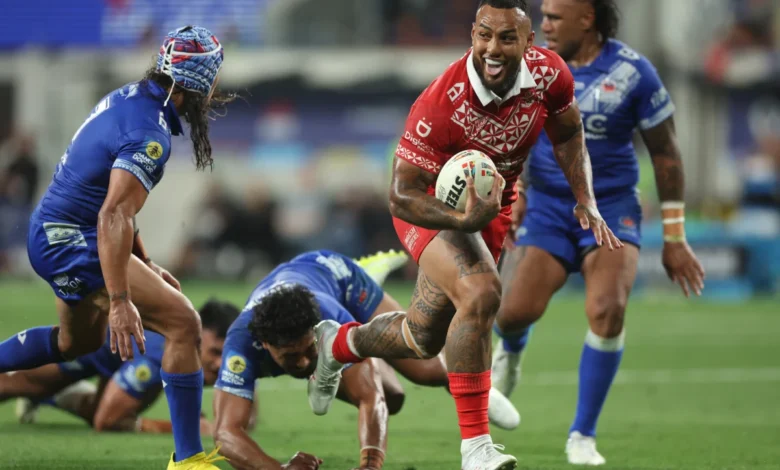
The stakes could not be higher as the tournament heads into a decisive weekend of knockout rugby. On Saturday, action centers in Newcastle, where New Zealand and Samoa face off in a high-stakes women’s semi-final clash, immediately followed by a heavyweight showdown between New Zealand and the resilient Tonga men’s side.
The momentum shifts on Sunday to Sydney, where fans will witness reigning champions Australia take on Fiji in the women’s competition. Later that day, the Australian men’s team will test their championship credentials against a formidable Samoa squad looking to cause a major tournament upset.
Concurrently, the wheelchair competitions are locked in their final round of pool fixtures. Monday and Tuesday will determine which wheelchair rugby league powerhouses advance to their respective semi-final encounters, adding another layer of fast-paced, inclusive sporting drama to the 2026 schedule.
Tournament Background and Expansion
The 2026 Rugby League World Cup represents a significant milestone in the sport’s global expansion. Co-hosted by traditional rugby league strongholds Australia and New Zealand alongside the fiercely passionate rugby-loving nation of Papua New Guinea, the tournament has captured the imaginations of millions of fans worldwide.
Historically, the Rugby League World Cup has been dominated by traditional powerhouses, primarily Australia, who have captured the majority of the men’s titles since the tournament’s inception in 1954. However, the continuous growth of international rugby league—evidenced by the stellar performances of Pacific nations like Tonga, Samoa, and Fiji—has fundamentally shifted the competitive landscape. The emergence of these nations as genuine contenders has elevated the standard of play, ensuring that no team enters the knockout stages without facing immense pressure.
The concurrent staging of the men’s, women’s, and wheelchair tournaments highlights the sport’s commitment to inclusivity and parity. By showcasing all three formats under a unified global banner, the International Rugby League (IRL) has provided athletes across all disciplines with an unprecedented platform to display their elite capabilities to a worldwide audience.
Global Broadcasting and Accessibility
Ensuring that fans around the globe can follow every tackle, try, and conversion has been a priority for tournament organizers and international broadcasters. In Australia, the Seven Network and its digital streaming platform, 7plus, have provided comprehensive, free-to-air coverage of every single match of the tournament. This accessibility has driven record-breaking domestic viewership figures as the host nation rallies behind its defending champions.
In New Zealand, ThreeNow has ensured that local supporters have free access to all matches featuring the Kiwis, as well as every semi-final and final across all categories. International audiences outside of the host regions are served by dedicated sports broadcasters, including Premier Sports covering the UK, Ireland, and the United States, and Sky Sport broadcasting across New Zealand.
For international travelers and expatriates wishing to access their home coverage while abroad, virtual private network (VPN) services such as NordVPN have provided a secure technological bridge, enabling fans to bypass geographical broadcast restrictions legally and securely.
Analytical Implications: The Shift in Global Rugby League
From a tactical and strategic standpoint, the 2026 tournament highlights a profound maturation of the international game. The traditional dominance of Australia and Great Britain is increasingly challenged by the athletic prowess and tactical sophistication of Pacific Island nations.
The rise of Samoa and Tonga as perennial semi-final threats is no longer an anomaly; it is the direct result of structured talent pathways, increased investment, and top-tier international competition. For the governing bodies, this competitive parity is the ultimate validation of their global expansion strategies. A diverse semi-final lineup not only drives broadcasting revenue and commercial interest but also secures the long-term viability and growth of rugby league as a truly global sport.
Furthermore, the integration of the wheelchair rugby league tournament into the main event schedule has been an unmitigated success. The high-intensity, full-contact nature of the wheelchair discipline has won over skeptics, generating dedicated fandoms and proving that the sport can deliver elite-level drama across diverse categories.
Looking Ahead to Brisbane
As the dust settles on this weekend’s semi-finals, attention will quickly pivot toward the grand finales in Brisbane on Sunday, November 15. Whether Australia can successfully defend its dual crowns, or if emerging challengers can orchestrate historic upsets, the 2026 Rugby League World Cup has already cemented its place in sporting history as one of the most competitive, inclusive, and globally resonant tournaments ever staged. Fans and analysts alike will be watching closely as the final chapters of this historic month of rugby league action unfold.