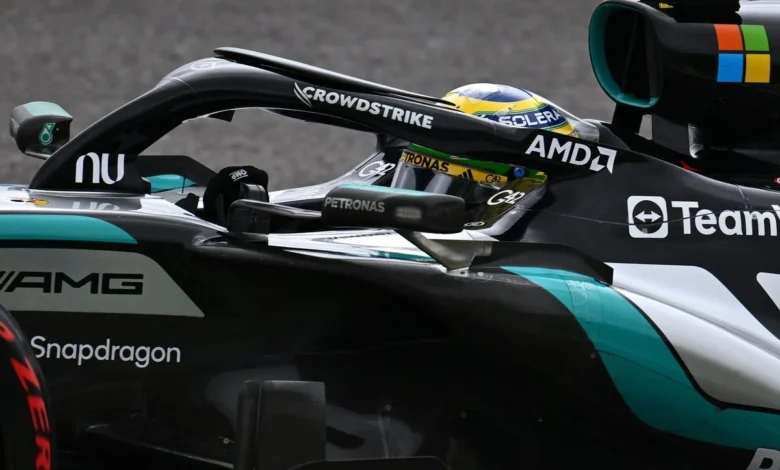
The 2024 Brazilian Grand Prix at the historic Autódromo José Carlos Pace will be remembered as a bittersweet milestone for the Mercedes-AMG Petronas Formula 1 team. While the Brackley-based squad successfully secured the Constructors’ Championship—a monumental achievement reflecting their technical evolution throughout the season—the race itself was defined by a perplexing mechanical mystery that derailed a dominant performance by their young star, Andrea Kimi Antonelli.
The Italian driver, who had showcased exceptional pace throughout the weekend, found himself battling not only his rivals on the track but an inexplicable instability in his W15. Despite a commanding start that saw him snatch the lead from pole-sitter Lando Norris, a sudden spin on lap 20 transformed his race from a probable victory into a damage-limitation exercise.
A Masterclass Cut Short: The Chronology of the Race
The race commenced under high-stakes pressure, with both Mercedes and McLaren vying for critical points in the standings. Antonelli, demonstrating the poise that has characterized his rapid ascent through the motorsport ranks, executed a clinical launch from the grid. He bypassed Lando Norris before the first turn, establishing an immediate buffer that allowed him to control the pace in the opening laps.
As the track transitioned from damp to dry, the strategic battle intensified. Mercedes opted to keep Antonelli on track as the circuit dried, favoring a late move to slick tires. While this strategy successfully neutralized the initial threat from the McLaren pit wall, Norris managed to shave significant time off the gap through a clever undercut. Despite the pressure, Antonelli appeared to have the situation under control, managing his tire temperatures with technical precision.
The narrative shifted abruptly at the start of the 20th lap. As the field navigated the technical opening sequence of the Interlagos circuit, Antonelli’s car snapped violently. The sudden loss of rear-end grip resulted in a 360-degree spin, leaving the Mercedes driver stranded in the middle of the track. By the time he successfully recovered and rejoined, the lead had evaporated, with Norris surging ahead and Isack Hadjar closing the gap rapidly.
The Mystery of the Unstable W15
In the aftermath of the race, the focus shifted from the spin itself to the mechanical anomaly that preceded it. Antonelli’s radio communications during the race hinted at a growing frustration with the car’s handling, specifically regarding a suspected suspension or geometry issue.

"I’m very disappointed for the race. I’m very angry, to be fair," Antonelli admitted during his post-race media availability. "But I’m going to put all this aside for now because the team clinched the title. They all deserve it, and I’m very proud to be part of this group."
When questioned about the specific technical gremlins, the Italian revealed a recurring sensation that plagued him throughout the stint on soft tires. "We need to check something with the geometry of the car, specifically the rear, because I had this issue only in left-hand corners," he explained. "It was most noticeable in high-speed sections. The rear felt incredibly unstable, even on the straight-line kinks. It was a very odd, sudden feeling, with absolutely no warning before the spin."
The severity of the incident was compounded by the resulting flat spots on his tires, which forced an unplanned pit stop. It was only after returning to the track on a fresh set of rubber that the true pace of the car returned, allowing Antonelli to recover some ground and challenge the leaders in the closing stages. The data from these final laps suggested that had the car been operating within its normal parameters, the Italian would have remained the favorite for the top step of the podium.
Contextualizing the Constructors’ Championship
The securing of the Constructors’ Championship in Brazil represents a pinnacle for Mercedes, marking the culmination of a grueling developmental cycle. After falling behind the curve at the beginning of the new ground-effect era, the team spent the last 24 months systematically refining the W15’s aerodynamic platform and floor geometry.
For Mercedes, the result is a validation of their pivot toward a more stable, predictable car concept. The team’s ability to maximize points across the various conditions presented at Interlagos—ranging from light rain to full dry running—underscores the depth of their engineering department. While the drivers are often the face of these achievements, the championship serves as a testament to the thousands of staff members in Brackley and Brixworth who have worked to close the performance deficit to their rivals.
Technical Implications and Data Analysis
Engineers will now perform a forensic analysis of the telemetry data from Antonelli’s car to identify the root cause of the "pulling" sensation reported during the race. In modern Formula 1, such issues are rarely the result of a single failure; they are often the product of minor deviations in ride height, tire pressure, or suspension compliance that manifest only under specific load conditions.
The fact that the issue was isolated to high-speed left-hand corners at a track like Interlagos—which places unique asymmetrical loads on the vehicle—suggests a potential issue with the rear suspension geometry or a damper setting that became unsettled under sustained lateral G-forces. If the telemetry confirms a component failure, it could trigger a wider inspection of the current batch of rear-end components to prevent similar occurrences in the final rounds of the season.

Reactions from the Paddock
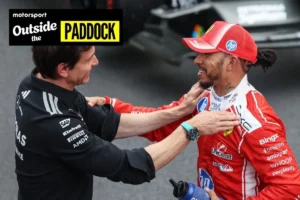
While the mood in the Mercedes garage was one of jubilation, there was an unmistakable sense of sympathy for Antonelli. Teammates and team principals were quick to praise his maturity in prioritizing the team’s success over his personal disappointment.
"Kimi showed the character of a champion today," a team representative noted. "To be able to set aside that level of frustration and immediately focus on the team’s achievement speaks volumes about his professional development."
Lando Norris, who benefited from the incident to take the lead, acknowledged the difficulty of the conditions. "Interlagos is one of the most challenging tracks on the calendar when the surface is inconsistent. You are constantly on the edge of adhesion, and it doesn’t take much for the car to bite back," Norris remarked.
Broader Impact on the 2024 Season
The results in Brazil have solidified the championship hierarchy, yet they leave several questions regarding the competitive balance between Mercedes, McLaren, and Red Bull. The pace displayed by Antonelli prior to his spin serves as a clear indicator that the Mercedes performance ceiling remains the highest in the field.
For Antonelli, the Brazilian Grand Prix serves as a baptism by fire. Dealing with high-stakes technical failures is a rite of passage for any driver at the top level of the sport. His ability to maintain his composure while his car exhibited dangerous handling characteristics, and his subsequent recovery to finish in the points, provides the team with valuable data for the upcoming races.
As the circus prepares for the next leg of the season, the focus for Mercedes will be two-fold: celebrating the hard-earned title and ensuring that the technical anomalies that plagued the W15 in São Paulo are resolved. The championship is secure, but the hunger to win individual Grands Prix remains the primary motivation for both the team and their young star. The events in Brazil have proven that while the title is theirs, the path to dominance is rarely without its unexpected detours. The team will now look to translate their structural victory into a consistent winning streak as the 2024 season reaches its dramatic conclusion.