From Extinction to Emulation: How Colossal Biosciences Is Utilizing Artificial Intelligence and Genetic Engineering to Bring Back the Dodo

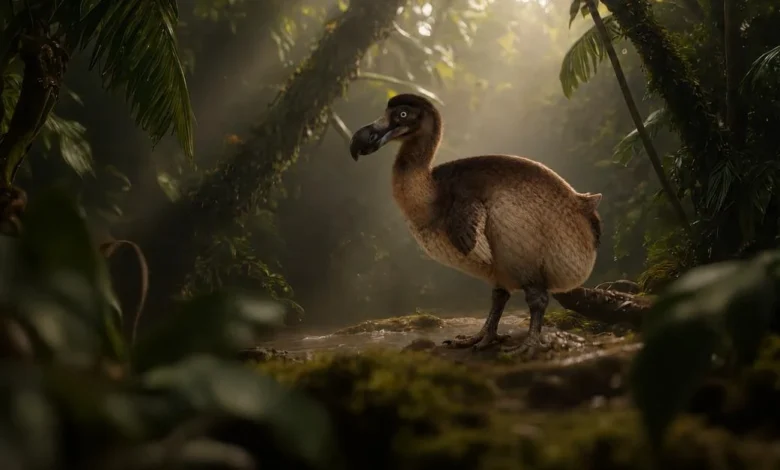
The dodo bird (Raphus cucullatus), long regarded as the global poster child for anthropogenic extinction, may soon step out of the history books and back into the physical world. Colossal Biosciences, a pioneering Dallas-based biotechnology and genetic engineering firm known for its ambitious de-extinction initiatives involving the woolly mammoth and the dire wolf, has announced a suite of groundbreaking technological advancements aimed at resurrecting the flightless bird. At the forefront of this scientific push is GenoMorph, an in-house artificial intelligence platform designed to decode the complex genetic instructions that governed the dodo’s unique anatomical features, starting with its iconic, heavily hooked beak.
While the prospect of reviving an extinct species has historically belonged to the realm of science fiction, advances in synthetic biology, computational genomics, and stem cell technology have brought the concept into the sphere of operational science. However, the path to de-extinction is fraught with immense biological and computational hurdles, particularly when dealing with fragmented historical DNA. Colossal’s latest breakthroughs suggest that these hurdles are not insurmountable, offering a new blueprint for ecological restoration that stretches far beyond a single species.
The Main Facts of the Dodo De-Extinction Initiative
The core objective of Colossal’s dodo project is not merely to clone an animal from the past—a feat complicated by the degradation of ancient DNA over centuries—but to engineer a proxy organism that possesses the physiological, anatomical, and ecological traits of the original Raphus cucullatus. Because intact dodo DNA is exceedingly rare and heavily fragmented, traditional genomic reconstruction methods fall short.
To bypass this limitation, Colossal’s scientific team developed GenoMorph, an advanced AI platform that serves as a translator between living avian genetics and extinct morphology. The system operates by analyzing massive datasets encompassing embryonic development across multiple living bird species—including chickens, quails, ducks, and pigeons—sampled across six distinct developmental stages. This data is cross-referenced with high-resolution genomic sequences and detailed CT scans of skulls from more than 70 different bird species, mapped across 541 precise anatomical points.
Through this multi-layered analysis, GenoMorph successfully identified approximately 2,300 candidate genetic switches—regulatory DNA sequences that dictate the timing, location, and intensity of gene expression. Rather than acting as the instruments themselves, these regulatory sequences function like the faders on a mixing board, determining how loudly each genetic instrument plays. By understanding how regulatory DNA shapes living birds, researchers can pinpoint the specific genetic switches responsible for the dodo’s distinctive physical characteristics, such as its massive beak and flightless skeletal structure.
Chronology and Historical Context of the Dodo
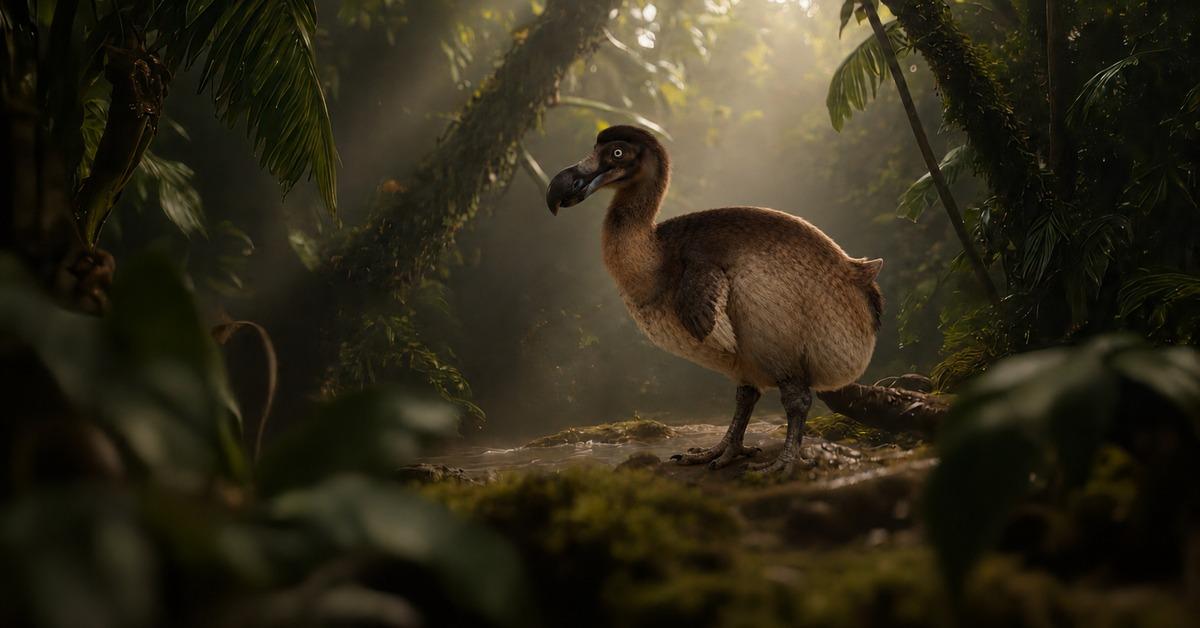
To understand the significance of Colossal’s undertaking, one must examine the historical timeline of the dodo and its tragic demise. Endemic to the island of Mauritius in the Indian Ocean, the dodo was a relative of pigeons and doves that adapted to an isolated environment devoid of natural mammalian predators. Weighing up to 50 pounds and standing roughly three feet tall, the bird lost its need for flight, evolving a robust frame and a specialized diet suited to the island’s unique ecosystem.
Following its documentation by Dutch sailors in the late 16th century, the dodo’s existence was brutally short-lived. Human colonization introduced invasive species such as rats, pigs, and macaques, which raided ground nests for eggs, while intensive hunting by sailors and settlers decimated the adult population. By the late 17th century—specifically around 1662, when the last widely accepted sighting was recorded—the dodo was entirely extinct, vanishing less than a century after its official discovery. For over 300 years, the bird’s name has served as a cultural idiom for irreversible loss.
The modern effort to reverse this historical trajectory began in earnest with advances in ancient DNA sequencing over the past two decades. In 2002, researchers successfully extracted mitochondrial DNA from a dodo specimen held in the Oxford University Museum of Natural History, confirming its phylogenetic placement within the Columbidae (dove and pigeon) family. In the years that followed, full nuclear genome sequences were teased out from severely degraded museum specimens.
Colossal Biosciences entered the fray in recent years, systematically assembling the technological pillars required for avian de-extinction. By adapting a novel genome-assembly methodology initially developed for its dire wolf project—a breakthrough recently published in the peer-reviewed journal Cell Genomics—the team successfully bridged major gaps in the dodo’s fragmented genetic record, allowing ancient code to be structurally aligned for the first time.
Supporting Data and Technological Infrastructure
De-extinction requires more than just digital models and patched-together DNA; it demands a robust physical infrastructure capable of hosting, editing, and incubating genetic material. Colossal has steadily constructed this ecosystem at its specialized facilities.
Crucial to the physical execution of the project is the maintenance of a specialized breeding colony of Nicobar pigeons (Caloenas nicobarica), widely recognized as the dodo’s closest living relative. Colossal’s Texas-based colony has expanded to 36 birds. Crucially, researchers have successfully harvested germ cells from the eggs of these pigeons—precursor cells capable of developing into sperm and eggs—providing a viable biological vehicle for passing edited genetic traits down to subsequent generations.
In tandem with the pigeon colony, the research team achieved a major milestone by successfully hatching chimeric chickens. These are birds that carry lab-grown primordial germ cells embedded within their somatic tissues, demonstrating that exogenous avian cells can successfully integrate and function within a developing host organism. Furthermore, the laboratory developed a novel lipid-nanoparticle delivery system—microscopic fat bubbles engineered to ferry gene-editing payloads directly into developing avian embryos. This delivery mechanism has been successfully validated across multiple bird species, including chickens, rock doves, and ducks, establishing a dependable framework for applying precise edits to living germlines.
Official Responses and Expert Perspectives
The intersection of synthetic biology, artificial intelligence, and conservation has elicited a mixture of cautious optimism and rigorous academic debate within the scientific community.
Ben Lamm, CEO and co-founder of Colossal Biosciences, emphasized the broader computational nature of the challenge during recent disclosures. "De-extinction is as much a data problem as a biology problem," Lamm stated. "Because so few dodo genomes survive, we cannot rely on the population-level comparisons available for many living species. Our GenoMorph platform provides another path: it learns how regulatory DNA shapes living birds, then identifies the genetic switches that may have contributed to the dodo’s distinctive anatomy. This is more than a solution for the dodo. It provides a repeatable approach for extinct species whose genomic records are similarly limited."
Dr. Beth Shapiro, Chief Science Officer at Colossal and an evolutionary biologist renowned for her work on ancient DNA, underscored the systemic nature of the technological framework being built. "It establishes a repeatable framework for connecting ancient genomes to extinct traits," Shapiro noted, highlighting how the integration of AI-driven regulatory mapping, surrogate avian husbandry, and advanced transfection tools creates a closed-loop system capable of moving theoretical genetics into tangible biological outcomes.
Broader Impact, Implications, and Ethical Considerations
The implications of Colossal’s work extend far beyond the symbolic resurrection of a single historical icon. The methodologies developed through the dodo project—particularly the GenoMorph AI platform and the lipid-nanoparticle avian gene-delivery systems—offer immediate, practical utility for contemporary conservation biology.
As global biodiversity faces unprecedented pressures from habitat destruction, climate change, and epizootic diseases such as avian malaria, many endangered bird species possess dwindling, bottlenecked gene pools. The ability to model regulatory DNA, mend fragmented genomes, and safely edit avian germlines provides conservationists with powerful new interventions to bolster genetic diversity and climate resilience in living species on the brink of extinction.
However, the initiative also prompts complex ethical and ecological discussions. Critics and conservation ethicists frequently question whether financial and intellectual resources dedicated to de-extinction might be better allocated toward preserving existing habitats and protecting currently endangered species. Furthermore, questions remain regarding the ecological niche of a dodo proxy on a modern-day Mauritius that has been fundamentally altered over the last three centuries. How these engineered organisms will interact with contemporary flora and fauna, and whether they can successfully reintegrate into a restored ecosystem, represents the next critical frontier of inquiry.
As the strongest candidate gene edits currently undergo rigorous testing and preparation for insertion into Nicobar pigeon cells, the boundary between history and future biology continues to blur. For centuries, the dodo stood as an immutable monument to human-induced erasure. Today, driven by artificial intelligence and molecular engineering, that monument is being transformed into a testbed for ecological restoration.