U2 discuss the defiant joy of their new album Carnaval de Luz and the secrets of their fifty-year musical partnership

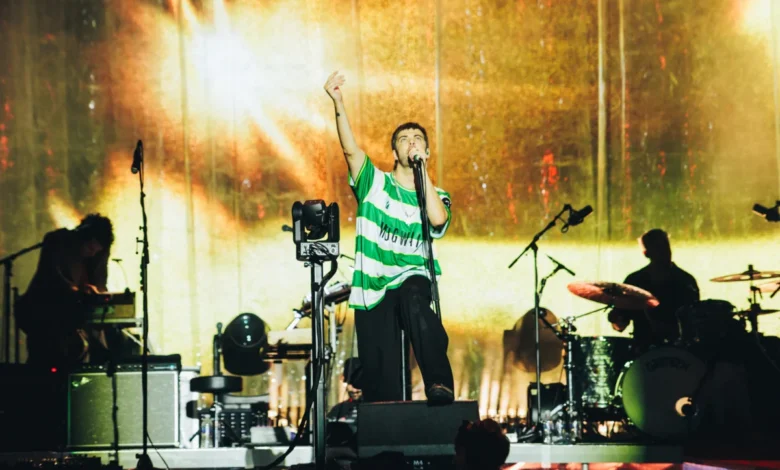
After half a century at the summit of global rock music, U2 have returned with a project that seeks to bridge the gap between their storied past and a volatile, uncertain future. The release of their 16th studio album, Carnaval de Luz, arrives at a moment of significant industry transition and follows a series of intimate, high-profile performances, including a notable appearance at London’s Tate Modern. For Bono and The Edge, the record serves as a sonic manifesto on the necessity of "defiant joy" in an era dominated by political polarization and digital despondency.
The album, produced in collaboration with Jacknife Lee, marks a departure from the introspective nature of their previous two records, Songs of Innocence (2014) and Songs of Experience (2017). By embracing a more experimental, collaborative spirit—a process heavily influenced by their long-time sonic architect Brian Eno—the band has pivoted toward a sound that seeks to synthesize the political with the celebratory.

A Legacy of Collaboration and Deconstruction
The roots of the band’s current creative philosophy can be traced back to their formative sessions in the early 1980s. Working with Brian Eno on the 1984 album The Unforgettable Fire, U2 learned to dismantle their traditional songwriting structures. The Edge notes that Eno’s influence taught the band to view their musical limitations not as obstacles, but as unique characteristics to be leveraged. This methodology remains central to their current creative process, where the "blank page" is no longer a source of anxiety but a canvas for experimentation.
This collaborative ethos extends beyond the studio walls. The band has actively engaged with contemporary artists, citing acts like Fontaines D.C., Rosalía, and the Lambrini Girls as vital inspirations. This cross-generational dialogue highlights a deliberate effort by U2 to remain relevant in a shifting cultural landscape. Bono emphasizes that healthy artistic competition—much like the historical rivalry between The Beatles and The Rolling Stones—is essential for creative evolution. By acknowledging the success of rising Irish acts like Fontaines D.C., U2 signal an awareness that their own position as stadium giants is part of a continuum rather than a static throne.
Chronology of a Career Milestone
The path to Carnaval de Luz has been characterized by a series of strategic, surprise-led initiatives. In late 2026, the band marked their 50th anniversary with a string of homecoming performances in Dublin, including emotional sets at Mount Temple and Grafton Street. These events served as a reminder of their humble origins before the announcement of their 2027 global stadium tour, titled The Greatest Show On Earth.

The tour, which will feature Wolf Alice as support, is expected to be one of the highest-grossing concert series of the year. Historically, U2’s tours—such as the revolutionary Zoo TV tour of the early 1990s—have set the industry standard for production value and thematic depth. The title of the new tour, The Greatest Show On Earth, mirrors a prophetic sign spotted by Bono during a 1992 NME cover shoot in Miami, suggesting that the band views their current era as a cyclical return to the grand, theatrical spectacle that defined their mid-career peak.
The Philosophy of Utility and Defiance
In an era where music streaming platforms and algorithmic curation have shifted how audiences consume art, U2 have grappled with the concept of "utility." Bono, in particular, has moved away from the desire to strictly control the narrative of their music, instead opting to produce works that serve specific functions—whether for protest, reflection, or catharsis.
The band views the current societal climate, marked by a decline in social cohesion and trust, as a direct challenge to the artist. The Edge identifies "despondency" as the primary enemy, warning that negative narratives amplified by social media algorithms contribute to a cycle of doom-scrolling. Against this backdrop, Carnaval de Luz is presented as a "reset"—a communal experience designed to allow listeners to participate in the reimagining of the future. This perspective aligns with the band’s historical interest in the intersection of politics and escapism, often pointing to the roots of carnival celebrations as a form of resistance against autocratic control.

Industry Implications and Financial Challenges
Beyond the artistic narrative, the band has expressed significant concern regarding the current financial model of the music industry. Bono noted that while established acts like U2 possess the infrastructure to sustain themselves through touring, the commodification of music has created a precarious environment for mid-tier and emerging artists.
Data from the International Federation of the Phonographic Industry (IFPI) suggests that while global recorded music revenues have seen growth, the distribution of that wealth remains heavily skewed toward the top one percent of artists. U2’s stance on this issue highlights a growing tension between legacy acts and the platforms that distribute their work. By advocating for a more equitable financial structure, the band aligns itself with broader calls for transparency in royalty payments and better support for the "gigging" musician who cannot rely on the massive stadium revenues that characterize the U2 business model.
Resilience and the Future of the Band
The question of how a rock band can remain viable for half a century is often answered with talk of chemistry and mutual respect. For U2, the secret lies in the sublimation of the ego for the sake of the collective. The band members acknowledge that the internal dynamics of a group are fragile; Bono admits that he feels he needs the band more than they need him, grounding his artistic identity in the unique interplay between his lyrics and The Edge’s guitar work.

This resilience is not merely sentimental; it is rooted in a shared ambition to continue creating work that surprises even the band members themselves. The band’s current focus on "shamanism" and the history of show business suggests that their upcoming tour will prioritize emotional resonance over technological gimmicks.
Broader Impact and Conclusion
As U2 prepares for the launch of Carnaval de Luz on November 13, the industry is watching closely. The band’s ability to pivot from the commercial expectations of the mainstream to a more experimental, defiant sound serves as a case study for legacy acts navigating the digital age. By refusing to "stay in their lane"—a critique they level against many modern performers—U2 maintain a position of cultural relevance that is rare for a group with a 50-year history.
The implications of their 2027 tour extend beyond ticket sales; they represent a test of whether the "stadium rock" format can still serve as a venue for genuine political and social discourse. With the backdrop of shifting American political landscapes and a global hunger for communal, live experiences, U2’s attempt to foster "defiant joy" may well resonate with a generation that has grown weary of digital fragmentation. Whether or not they succeed in their ambition to reset the collective mood, the band’s commitment to the "other stuff"—the intangible, creative spark that keeps an artist moving forward—remains as evident now as it was when they first formed in a Dublin classroom in 1976.