Anthony Burns joins AI-powered production firm Grail as in-house creative producer to spearhead original content development

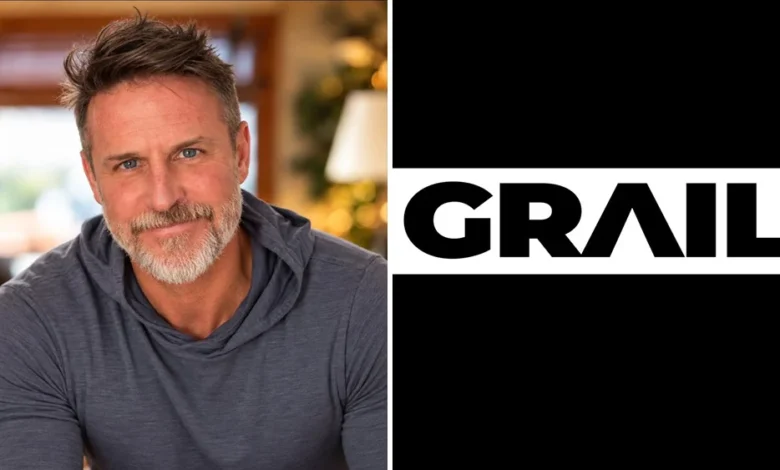
In a significant move aimed at bridging the gap between traditional cinematic storytelling and emerging generative technologies, Anthony Burns has officially joined Grail, the U.S.-based production and talent representation firm, as an in-house creative producer. The appointment, confirmed earlier this week, signals a strategic pivot for the multifaceted company as it seeks to scale its original film and television slate by leveraging both industry-veteran expertise and its proprietary artificial intelligence infrastructure.
Burns, a seasoned writer, director, and producer, arrives at Grail with a diverse portfolio that spans indie festival darlings and star-studded studio projects. His new role will involve packaging and developing a robust pipeline of original IP, further integrating Grail’s tech-forward methodology into the early stages of creative development. This hire underscores the growing trend among mid-sized production houses to recruit established filmmakers who can navigate the complexities of AI-integrated workflows without sacrificing the narrative integrity essential for high-end film and television.
A Career Built on Narrative Versatility
Anthony Burns’ entry into the industry was marked by the 2010 Sundance premiere of Skateland, a poignant coming-of-age drama that he co-wrote and produced. The film, which starred Shiloh Fernandez and Ashley Greene, served as a calling card for Burns’ ability to capture nuanced character dynamics—a skill set that helped him transition into larger-scale commercial projects.
Following the success of his debut, Burns moved into the thriller and dark comedy genres with Home Sweet Hell, a film featuring a high-profile ensemble cast including Patrick Wilson, Katherine Heigl, and Jordana Brewster. Beyond his directorial efforts, Burns has cultivated a reputation as a producer capable of shepherdng sensitive, character-driven narratives to the screen. His production credits include the critically acclaimed Monica, which featured standout performances by Trace Lysette and Patricia Clarkson; the Jimi Hendrix biopic Jimi: All Is by My Side, starring André Benjamin; and the gritty drama Green Is Gold.
His relationship with Grail is not new. Burns recently acted as the showrunner for José vs. Mourinho, a high-profile collaborative project between Grail, Coca-Cola, and Goal designed for the 2026 FIFA World Cup. Additionally, his work with Grail founder Davide Bianca on the original project A Song To Raise The Dead solidified a creative synergy that paved the way for his permanent transition to the firm.
The Grail Evolution: Integrating AI into Hollywood
Grail emerged on the industry’s radar last year as a hybrid entity, functioning simultaneously as a production company, an agency, and a technology lab. Founded by filmmaker Davide Bianca—who gained international attention for directing the first globally broadcast AI-powered commercial for Coca-Cola, Holidays Are Coming—and veteran producer Jeff Krelitz, the company operates out of hubs in Florida and Los Angeles.
The company’s mission statement is rooted in the belief that the future of content production lies in a "tech-first" approach that reduces friction in development and post-production. Grail has already established a footprint in the advertising and gaming sectors, having worked on campaigns for corporate giants like Microsoft and Activision, including the interactive project Fanta’s Haunted Universe.
The most ambitious element of Grail’s business model is the development of "Grail+Forge," a proprietary, integrated AI-powered production environment. According to company literature, the platform is designed to support creative teams throughout the entire lifecycle of a project, from initial script conceptualization and visualization to final post-production rendering. By bringing Burns on board, Grail is clearly signaling that this technology is intended for long-form narrative storytelling, not just short-form commercial content.
Strategic Implications for the Production Landscape
The appointment of Burns serves as a litmus test for the industry’s broader acceptance of AI-integrated production environments. As Hollywood continues to grapple with the ethical and practical questions surrounding generative AI, companies like Grail are attempting to define a middle ground: using technology to streamline tedious production processes while relying on human "creative producers" to maintain the emotional resonance of the work.
From a logistical standpoint, the integration of an in-house producer who has experience in both independent film and large-scale commercial collaboration allows Grail to de-risk its projects. By packaging and developing IP in-house using Grail+Forge, the company can produce high-quality "proofs of concept" or visual decks that significantly reduce the time and capital required for greenlighting traditional film projects.
The industry has taken notice of this model. Grail’s advisory board includes high-caliber producers such as Bob Teitel, known for his work on the Barbershop franchise and Bob Marley: One Love, and Adrian Askarieh, the producer behind the Hitman film series. The involvement of these established figures suggests that Grail’s AI-centric model is gaining institutional credibility, moving beyond the "experimental" phase into a legitimate production strategy.
Chronology of Growth
The trajectory of Grail’s expansion can be traced through several key milestones over the last 24 months:
- Mid-2023: Grail gains industry attention following the global release of the AI-enhanced Coca-Cola commercial, showcasing the potential for generative tools in major brand storytelling.
- Late 2023: The company formalizes its dual-identity as both a production and rep company, attracting interest from creators looking to diversify their output into gaming and immersive media.
- Early 2024: Grail begins the aggressive development of Grail+Forge, aiming to build a vertically integrated studio ecosystem.
- Mid-2024: Collaboration with Goal and Coca-Cola on José vs. Mourinho marks the company’s first significant foray into serialized sports-related content.
- April 2025: Official announcement of Anthony Burns as in-house creative producer, marking a transition from "service provider" to a dedicated developer of original long-form entertainment.
The Future of the Creative Producer
In the traditional studio system, the creative producer is often bogged down by the administrative burden of coordinating between disparate departments—visual effects, legal, marketing, and distribution. By deploying Grail+Forge, the company aims to centralize these functions. In this new workflow, a producer like Burns is not just overseeing the budget; he is interacting with an AI-augmented interface that provides real-time updates on asset creation and visual development.
Industry analysts suggest that this shift could lead to a "compression of development time." If a producer can visualize a scene, generate storyboards, and even test audience responses via AI-driven simulations within the Grail+Forge environment, the traditional "pitch" process becomes exponentially more efficient.
However, the challenge remains in the artistic execution. While AI can handle the logistical heavy lifting, the "human touch"—the nuance in performance, the subtext in dialogue, and the cultural relevance of a story—remains the exclusive domain of experienced filmmakers like Burns. His role will be to ensure that as the company scales its tech-enabled output, the stories remain rooted in human experience rather than algorithmic patterns.
Industry Impact and Market Outlook
The implications of this move extend beyond the internal operations of Grail. As independent production houses look for ways to compete with the sheer volume of content produced by streamers and major studios, the adoption of proprietary AI tools is becoming a competitive necessity. Grail is currently positioning itself as a "studio-in-a-box," offering a blueprint that other mid-tier production companies may soon look to replicate.
Furthermore, the recruitment of a veteran like Burns provides a bridge between the old guard of Hollywood and the new guard of tech-forward creators. It signals to agents, managers, and talent that Grail is not a "tech company" trying to replace filmmakers, but a "filmmaking company" that happens to have superior technology. This distinction is vital for maintaining relationships with high-level talent who may otherwise be skeptical of AI-integrated workflows.
As the 2026 FIFA World Cup approaches, and with it the release of more Grail-produced content, the industry will be watching closely to see if the "Grail model" results in a higher success rate for original projects. For now, the partnership between Anthony Burns and Grail represents a calculated bet: that the next generation of blockbuster entertainment will be born not from the traditional studio lot, but from a hybrid environment where human creativity is amplified by the speed and precision of artificial intelligence.
With this appointment, Grail has solidified its position as a frontrunner in the "AI-Studio" race. Whether this leads to a new golden age of independent, technology-driven cinema remains to be seen, but the infrastructure is now in place for a significant disruption in how original content is conceived, packaged, and brought to the global stage.