Bridging Tradition and Technology: How OLM and Global Animators are Harnessing AI to Reshape the Future of Production

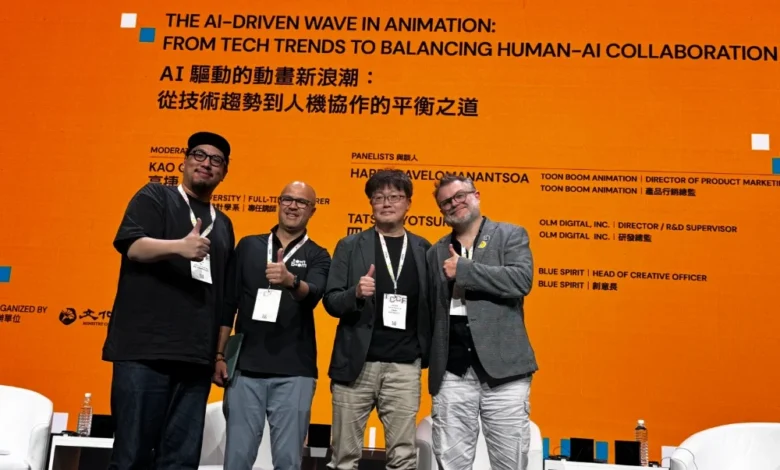
The intersection of artificial intelligence and traditional hand-drawn animation has long been a source of intense debate across the global entertainment industry. As studios grapple with escalating production costs, tightening deadlines, and severe labor shortages, technological innovation has transformed from a futuristic luxury into an urgent necessity. At the forefront of this evolution is OLM, the acclaimed Japanese animation studio widely celebrated for bringing the beloved Pokémon television series and theatrical films to life. Speaking at the prestigious Taiwan Creative Content Fest (TCCF) in Taipei, OLM Digital board director and Chief Technology Officer Yotsukura Tatsuo unveiled a groundbreaking, proprietary AI coloring tool designed specifically to streamline the notoriously grueling anime production pipeline.
This development marks a significant milestone in how studios are attempting to integrate machine learning without compromising artistic integrity. While Western and Eastern production houses approach the technology with varying degrees of caution and enthusiasm, industry leaders are increasingly realizing that artificial intelligence is no longer a distant theoretical concept, but an active participant in modern studio workflows.
The Genesis of OLM’s AI Coloring Tool
The newly revealed coloring technology is the direct product of ANIMINS, an intensive 15-month research and development project led by Yotsukura under GENIAC. GENIAC is a prominent generative AI promotion program overseen by Japan’s Ministry of Economy, Trade and Industry, established to evaluate and foster the practical applications of artificial intelligence within domestic industries. The ANIMINS project officially concluded its research phase in February, laying the technical groundwork for OLM’s latest workflow enhancements.
Unlike standard generative AI models that scrape vast, generalized datasets from the internet—a practice that frequently draws legal scrutiny and ethical concerns from artists—OLM’s system takes a localized, hyper-targeted approach. Traditional AI models often require millions of training parameters that individual animation studios struggle to compile or license. OLM circumvented this obstacle by designing a tool that trains exclusively on a production’s own assets.
In practice, an artist hand-colors just three reference frames. The system then analyzes and learns the specific line shapes, aesthetic nuances, and color palettes of that particular show in approximately 90 seconds. Once trained, the tool can independently color subsequent frames in roughly 15 seconds each. Crucially, the system scales with production: the more frames an artist manually paints and feeds into the system, the higher its accuracy becomes.
"Strictly speaking, it isn’t generative AI," Yotsukura emphasized during his TCCF presentation at the Taipei Nangang Exhibition Center. Because the software trains exclusively on a single production’s proprietary frames, no outside works or artists are exploited in the process. Furthermore, the tool exhibits remarkable adaptability, instantly adjusting when production teams introduce entirely new characters or mythical creatures, such as dragons, mid-series.
Integration and Workflow Efficiency
For OLM—which employs roughly 600 staff members distributed across offices in Japan, Malaysia, Thailand, and the United States—maintaining workflow continuity is paramount. Alongside its flagship Pokémon commitments, the studio manages a diverse slate of high-profile titles, including the action-oriented Beydays, the family-friendly Hanakappa, and the critically acclaimed, adult-skewing historical drama The Apothecary Diaries. Notably, maintaining an in-house R&D division remains a rarity among Japanese animation companies, positioning OLM uniquely to pioneer such technological solutions.
During the proof-of-concept stage, Yotsukura estimated that the coloring tool successfully reduced the mechanical painting workload by approximately 30 percent. While this drastically alleviates the burden on junior colorists, it shifts a degree of responsibility onto checkers, the meticulous quality-assurance personnel who must review every digitally colored frame for consistency.
OLM is not alone in identifying coloring and in-betweening as primary industry bottlenecks. Toon Boom Animation, the Canadian software giant behind industry-standard programs like Harmony and Storyboard Pro, is tackling the exact same production friction points. Harry Ravelomanantsoa, Toon Boom’s product marketing director, noted that the beta testing phase for the coloring tool within Ember, the company’s dedicated AI suite, is nearing completion, with AI-assisted in-betweening expected to enter beta testing shortly.
The practical impact of these tools on studio timelines can be staggering. Ravelomanantsoa highlighted a test conducted by a Manila-based animation studio, where the painting time for a single complex 90-second scene plummeted from an exhausting 15 hours down to a mere two or three minutes.
Broader Applications: From Administrative Agents to Production Management
Beyond basic coloring, OLM is actively experimenting with artificial intelligence to optimize in-between animation. However, Yotsukura suggested that the most profound operational gains may eventually stem from indirect administrative and managerial uses within large-scale productions that frequently involve more than 100 staff members.
Collaborating with a startup partner from the GENIAC initiative, OLM is currently exploring anime-specific AI agents. These digital assistants could prove invaluable for onboarding new directors or production managers who join long-running series—some of which have spanned a decade or more. An AI agent could theoretically recall specific artistic intentions or continuity notes established years prior by an original director for a given cut. Additionally, these agents could accelerate the complex processes of legal approvals and license management for secondary merchandising and distribution rights, which Yotsukura identified as the most revenue-critical segment of the modern anime business. Because these administrative areas involve sensitive intellectual property, OLM is proceeding with cautious, deliberate steps.
The Reality Gap: Navigating the Final 20 Percent
Despite technological advancements, bridging the divide between impressive AI demonstrations and the rigorous demands of commercial animation remains a formidable challenge. Yotsukura likened the current state of AI development to gacha—the Japanese capsule-toy vending machines where a turn costs roughly JPY500 (about $3.30), roughly matching the cost of an AI generation credit. Each pull may or may not yield the desired prize.
AI technology consistently performs well enough to reach an 80 percent completion threshold, which frequently inflates expectations among casual observers and hobbyists. However, pushing that output from 80 percent to the pristine 90 or 100 percent required by professional broadcast standards demands painstaking manual intervention.
"Raising it from there to 90 or 100 percent turns into work so hard it can make you heartsick," Yotsukura explained. Professional animators require tools that respect their creative direction consistently, allowing for precise, pixel-level corrections. Furthermore, anime is exceptionally sensitive to color theory; minor algorithmic shifts in RGB values during automated editing can ruin the emotional resonance of a scene, even if the image appears superficially correct at a glance.
"The creative stays with the artist, and the mechanical time goes to AI, to Ember," Ravelomanantsoa remarked, summarizing the symbiotic philosophy shared by progressive software developers and studio executives alike.
Yotsukura echoed this sentiment, noting that artificial intelligence is inherently constrained by its training data. The genuinely innovative ideas, cultural nuances, and emotionally resonant imagery that captivate global cinema audiences must invariably originate from human imagination. He drew a historical parallel to the introduction of 3DCG (Three-Dimensional Computer Graphics) into traditional anime two decades ago.
"Twenty years ago, I kept rejecting it, saying, ‘How could this ever be used in anime?’ Now it’s unthinkable for anime not to have 3DCG," Yotsukura reflected. He predicts that AI adoption will move at an exponentially faster pace simply because its baseline output quality is already remarkably high from inception.
Global Divergence: Eastern Pragmatism Versus Western Compliance
While Japanese studios like OLM increasingly view AI as an essential instrument for creative expansion, Western production houses navigate a vastly different landscape dictated by stringent platform regulations and legal frameworks.
This divergence was starkly illustrated by Charles Beirnaert, Chief Creative Officer of Blue Spirit, the French animation studio acclaimed for its work on Netflix’s hit series Blue Eye Samurai. According to Beirnaert, Blue Spirit utilizes zero artificial intelligence on its Netflix projects due to strict platform mandates.
"We’re not allowed to use AI for the Netflix projects," Beirnaert stated, explaining that while his team routinely inquires about permitted AI integration stages during pre-production, the official response is uniformly negative. This aligns with Netflix’s published production guidelines issued in August 2025, which mandate full disclosure of any intended generative AI usage and require explicit written approval for any AI-generated material appearing in the final broadcast cut. Conversely, when working on series for alternative distributors like Amazon, Blue Spirit has occasionally utilized AI strictly for conceptual pre-visualization of characters and robotic assets, ensuring none of the raw AI output reaches the final rendered frame.
Outside of strict client commissions, Beirnaert’s internal teams have experimented with AI on independent concepts. In one internal test, a traditional pilot that normally required a team of 20 artists roughly three months to produce was recreated by a single individual using AI tools across modeling, layout, and animation within a matter of days. While the resulting animation lacked the fluid dynamism of the traditional pilot, the AI-generated backgrounds surpassed expectations.
"For me, AI is not meant to replace animators. The day every animator is replaced, I will change job and do something else," Beirnaert asserted.
The philosophical split between Eastern and Western studios also extends to financial motivations. When an audience member at TCCF inquired about potential cost-saving metrics, Beirnaert offered a rough estimate of saving €1 million on an overall €8 million budget, suggesting that AI tools could help rescue independent projects that stall out at the 80 to 90 percent financing mark.
In contrast, Yotsukura noted that OLM operates within a different economic ecosystem. As a contractor brought in after budgets are firmly established, OLM views AI not as a mechanism to downsize production costs or reduce headcounts, but rather as a means to inject greater creative freedom, detail, and visual ambition into pre-determined budgets. While the industry-wide conversation a year or two ago centered nervously on staff replacement, the current dialogue has shifted toward unlocking complex camera angles and cinematic shots previously deemed too labor-intensive to attempt.
Moderator Kao Chieh, a lecturer at Shih Chien University, summarized the debate as a fascinating cultural and structural split between Eastern and Western animation industries. Ultimately, Yotsukura concluded that Japanese anime already possesses an abundance of narrative and artistic creativity, but technological infrastructure must evolve in tandem to sustain the industry’s demanding output.
"I think ‘not using AI’ is probably no longer an option from here on," Yotsukura concluded, signaling that the future of animation will rely heavily on a balanced partnership where human artistry and machine precision drive the medium forward together.
Related posts: