For years, the discourse surrounding artificial intelligence and the labor market has been dominated by a singular, anxiety-ridden question: which jobs will machines replace? This inquiry has driven workforce development strategies, corporate restructuring, and public policy, often framing AI as a zero-sum game between human labor and algorithmic efficiency. However, as AI-integrated workflows transition from experimental pilots to standard operating procedures across global industries, the narrative is undergoing a significant transformation. The focus is shifting from "AI-proofing" careers through technical mastery alone to cultivating the uniquely human competencies that remain beyond the reach of large language models and machine learning systems.
The Shift in Hiring Paradigms
Recent empirical data provides a clear roadmap for this transition. A comprehensive analysis by PwC, the AI Jobs Barometer, reveals a notable trend in workforce evolution: when employers incorporate AI tools into roles previously deemed highly susceptible to automation, they do not simply pare down the workforce. Instead, they pivot the job requirements toward human-centric proficiencies. The report indicates that these modified roles are more than twice as likely to prioritize empathy, nuanced judgment, and creative problem-solving compared to traditional iterations of the same positions.
This phenomenon is particularly pronounced at the entry-level. The data suggests that junior-level roles with the highest exposure to AI are seven times more likely to demand advanced leadership and strategic thinking skills—competencies that were historically reserved for senior management or veteran employees. This indicates that the barrier to entry is no longer just technical proficiency; it is the ability to manage, interpret, and provide context to AI-generated outputs.
The Rise of Durable Skills in a Volatile Market
The urgency of this shift is underscored by a 2025 analysis conducted by America Succeeds and Lightcast. By examining 76 million job postings, the researchers identified that 76 percent of roles now require at least one "durable skill"—an ability that remains relevant regardless of technological cycles or shifts in job titles. Eight of the ten most-requested skills in the modern labor market fall under this umbrella.
Often mischaracterized as "soft skills," these competencies include critical thinking, effective communication, and collaborative problem-solving. In an educational context, these are frequently sidelined in favor of rote memorization or standardized testing, yet they serve as the bedrock of professional resilience. Critical thinking, for instance, has evolved from an academic exercise into a survival skill for the digital age. As AI tools frequently produce "hallucinations"—convincing but factually incorrect outputs—the ability to verify, interpret, and challenge algorithmic findings is becoming a core requirement for productivity.
The Productivity Tax and the AI Bottleneck
The necessity of human oversight is further quantified by recent research from Workday. Their global survey into workplace productivity found that while AI is successfully automating repetitive administrative tasks, the time saved is frequently offset by a phenomenon described as an "AI tax." Employees reported that nearly 40 percent of the time saved by AI is subsequently reinvested into correcting, clarifying, and refining low-quality AI-generated content.
This creates a paradox: the more an organization relies on AI to handle complex tasks, the more it requires human operators capable of high-level critical analysis. The technology does not eliminate the cognitive burden; it shifts it downstream to the employee. Consequently, the most valuable worker in an AI-empowered economy is not the one who can write the most code, but the one who can verify the integrity of the work, communicate its purpose, and ensure it aligns with human intent.

A Chronology of the Skills Gap
The disconnect between classroom instruction and workplace requirements has widened over the last decade. A brief timeline of the current landscape reveals the systemic nature of this challenge:
- 2015–2018: The emergence of advanced AI and automation triggers widespread public concern regarding the "end of work." Education systems begin to focus heavily on STEM and coding as the primary defense against displacement.
- 2019–2021: Pandemic-driven remote work accelerates the adoption of digital collaboration tools, exposing a lack of "durable skills" as workers struggle to communicate effectively in distributed, technology-heavy environments.
- 2022–2023: The launch of accessible generative AI models (such as ChatGPT) forces a re-evaluation of educational integrity. Schools struggle to adapt curricula as AI becomes a tool for both learning and potential plagiarism.
- 2024–2025: Industry data reveals that technical skills are depreciating faster than ever. Employers begin explicitly calling for "durable" capabilities in job descriptions, forcing a systemic reassessment of the "Portrait of a Graduate" frameworks.
The Role of Education Policy and "Portrait of a Graduate"
Recognizing this trend, over 20 states in the U.S. have moved toward adopting "Portrait of a Graduate" frameworks. These initiatives aim to define the core competencies students should possess upon graduation, moving beyond GPA and standardized test scores to emphasize resilience, communication, and critical thinking.
However, the transition from strategic planning to classroom practice remains a significant hurdle. Many school districts face structural constraints—including rigid state standards and limited teacher training—that prevent the integration of these skills into daily lessons. Educators report that "durable skills" are often treated as an extracurricular add-on rather than a fundamental component of literacy and numeracy.
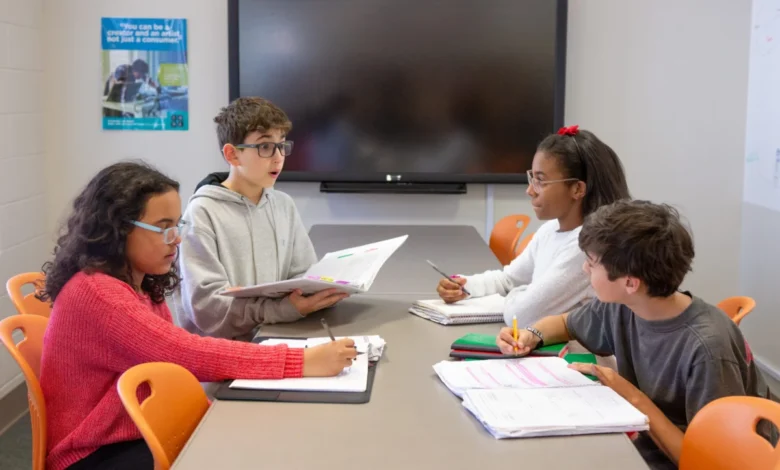
Experts argue that this is a failure of integration. Rather than treating critical thinking or collaboration as separate subjects, they must be woven into the fabric of existing curricula. For example, a science class should not just teach the periodic table; it should require students to evaluate competing scientific evidence, debate their findings, and defend their conclusions—all of which are essential "durable" skills.
Bridging the Gap: Recommendations for Implementation
To prepare students for a future where the nature of work is fluid, educational institutions should consider a shift in instructional delivery:
- Explicit Instruction: Durable skills must be taught as intentionally as algebraic concepts. Teachers should use clear criteria to explain what "collaboration" or "strategic thinking" looks like in practice.
- Visible Progress: Schools should implement performance-based assessments that require students to demonstrate these skills through curated portfolios of work, rather than relying solely on multiple-choice testing.
- Teacher Calibration: Professional development must focus on helping teachers evaluate student growth in non-traditional areas. By comparing examples of work across subjects, educators can build a shared understanding of what proficiency looks like.
- Community Engagement: Local employers play a critical role. By engaging with schools, businesses can provide the real-world context necessary to show students why these skills are vital, thereby demystifying the path from the classroom to the boardroom.
Broader Implications for the Future Workforce
The future of the workforce will likely be defined by a symbiosis of human and machine capabilities. Domain knowledge remains essential, as does basic "AI fluency"—the ability to operate the tools effectively. However, these are merely the baseline. The true competitive advantage will belong to individuals who possess the meta-cognitive skills to navigate uncertainty.
As the lines between machine-generated content and human creation continue to blur, the demand for authentic communication and ethical judgment will only increase. The challenge for educators and policymakers is to ensure that these skills are not the preserve of the elite, but are embedded in the curriculum for every student, regardless of socio-economic background.
The rise of AI has not fundamentally changed the human requirement for critical thought or social cohesion; it has simply made the cost of lacking those skills impossible to ignore. In the coming decade, the students who thrive will not be those who attempt to compete with machines, but those who are prepared to lead them. By reframing education around the development of durable, human-centric competencies, the K-12 system can ensure that the next generation is not merely ready for the future, but capable of defining it.