Beware of Invisible Cows: The Unusual History and Modern Hazards of Hawaii’s Bovine Roadway Crisis

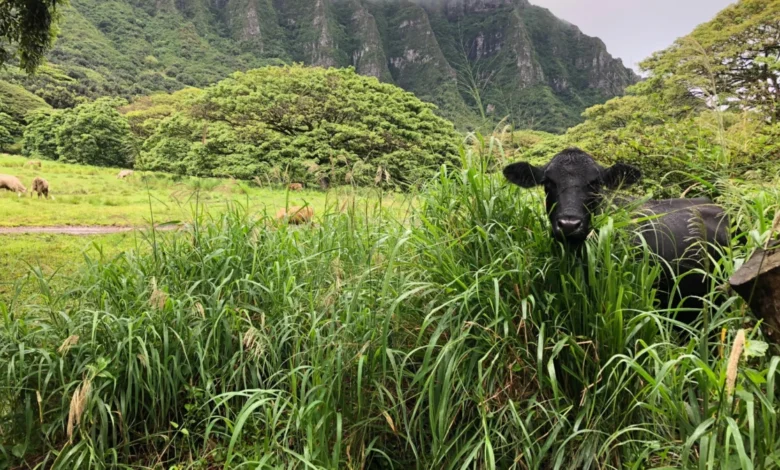
Across the United States, transportation departments utilize standardized signage to warn motorists of potential hazards ranging from falling rock to icy bridge decks. While most of these markers are intuitive, some roadside warnings veer into the realm of the surreal. Perhaps none are as jarring to the uninitiated traveler as those found on the Big Island of Hawaii, where yellow diamond signs command drivers to “Beware of Invisible Cows.” While the moniker suggests a supernatural phenomenon or a government-led experiment in camouflage, the reality is a complex legacy of ecological transformation, historical colonial influence, and the persistent challenges of navigating high-altitude volcanic terrain. These signs serve as a critical, if oddly phrased, warning for a genuine public safety issue that has persisted for over two centuries.
The Ecological and Historical Origins of Hawaii’s Cattle
The presence of cattle in Hawaii is not a natural occurrence but a direct consequence of 18th-century global exploration and colonial expansion. In 1793, Captain George Vancouver, a British Royal Navy officer, arrived in the Hawaiian Islands. As a gesture of diplomacy, Vancouver gifted a small herd of cattle to King Kamehameha I. At the time, the islands possessed no native large land mammals, and the introduction of these bovines fundamentally altered the local landscape.
Recognizing the economic potential of a burgeoning beef industry, King Kamehameha I instituted a ten-year kapu, or prohibition, on the hunting of these animals. This decree allowed the cattle population to explode in number and size without the natural predatory pressures they faced in their native habitats. By 1848, an estimated 35,000 feral cattle were roaming the Big Island. These herds became an invasive force, stripping native forests, destroying indigenous vegetation, and causing significant erosion on the slopes of the island’s massive shield volcanoes, including Mauna Kea.
The Rise of the Paniolo and Cattle Management
As the feral cattle population surged, the Hawaiian government realized that domesticating the animals was essential for both environmental management and economic development. In the early 19th century, the islands recruited vaqueros—skilled Spanish-Mexican cowboys—from California to teach the native population how to manage and herd cattle. These instructors imparted vital skills in roping, riding, and animal husbandry, leading to the birth of a unique Hawaiian cultural tradition: the paniolo.
The paniolo established the foundational ranching industry of Hawaii, most notably on the vast expanses of the Parker Ranch. Through the 19th and early 20th centuries, these ranchers worked to consolidate the roaming herds, build perimeter fencing, and implement systematic population control. However, the geography of the Mauna Kea slopes—characterized by deep ravines, thick scrub brush, and rapidly changing weather patterns—meant that complete containment was nearly impossible. Even with the establishment of large-scale ranching, pockets of wild cattle remained, continuing to migrate across public thoroughfares and rugged mountain access roads.
The Mauna Kea Access Road: A Collision Course
The transition from a horse-and-cart society to a motorized one brought the historical cattle problem into the modern era. The Mauna Kea Access Road, which climbs toward the summit’s world-renowned astronomical observatories, traverses diverse ecosystems that include high-altitude subalpine zones. The road is often shrouded in thick, dense fog, particularly during the afternoon hours when upslope winds push moisture-heavy clouds into the mountain pass.
For motorists, the combination of low visibility and dark-coated cattle creates a dangerous environment. Research into animal-vehicle collisions (AVCs) indicates that the detectability of an animal depends largely on its silhouette against the background and the contrast provided by ambient light. At night or in heavy fog, dark-colored cattle are virtually invisible until they are within the immediate stopping distance of a vehicle. This physical reality is the impetus for the "Invisible Cow" signage. These markers are not a critique of the cows’ actual visibility, but rather a warning about the environmental conditions that render the animals effectively invisible to human drivers.
Supporting Data and Safety Implications
The Department of Transportation (DOT) and local land management agencies have faced the challenge of balancing wildlife management with public infrastructure safety. Statistically, the cost of animal-vehicle collisions in the United States exceeds billions of dollars annually, encompassing property damage, medical expenses, and loss of livestock.
On the Big Island, the risks are compounded by the elevation. Drivers ascending Mauna Kea are often focused on the steep gradients and winding turns, as well as potential altitude sickness. When a herd of cattle—which can weigh upwards of 1,000 pounds—suddenly emerges from a wall of fog, the reaction time required to prevent a collision is often insufficient. Data from local traffic reports over the past several decades suggests that these incidents remain a persistent concern, prompting the state to invest in advanced fencing projects and improved signage.
Official Responses and Modern Mitigation Strategies
Government agencies and private ranching interests have adopted a multi-pronged approach to mitigate the risks. While the signs have become a novelty for tourists, their placement is strategic. They are located in high-density crossing zones identified by local ranchers and law enforcement.
- Strategic Fencing: New, high-tensile wire fencing has been installed along key sections of the Mauna Kea Access Road. This physical barrier is designed to funnel cattle away from the pavement and into managed grazing pastures.
- Population Management: The state continues to authorize controlled hunts to manage feral populations in areas where fences are impractical due to the steep, volcanic terrain.
- Infrastructure Improvements: Improved lighting and reflective markers have been installed in areas with the highest frequency of sightings to provide drivers with better depth perception during low-light conditions.
State officials and local representatives have consistently emphasized that the "Invisible Cow" signs are not merely local color; they are essential safety equipment. "The signage is a reflection of the unique, challenging, and often unpredictable environment we manage here," a spokesperson for the Hawaii Department of Transportation noted in past briefings. "We encourage all motorists to maintain a speed that allows for a safe stop, especially when entering the fog banks of the higher elevations."
The Broader Impact on Hawaii’s Infrastructure and Tourism
The enduring presence of these signs highlights the broader conflict between industrial development and ecological management. As the tourism industry has expanded, the number of inexperienced drivers traversing mountain roads has increased. Many visitors are unprepared for the specific hazards of high-altitude driving, making the "Invisible Cow" signs a vital component of public education.
Furthermore, the cattle industry remains an integral part of the Hawaiian agricultural sector. The paniolo culture is a point of immense pride for local communities, and the balance between protecting this cultural heritage and ensuring public safety remains a delicate task. The cattle that wander the roads are often descendants of the original herds introduced centuries ago, serving as a living link to the islands’ transition into the modern global economy.
Ultimately, the signs are a reminder that even in an age of high-tech infrastructure and astronomical discovery, human systems must still contend with the realities of the natural world. Whether through the persistent fog of Mauna Kea or the historical shadow of colonial-era livestock, the "Invisible Cow" remains a testament to the fact that the most effective safety warnings are often those that force a driver to slow down, observe their surroundings, and respect the unpredictability of the environment. As development continues to push into the higher reaches of Hawaii’s mountains, the management of these wandering herds will remain a priority for the state, ensuring that the legacy of Captain Vancouver’s gift does not lead to unnecessary tragedy on the mountain roads.