Deepest Animal Communities on Earth Discovered in Hadal Trenches Reveal Vibrant Oasis Powered by Chemosynthesis

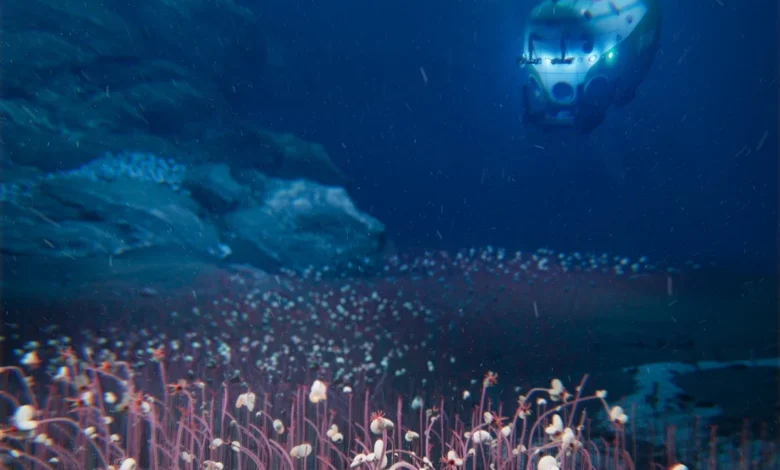
In a discovery that fundamentally alters the scientific understanding of life’s resilience, researchers from the Chinese Academy of Sciences have documented the deepest and most extensive animal communities ever observed on Earth. Utilizing the manned submersible Fendouzhe, a team of marine geochemists and biologists explored the extreme depths of the Mariana Trench, the Kuril–Kamchatka Trench, and the western Aleutian Trench, uncovering a thriving ecosystem of mollusks, tubeworms, and other invertebrates nearly six miles below the ocean’s surface. This breakthrough, recently published in the journal Nature, challenges long-standing models of deep-ocean carbon cycling and suggests that life in the "hadal zone"—the deepest part of the ocean—is far more widespread and robust than previously anticipated.
A New Frontier in the Hadal Zone
The hadal zone, named after the Greek god of the underworld, refers to the deepest regions of the ocean, specifically those exceeding 6,000 meters (approximately 3.7 miles). These environments are characterized by perpetual darkness, near-freezing temperatures, and crushing pressures that can exceed 1,000 atmospheres. For decades, these trenches were viewed as biological deserts, or at best, home to sparse populations of highly specialized, isolated organisms.
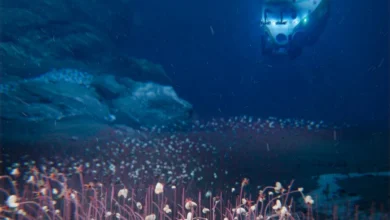
However, the latest findings from the Institute of Deep-sea Science and Engineering (IDSE) present a different reality. During a series of expeditions, the Fendouzhe submersible conducted 23 dives into the Mariana Trench alone, reaching depths between 3.6 and 5.92 miles (approximately 5,800 to 9,500 meters). The researchers discovered massive colonies of siboglinid Polychaeta (tubeworms) and Bivalvia (clams and mussels) spanning a staggering distance of 1,553.4 miles across the Pacific seafloor. Unlike the isolated pockets of life found in earlier missions, these communities appeared as "vibrant oases" in the vast, desolate stretches of the deep sea.
The Mechanics of Chemosynthetic Survival
The primary factor that makes these communities remarkable is their source of energy. At these depths, sunlight is non-existent, rendering photosynthesis—the process by which plants and algae convert light into energy—impossible. Instead, these ecosystems rely on chemosynthesis, a process where microbes convert chemical energy from minerals and fluids into organic matter.
According to the study’s lead author, Xiatong Peng, the communities are sustained by fluids rich in hydrogen sulfide and methane. These chemicals are transported along geological faults that traverse deep sediment layers within the trenches. Isotopic analysis conducted by the team indicates that the methane is produced microbially from organic matter deposited on the seafloor.
The siboglinid tubeworms found in these trenches have evolved a unique symbiotic relationship with these microbes. These worms, which can grow up to a foot long, lack a traditional digestive tract. Instead, they harbor billions of chemosynthetic bacteria within a specialized organ called a trophosome. The bacteria process the hydrogen sulfide and methane absorbed by the worms, providing the nutrients necessary for the host to survive. This biological engine allows life to flourish in conditions that would be toxic or fatal to most terrestrial and shallow-water organisms.
Taxonomic Diversity and Biological Abundance
The expedition captured high-definition video footage showing extensive fields of tubeworms clustered around "snow-like" microbial mats. In addition to the dominant tubeworms and bivalves, the researchers observed a diverse array of other life forms, including:
- Free-floating marine worms: Various species of polychaetes that navigate the water column just above the seafloor.
- Spiky crustaceans: Deep-sea amphipods and decapods adapted to high-pressure environments.
- Echinoderms: Sea lilies (crinoids) and sea cucumbers (holothurians) that scavenge for organic detritus.
- Mollusks: Dense mounds of clams and mussels that form the bedrock of these hadal communities.
Mengran Du, a marine geochemist and co-author of the study, noted that the sheer abundance of life was the most surprising element of the discovery. "What makes our discovery groundbreaking is not just its greater depth—it’s the astonishing abundance and diversity of chemosynthetic life we observed," Du stated. The researchers found that these communities were not merely surviving but were actively thriving, suggesting that the hadal trenches possess a much higher carrying capacity for biomass than previously calculated.

A Chronology of Deep-Sea Exploration
The discovery by the Fendouzhe team is the latest milestone in a history of deep-sea exploration that began over 60 years ago.
- 1960: The bathyscaphe Trieste, manned by Jacques Piccard and Don Walsh, became the first vessel to reach the bottom of the Challenger Deep in the Mariana Trench. The 20-minute stay provided a glimpse of the bottom but offered little opportunity for biological study.
- 2012: Hollywood filmmaker and explorer James Cameron conducted a solo dive in the Deepsea Challenger. He described the environment as "alien" and "desolate," noting the absence of large animals at the very bottom.
- 2019–2020: The "Five Deeps Expedition" led by Victor Vescovo reached the deepest points of all five oceans, discovering several new species but primarily focusing on geological and bathymetric mapping.
- 2023–2024: The Chinese Academy of Sciences deployed the Fendouzhe, a state-of-the-art manned submersible capable of repeated dives to the deepest parts of the ocean. This mission shifted the focus from record-breaking depth to sustained biological and geochemical observation.
The Fendouzhe‘s ability to stay at the bottom for extended periods allowed for the collection of sediment samples, fluid analysis, and the recording of hours of biological activity, providing the "compelling evidence" needed to map these chemosynthetic communities.
Implications for Carbon Cycling and Planetary Science
The discovery has significant implications for our understanding of the global carbon cycle. Standard models of the ocean assume that the majority of carbon is processed in the upper layers, with only a small fraction reaching the deep sea as "marine snow" (dead plankton and organic waste). However, the presence of massive chemosynthetic communities suggests that the hadal trenches act as significant carbon sinks and processing centers.
By converting methane and other chemicals into biomass, these communities sequester carbon in a way that was previously unaccounted for in climate models. This "dark" carbon cycle—independent of the sun—could play a larger role in regulating the Earth’s chemistry than scientists realized. Furthermore, the discovery suggests that life may be common on other celestial bodies with similar conditions, such as the icy moons of Jupiter (Europa) and Saturn (Enceladus), which are believed to have subsurface oceans and hydrothermal activity.
The Debate Over Deep-Sea Mining
The timing of this discovery is particularly relevant as the international community debates the future of deep-sea mining. Several nations and corporations are eager to mine the seafloor for polymetallic nodules—rocks rich in cobalt, nickel, and manganese, which are essential for the production of electric vehicle batteries.
Environmentalists and ocean scientists have warned that such industrial activity could be catastrophic. The discovery of these vibrant, fragile ecosystems in the Mariana and Aleutian trenches provides new evidence of what could be lost. Mining operations often involve dredging the seafloor and releasing massive sediment plumes, which could smother chemosynthetic communities and disrupt the delicate chemical balance they rely on.
The International Seabed Authority (ISA) is currently in the process of drafting regulations for deep-sea mining. Scientists argue that the discovery of these "hadal oases" necessitates a more cautious approach. "Given geological similarities with other hadal trenches, such chemosynthesis-based communities might be more widespread than previously anticipated," Peng noted, suggesting that mining in one area could have far-reaching ecological consequences across the trench systems.
Conclusion and Future Research
The findings of the Fendouzhe expedition mark a new era in hadal science. By proving that life can flourish at the extreme limits of the planet, researchers have opened the door to further exploration of the world’s least understood environments. Future missions will likely focus on mapping the full extent of these communities and understanding the genetic adaptations that allow siboglinids and bivalves to survive such extreme pressures.
As the scientific community continues to analyze the data from the Mariana, Kuril–Kamchatka, and Aleutian trenches, one thing is clear: the deep ocean is not a wasteland. It is a complex, living system that continues to challenge our definitions of life and the boundaries of the biological world. The "hidden world" unveiled by the Chinese Academy of Sciences serves as a reminder that the most profound mysteries of our planet may still lie in the dark, silent depths of the abyss.